Number Matching Extra Challenge Math Worksheets for 5-Year-Olds
4 filtered results
Difficulty Level
Grade
Age
-
From - To
Subject
Activity
Standards
Enhance your child's numerical skills with our Number Matching Extra Challenge Math Worksheets designed for 5-year-olds. These engaging worksheets go beyond basic number recognition, helping young learners advance in their matching abilities. Kids will practice linking numbers to quantities and mastering early math foundations through fun and interactive activities. Perfect for kindergarteners, these worksheets support cognitive development, boost confidence, and prepare children for future mathematical success. With colorful designs and varied exercises, our worksheets make learning enjoyable and effective. Available for download at Kids Academy for a seamless educational experience. Give your child a head start in math today!
Favorites
With answer key
Interactive
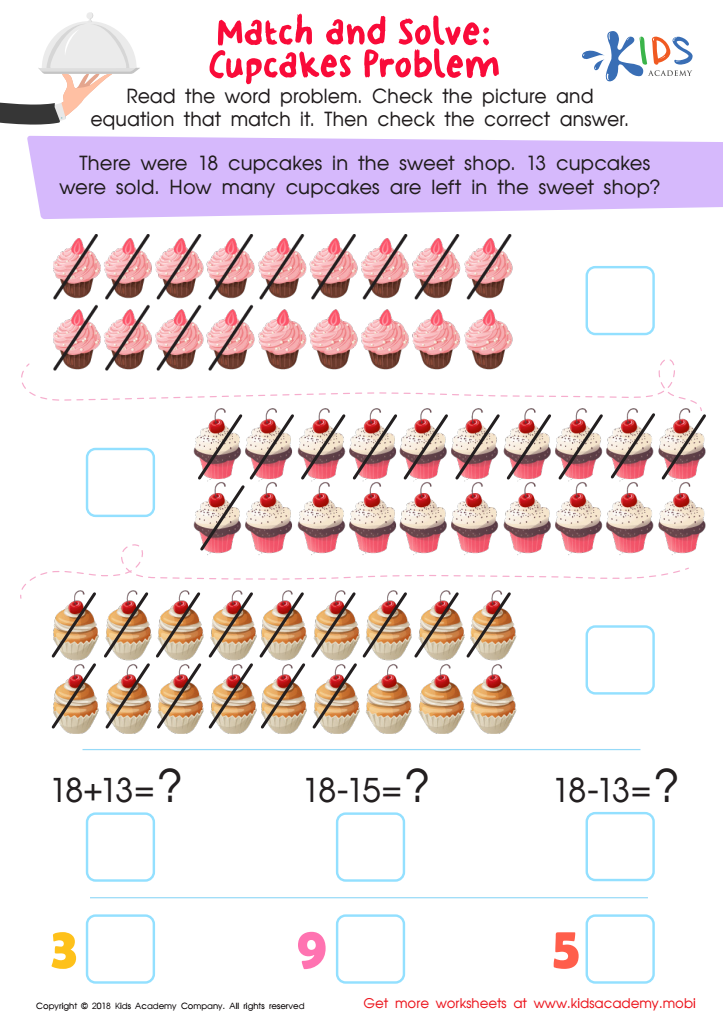
Match and Solve: Cupcakes Problem Worksheet
This math worksheet will excite your kid! Read the word problem and look at the cupcakes; the slashes mean some are being taken away. Select the picture that matches the text, then complete the equation to find the solution!
 Assign to My Students
Match and Solve: Cupcakes Problem Worksheet
Worksheet
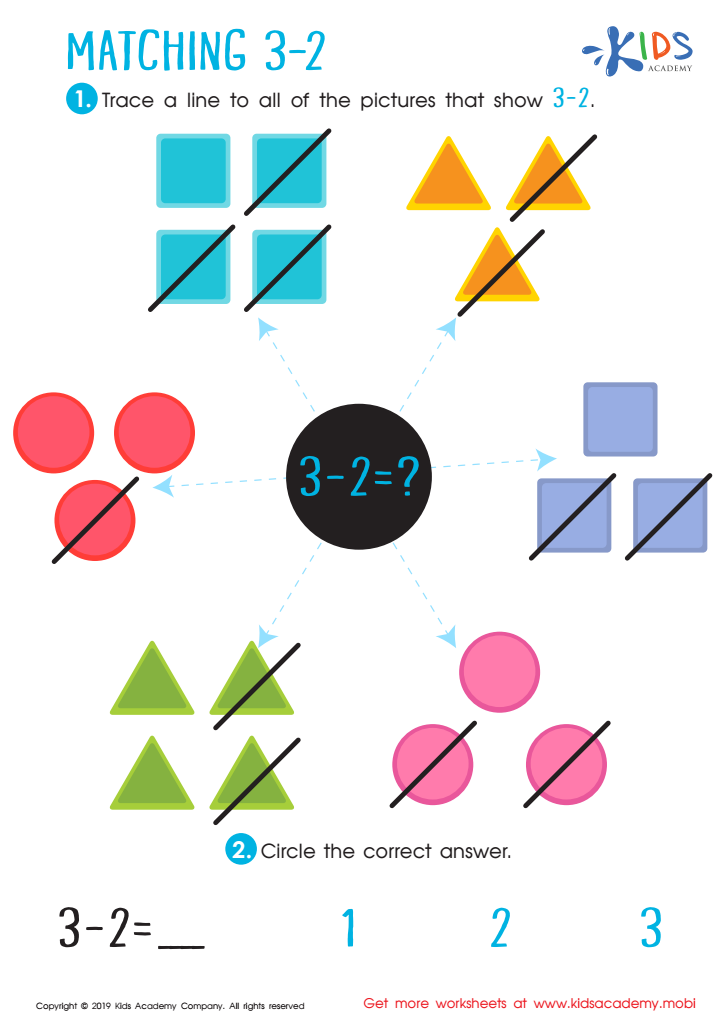
Matching 3-2 Worksheet
Subitizing is the ability to quickly identify sets of items without counting. It's a key skill for young learners to cultivate number sense. This worksheet takes it further, with 3-2=1 number sentences. Look at the sets of counters with slashes to decide which illustrate the sentence. Draw a line from the sentence in the middle to the right images to finish the page!
Matching 3-2 Worksheet
Worksheet
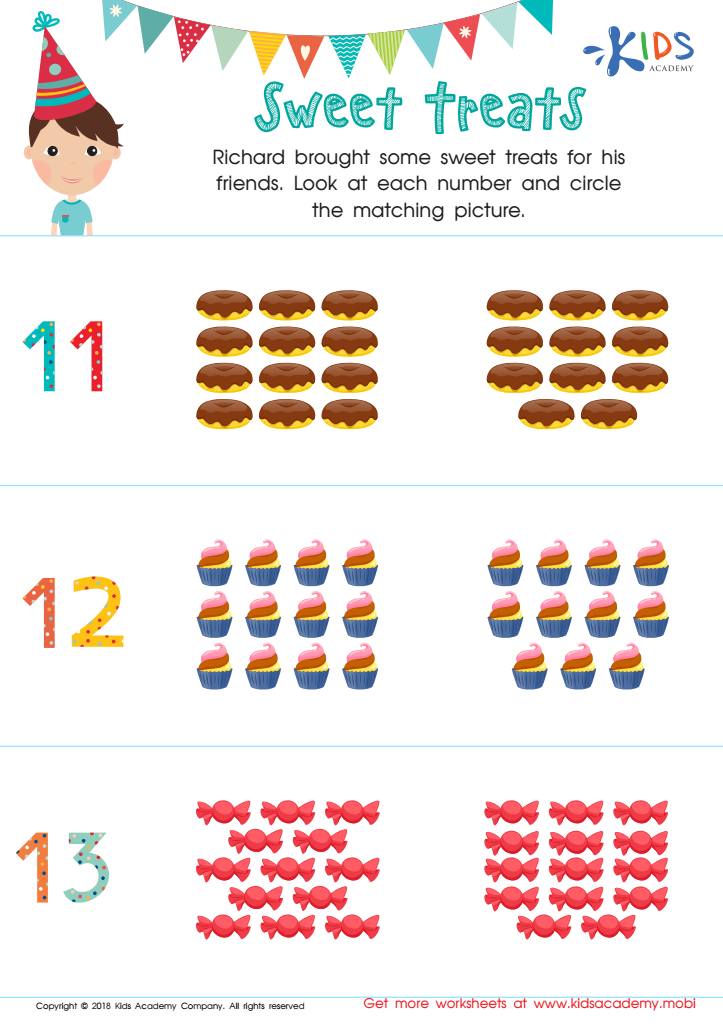
Kindergarten Math Worksheet Matching Numbers
Counting is fun with these kindergarten math worksheets! Richard brought cupcakes and candy - help your child count each treat and circle the picture that matches the number. Let the party begin!
Kindergarten Math Worksheet Matching Numbers
Worksheet
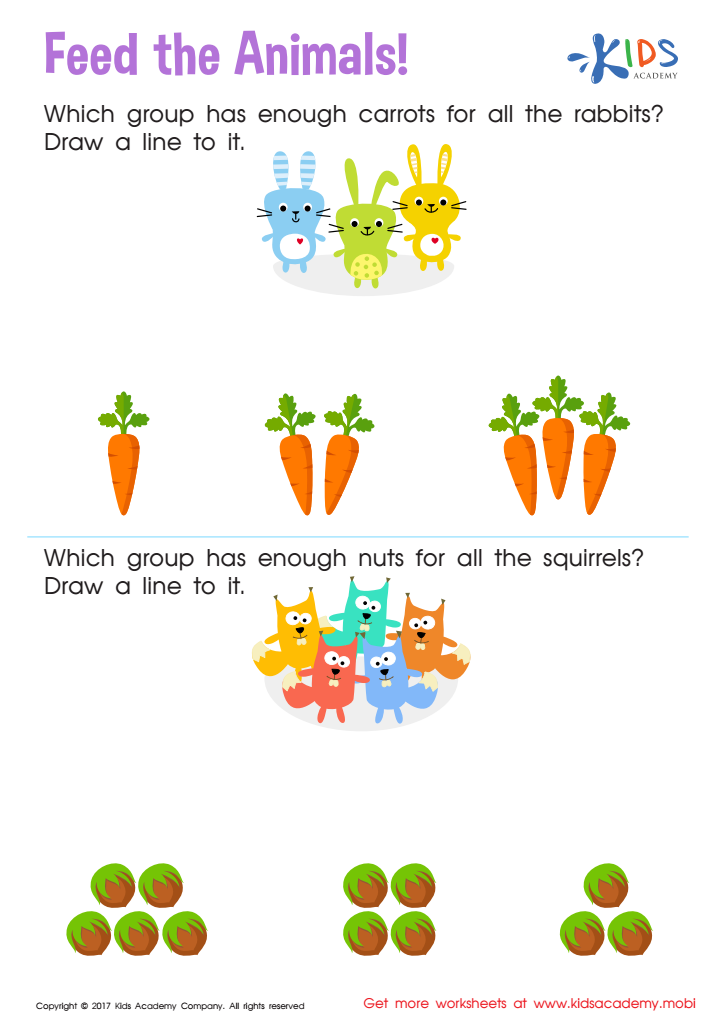
Count and Match: Feed the Animals Worksheet
Learning and growing involves more than just numbers, phonics and comparison. This Feed the Animals worksheet helps kids to exercise their reasoning skills. They must work out how many rabbits and carrots there are, and then repeat the process for the squirrels. This encourages problem solving and counting skills.
Count and Match: Feed the Animals Worksheet
Worksheet
Join Kids Academy for Free
Who is primarily going to use this learning content?








Number Matching Extra Challenge Math activities for 5-year-olds are invaluable tools that parents and teachers should invest in due to their significant developmental benefits. At this critical age, children are in a formative stage where cognitive skills, particularly in mathematics, can have far-reaching effects on their academic trajectory and overall intellectual growth. Number matching exercises engage children in recognizing numbers and understanding their sequential relationships, which forms the groundwork of numeracy.
These activities often integrate elements of fun through games or innovative puzzles, making learning an enjoyable journey rather than a mundane task. When children participate in number matching challenges, they continuously exercise their memory, attention to detail, and problem-solving abilities—a trio of cognitive skills essential for success in school and life. Moreover, encountering varied levels of challenge within these activities can build perseverance and enhance emotional resilience by teaching children to tackle difficult tasks without giving up easily.
Parents and teachers who introduce such activities are not only fostering an enthusiasm for math but also ensuring students develop a solid foundation which prevents future anxiety related to the subject. The earlier children are introduced to math in a positive, engaging manner, the more likely they are to view it favorably later in life, promoting long-term educational success and confidence.