Spelling practice Extra Challenge Missing Vowels Worksheets for Ages 6-8
3 filtered results
Difficulty Level
Grade
Age
-
From - To
Subject
Activity
Standards
Help young learners enhance their spelling skills with our Spelling Practice Extra Challenge Missing Vowels Worksheets for Ages 6-8. These engaging worksheets focus on improving vocabulary and spelling by asking children to fill in the missing vowels in different words. Perfect for kids in early grades, the exercises make learning fun and interactive. By identifying the correct vowels, children not only strengthen their vocabulary but also boost their reading skills. Designed by educational experts, our worksheets provide a delightful challenge for young minds. Download today and turn spelling practice into an entertaining and educational adventure!
Favorites
With answer key
Interactive
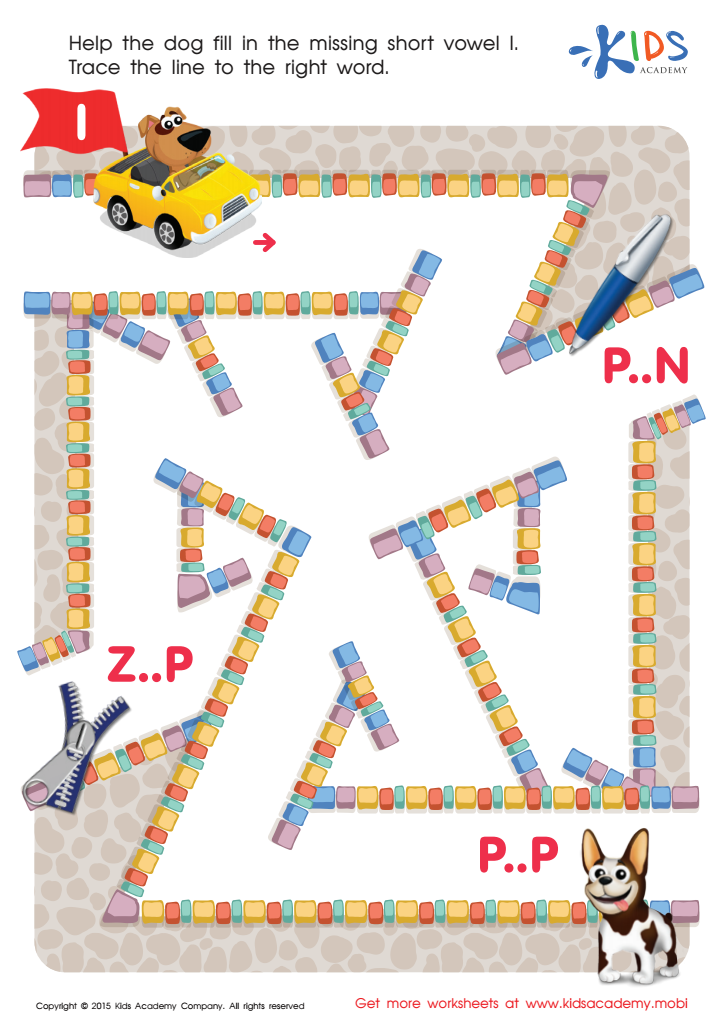
Short Vowel Sound I Worksheet
This free printable phonics worksheet will get your kid prepped for reading! It's a maze to help the dog complete the word “zip” with the missing letter I. Have your kid say the word aloud to learn the I sound. It's a great way to practice reading, writing and spelling skills. Check out here for more phonics worksheets!
 Assign to My Students
Short Vowel Sound I Worksheet
Worksheet
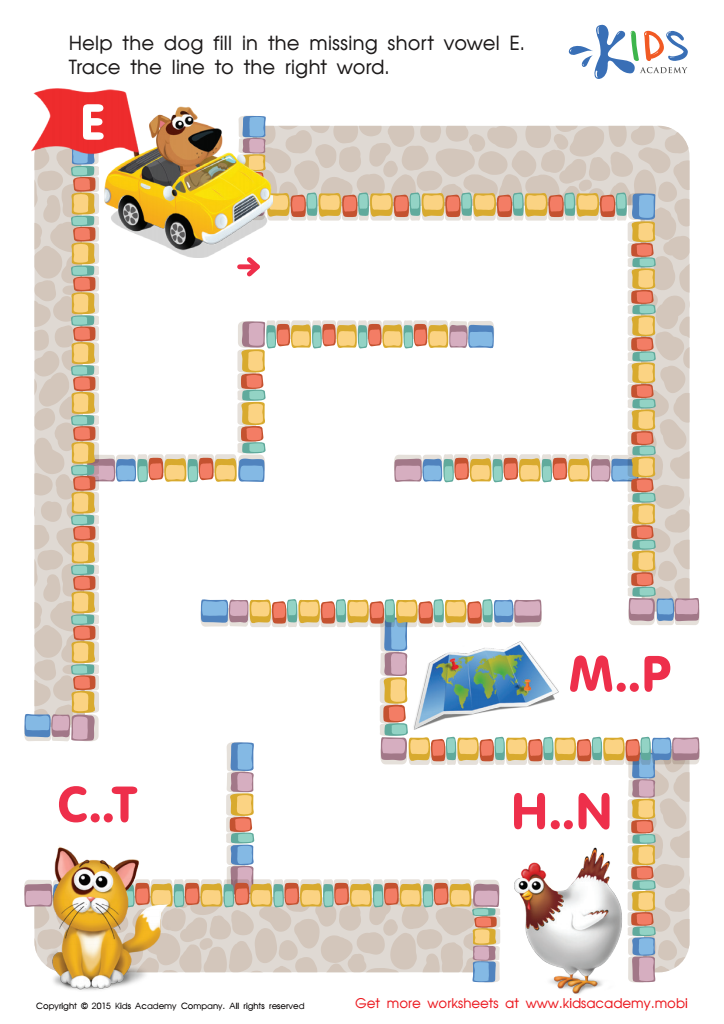
Short Vowel Sound E Worksheet
This free printable phonics worksheet helps kids learn the short vowel sound E. Kids need to help the dog complete the word “hen” by finding their way through a maze. It teaches kids to see the connection between letters and sounds and also strengthens their writing and spelling skills. Fun and educational, this phonics worksheet is great for kids. Want more? Check out here.
Short Vowel Sound E Worksheet
Worksheet
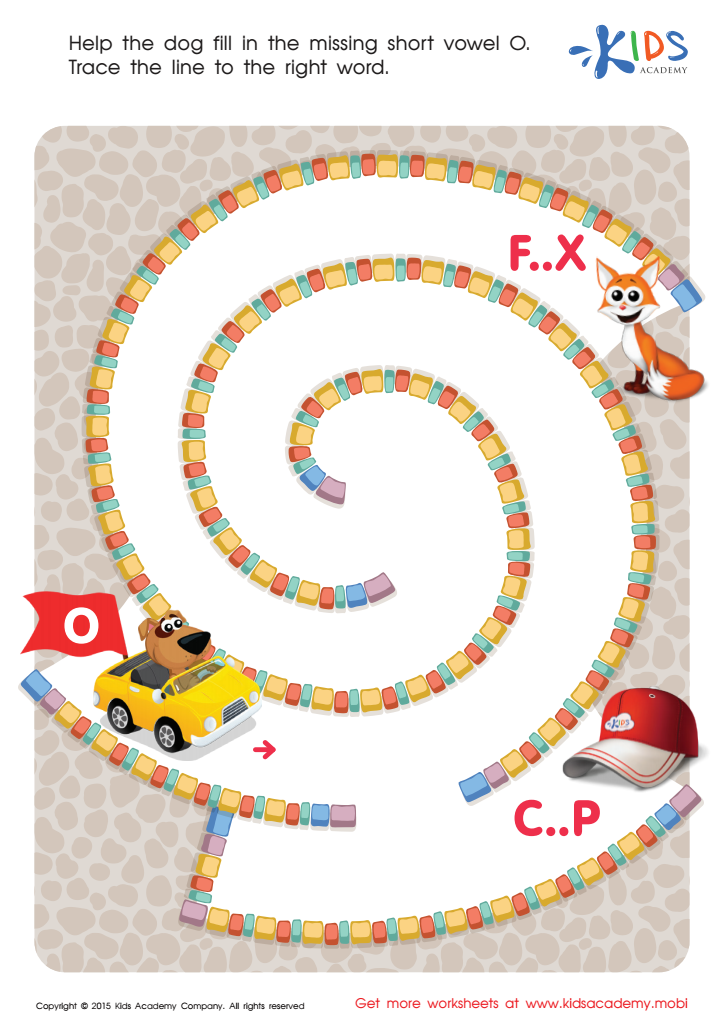
Short Vowel Sound O Worksheet
Help your child learn the short vowel sound O with this fun and free printable phonics worksheet! They'll need to complete the maze to help the dog finish the word "fox" with the missing letter O. Engage their fine motor muscles while they color or trace the maze with crayon or pencil. This educational activity is sure to bring a smile to your little learner's face! For more phonics worksheets, check here.
Short Vowel Sound O Worksheet
Worksheet
Join Kids Academy for Free
Who is primarily going to use this learning content?


Parents and teachers should place a significant emphasis on spelling practice, particularly with exercises like the Extra Challenge Missing Vowels for ages 6-8, as these foundational years are critical for literacy development. This engaging and interactive activity not only enhances spelling skills but also bolsters phonemic awareness, crucial for proficient reading and writing.
When children decipher words with missing vowels, they must rely on their understanding of phonics—the relationship between letters and sounds—which encourages the development of decoding skills. These skills are instrumental for reading fluency and comprehension.
Additionally, such challenges nurture problem-solving and critical thinking abilities. Kids learn to apply patterns and context clues to complete the words, boosting their confidence and enjoyment in learning.
Furthermore, these exercises cultivate attention to detail and reinforce the importance of accuracy, traits important both in academic environments and everyday communications. By embedding these skills early on, children are better prepared for more complex language tasks in the future.
Finally, incorporating fun and challenging spelling activities supports a multidimensional approach to education, catering to diverse learning styles and helping to create a positive, stimulating learning experience for young minds. Through attentive and engaging practice, children develop a robust linguistic foundation, setting the stage for long-term academic success.