Interpreting data Extra Challenge Graphs Worksheets for Ages 6-8
3 filtered results
-
From - To
Introduce your young learners to the world of data with our "Interpreting Data Extra Challenge Graphs Worksheets" for kids aged 6-8. These specially designed worksheets help students enhance their analytical skills by practicing how to read, interpret, and represent various graph types. Our engaging and colorful exercises include bar graphs, tally charts, and pictographs tailored to challenge young minds while making learning fun. Perfect for reinforcing classroom lessons or extra home practice, these worksheets are designed to boost your child’s confidence and proficiency in data interpretation. Equip your kids with these essential skills for their academic journey.
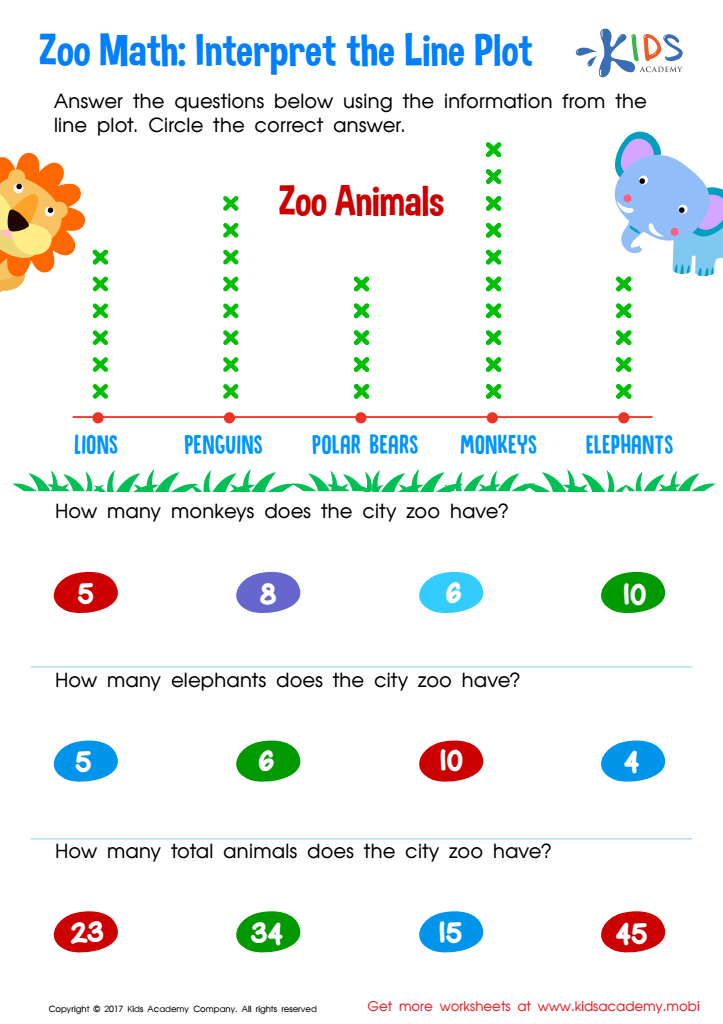
Interpret Line Plot Worksheet
 Assign to My Students
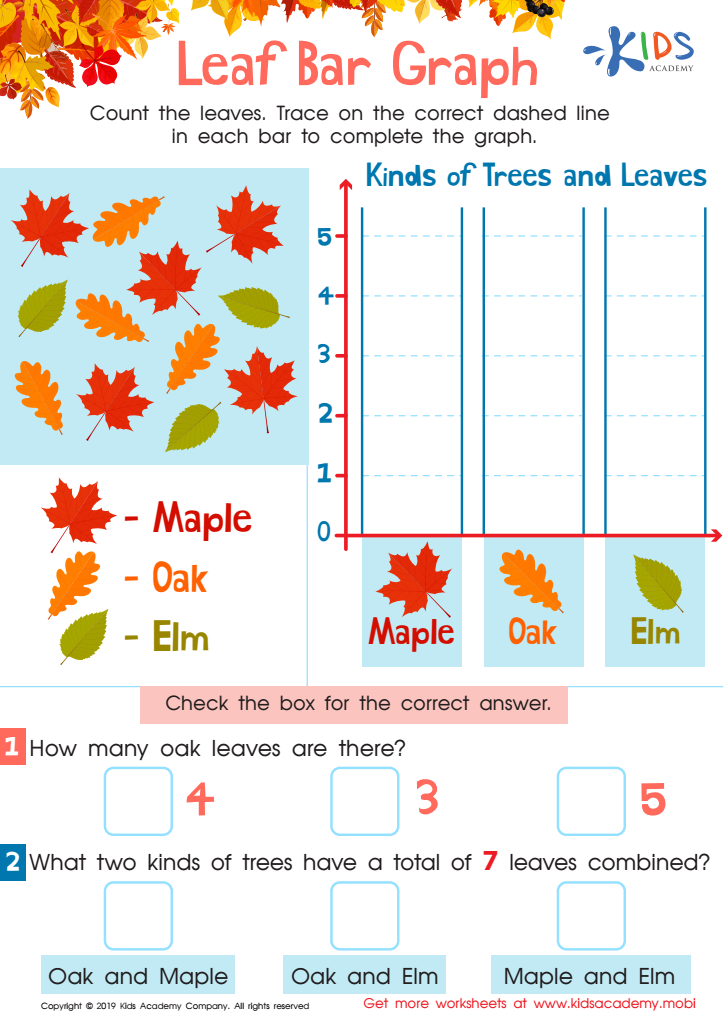
Leaf Bar Graph Worksheet
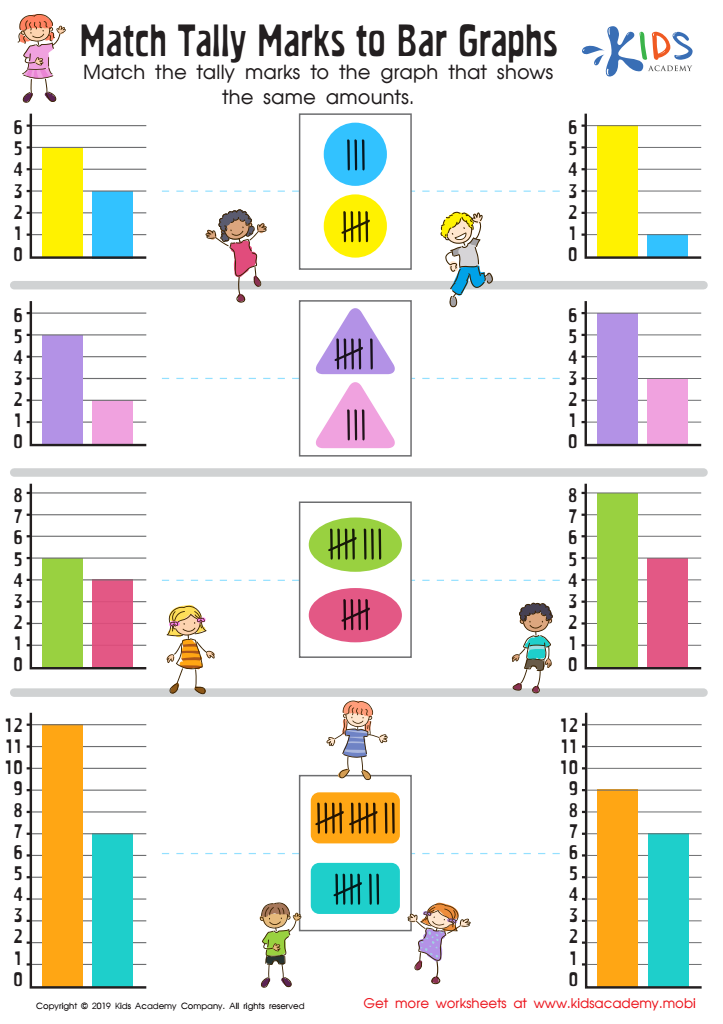
Match Tally Marks to Bar Graphs Worksheet








Understanding and interpreting data is a crucial skill for young learners aged 6-8. Interpreting data teaches children to analyze information, think critically, and make informed decisions, skills that are foundational for their academic and everyday life. Early exposure helps build these competencies gradually. When parents and teachers care about data interpretation, they encourage children to approach problems methodically, discerning patterns and relationships that boost their mathematical thinking.
Graphs provide a visual representation of numerical information, which makes the abstract concept of data more concrete and accessible to young minds. Kids naturally are visual learners, and using colorful and engaging graphs can maintain their interest while they learn critical math concepts such as counting, comparison, and basic arithmetic.
Moreover, skills gained from interpreting data extend beyond mathematics. They foster analytical thinking, enhance reading comprehension through the interpretation of data in story contexts, and lay the foundation for future learning in science, technology, engineering, and mathematics (STEM) disciplines.
Involvement from parents and teachers in these activities ensures learners receive guidance, encouragement, and real-life applications, fostering an environment where children feel more confident and competent in their abilities to interpret data. This, in turn, prepares them for more complex problem-solving tasks in higher grades.








