Alphabet Recognition Extra Challenge ABC Letters Worksheets for Ages 6-9
3 filtered results
Difficulty Level
Grade
Age
-
From - To
Subject
Activity
Standards
Unlock your child's potential with our engaging Alphabet Recognition Extra Challenge ABC Letters Worksheets, designed for ages 6-9. These worksheets provide a fun and interactive way for children to learn and master their letters, enhancing their recognition skills through varied activities. Each printable includes exciting exercises that challenge young learners to think critically while reinforcing their understanding of the alphabet. Ideal for classrooms or homeschooling, our resources cater to different learning styles, ensuring that every child stays motivated and eager to learn. Dive into an educational adventure today, and watch your child flourish with these effective worksheets!
Favorites
With answer key
Interactive

Letter A Tracing Page
Trace and write the letter "A"! Start with the big red dot, then do the capital and lowercase versions. Then write it again with two words - apple and alligator. Download more tracing worksheets at Kids Academy.
 Assign to My Students
Letter A Tracing Page
Worksheet

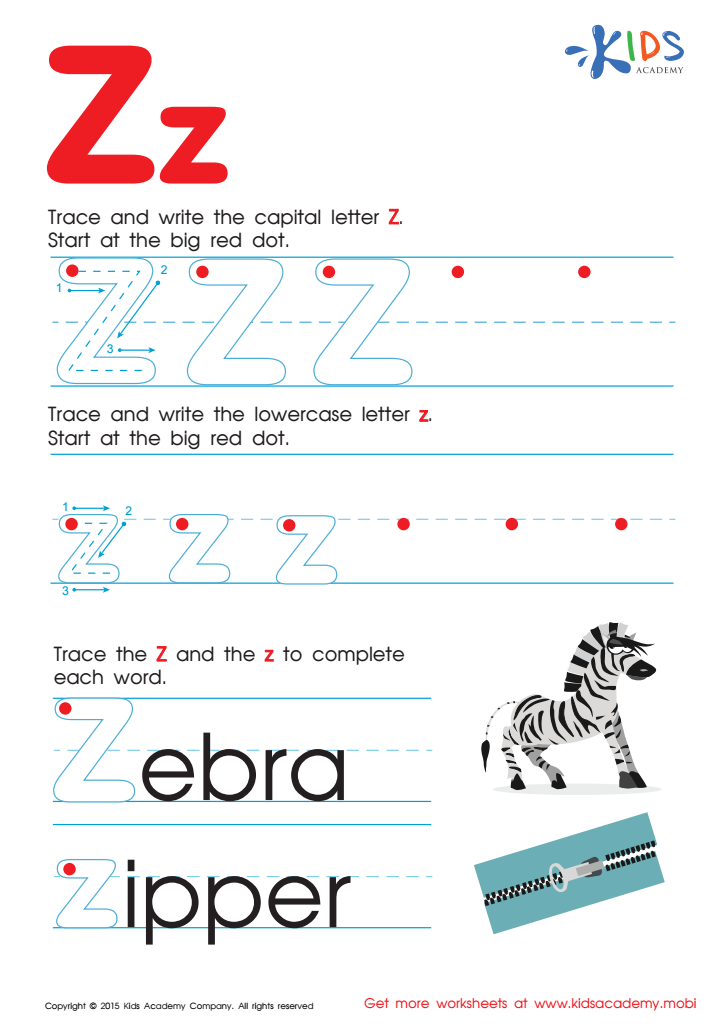
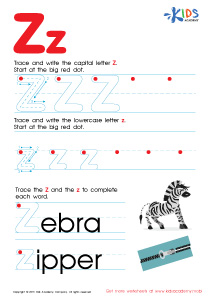
Letter Z Tracing Page
Trace and write capital "Z" and lowercase "z". Complete words "zebra" and "zipper". Be attentive and have fun! (80 words)
Letter Z Tracing Page
Worksheet
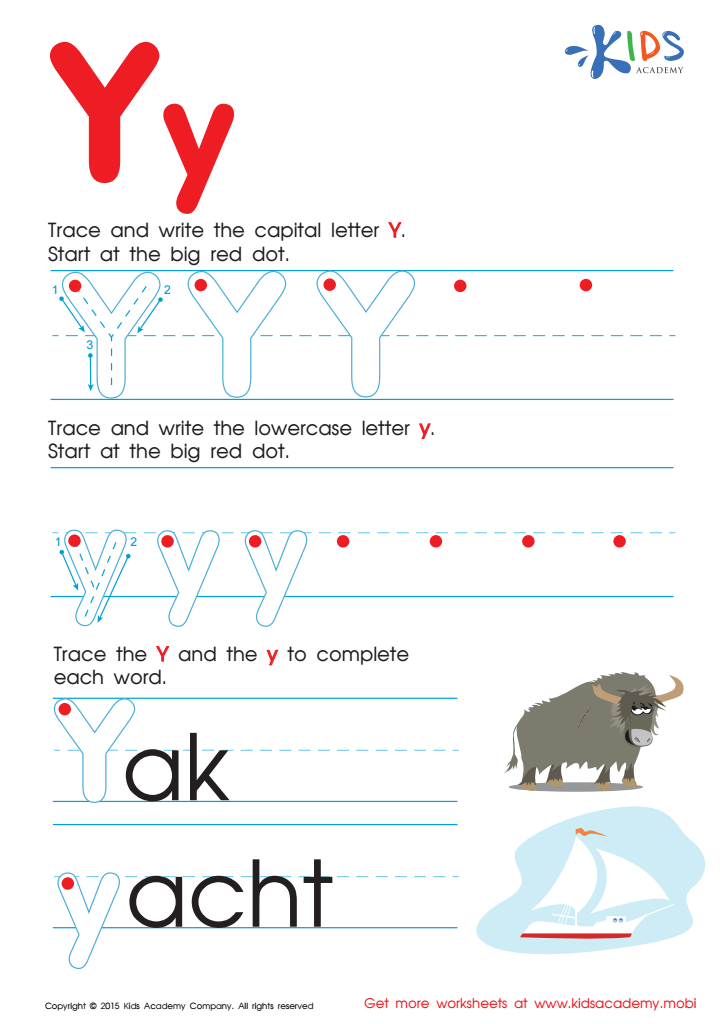
Letter Y Tracing Page
Trace the capital letter "Y" on the red dot, then trace and write the lowercase letter. Complete the words to help the Yak walk and the yacht swim. More worksheets at Kids Academy.
Letter Y Tracing Page
Worksheet
Join Kids Academy for Free
Who is primarily going to use this learning content?








Alphabet Recognition Extra Challenge ABC Letters for children aged 6-9 is a vital tool for both parents and teachers because it enhances early literacy skills that are foundational for future academic success. At this age, children are transitioning from pre-reading skills to actual reading, making it crucial to solidify their understanding of letter recognition and sounds. Engaging activities designed for this age group promote active learning and help children recognize letters in diverse contexts, aiding retention.
By fostering alphabet recognition through challenges and interactive games, children develop critical thinking and problem-solving skills. This not only makes the learning process enjoyable but also inspires a love for learning. Parents can reinforce classroom lessons at home, creating a consistent learning environment that encourages children to take ownership of their education.
Moreover, effective alphabet recognition strategies contribute to improved reading abilities, better vocabulary, and enhanced communication skills—critical components for academic achievement across subjects. For teachers, tailored interventions can identify children who may need extra support, allowing for timely assistance to prevent gaps in learning. Ultimately, engaging children in playful learning fosters their holistic development and builds the confidence they need to succeed in their educational journeys.