Alphabet Recognition Extra Challenge Alphabet Worksheets for Ages 6-9
3 filtered results
Difficulty Level
Grade
Age
-
From - To
Subject
Activity
Standards
Boost your child's alphabet skills with our engaging Alphabet Recognition Extra Challenge Worksheets, designed for ages 6-9! These expertly crafted worksheets from Kids Academy offer advanced activities to reinforce letter recognition, sequencing, and writing. Perfect for young learners ready for a challenge, our worksheets combine fun with education through captivating graphics and varied exercises. Whether your child is mastering uppercase and lowercase letters or honing alphabet sequencing, these worksheets provide a comprehensive, exciting experience. Ideal for use at home or in the classroom, help your child excel and build confidence with our Alphabet Recognition Extra Challenge Worksheets!
Favorites
With answer key
Interactive
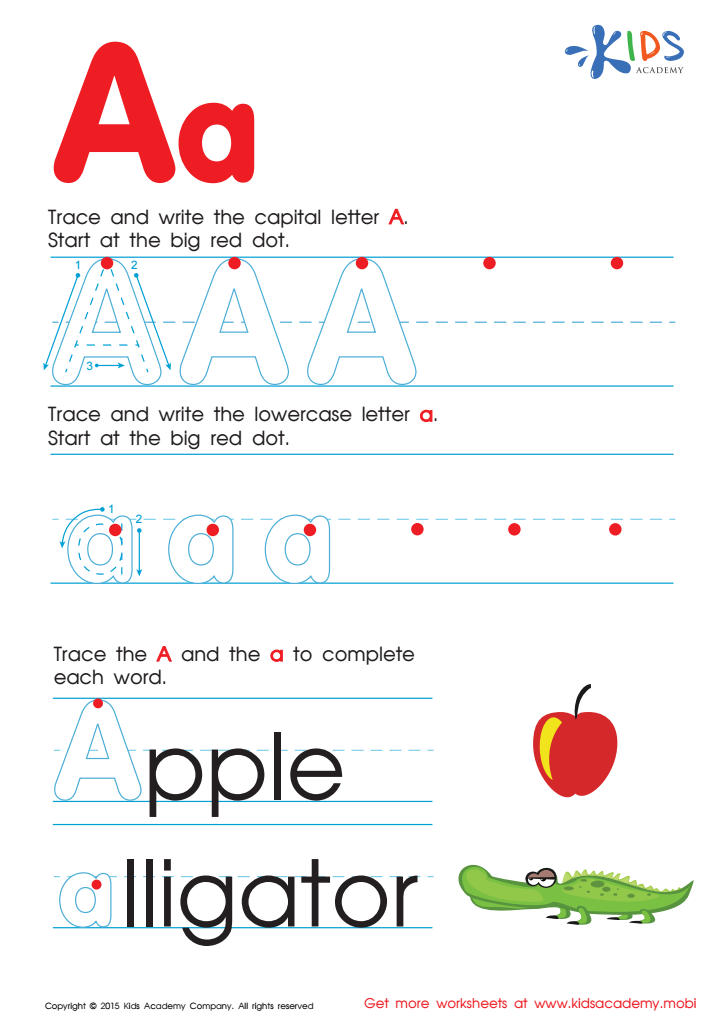
Letter A Tracing Page
Trace and write the letter "A"! Start with the big red dot, then do the capital and lowercase versions. Then write it again with two words - apple and alligator. Download more tracing worksheets at Kids Academy.
 Assign to My Students
Letter A Tracing Page
Worksheet
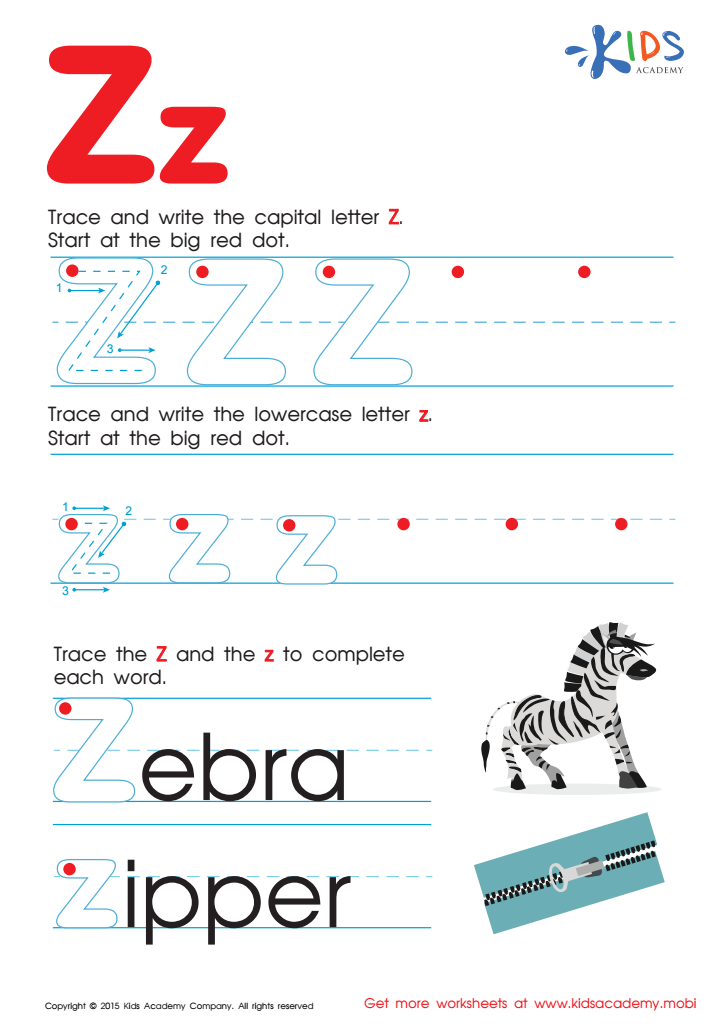
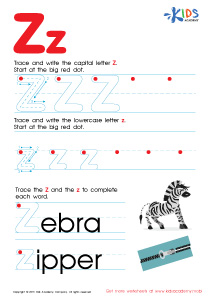
Letter Z Tracing Page
Trace and write capital "Z" and lowercase "z". Complete words "zebra" and "zipper". Be attentive and have fun! (80 words)
Letter Z Tracing Page
Worksheet
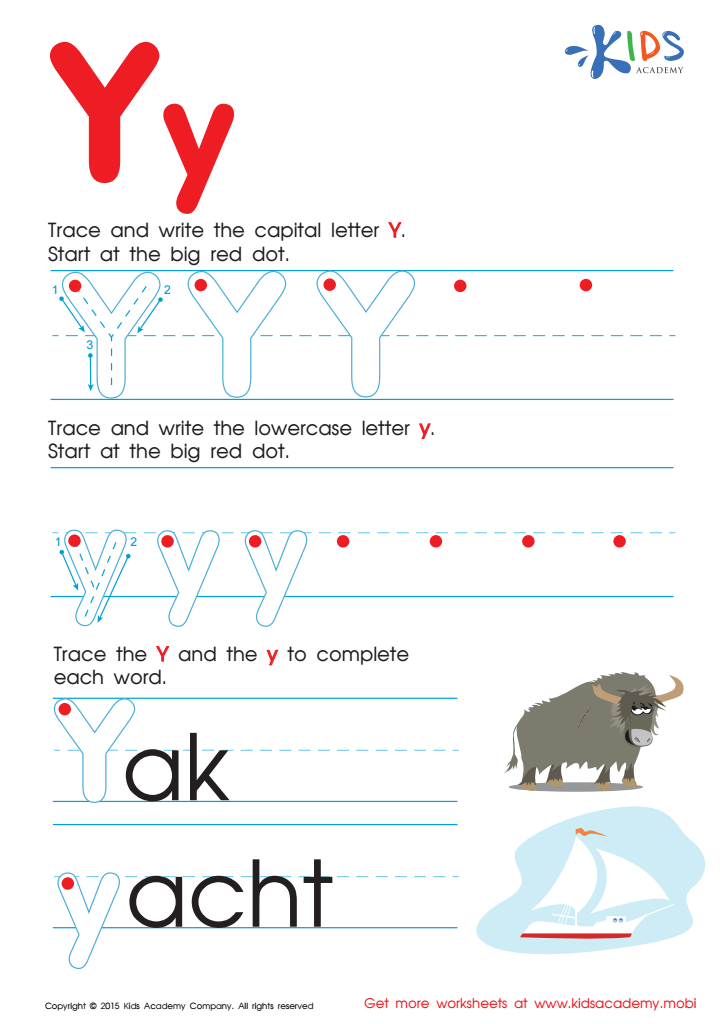
Letter Y Tracing Page
Trace the capital letter "Y" on the red dot, then trace and write the lowercase letter. Complete the words to help the Yak walk and the yacht swim. More worksheets at Kids Academy.
Letter Y Tracing Page
Worksheet
Join Kids Academy for Free
Who is primarily going to use this learning content?






.jpg)
Alphabet Recognition Extra Challenges are crucial for children aged 6-9 because they build foundational literacy skills, which serve as the gateway to all future learning. At this developmental stage, children's brains are highly receptive to language acquisition, meaning they can more readily grasp and retain fundamental principles of reading and writing.
For parents and teachers, focusing on alphabet recognition ensures kids can differentiate between letters, understand letter sounds, and begin combining letters to form words. Mastery of the alphabet is directly tied to a child's ability to read fluently and with comprehension later on. By engaging in these extra challenges, children can advance beyond mere recognition to understanding alphabetical order and developing phonemic awareness, amplifying their abilities to decode new words quickly.
Furthermore, fun and engaging alphabet challenges enhance cognitive skills like memory, focus, and problem-solving. These activities often employ games, visuals, and hands-on experiences that make learning enjoyable and more effective. In sum, investing time in Alphabet Recognition Extra Challenges is investing in a child's educational journey, offering them the skills they need to succeed academically and fostering a lifelong love for learning.