Addition Practice Extra Challenge Worksheets for Ages 6-9 - Page 2
25 filtered results
-
From - To
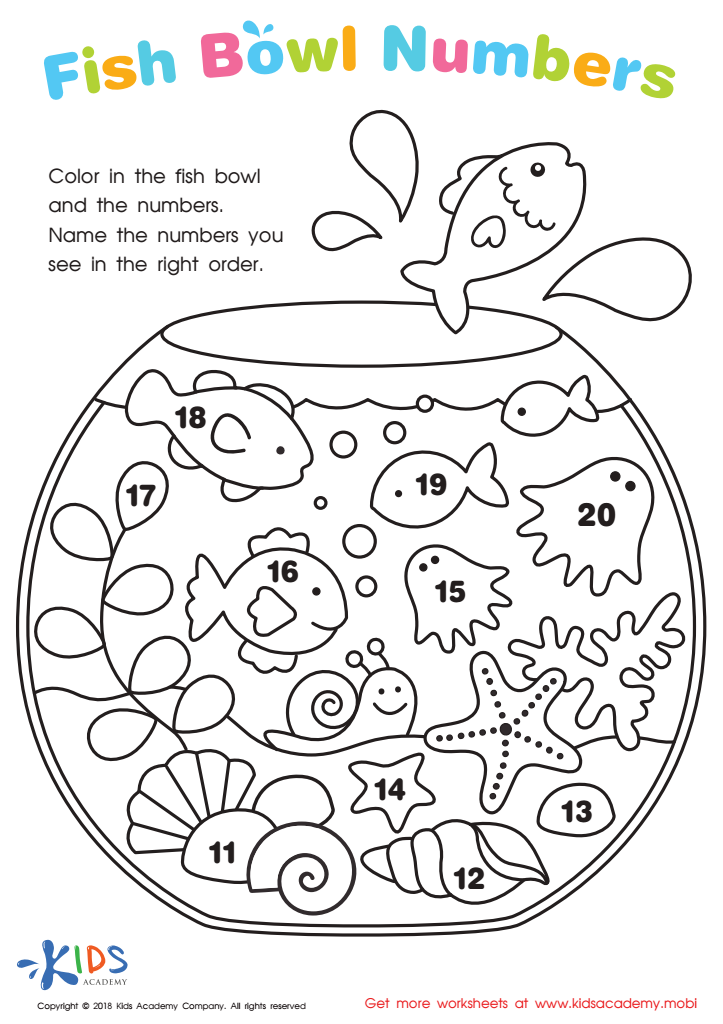
Fish Bowl Numbers Worksheet
 Assign to My Students







Encouraging children aged 6-9 to engage in addition practice and taking on extra challenges can have a transformative impact on their mathematical development and overall cognitive growth. At this formative stage, their brains are highly receptive to building foundational skills, and adding additional layers of complexity can greatly enhance their learning experience.
Firstly, mastering addition is a critical building block for all future mathematical concepts. Early competence in addition contributes to better understanding and quicker learning of more advanced operations such as subtraction, multiplication, and division. When children are challenged to go beyond basic addition, they develop problem-solving skills, logical reasoning, and numerical fluency. These activities nurture their ability to think critically and approach problems methodically.
Moreover, engaging in additional practice sharpens their focus and concentration, abilities that are essential across all areas of learning—including reading, writing, and beyond. Extra challenges can help foster a growth mindset, teaching children that effort and persistence improve their abilities, thus nurturing perseverance and resilience.
Importantly, when parents and teachers emphasize the importance of addition practice, they send a powerful message about valuing education and lifelong learning. Positive reinforcement from adults can bolster self-confidence, making children more willing to tackle new challenges and thus benefiting their overall academic journey. Therefore, investing in rigorous addition practice for young learners paves the way for a confident and capable mathematical mind.








