Basic counting skills Extra Challenge Worksheets for Ages 6-9
4 filtered results
-
From - To
Enhance your child's counting abilities with our "Basic Counting Skills Extra Challenge Worksheets" designed for ages 6-9. These engaging worksheets aim to provide an additional layer of challenge, helping young learners strengthen their numerical understanding and improve their problem-solving skills. Each worksheet is carefully crafted to boost their confidence while making learning fun and interactive. Perfect for mastering basic counting and moving on to more advanced concepts, our resources ensure your child’s progress. Ideal for classroom or home practice, these activities offer a fantastic supplement to your educational toolkit. Try them out today and watch your child excel!
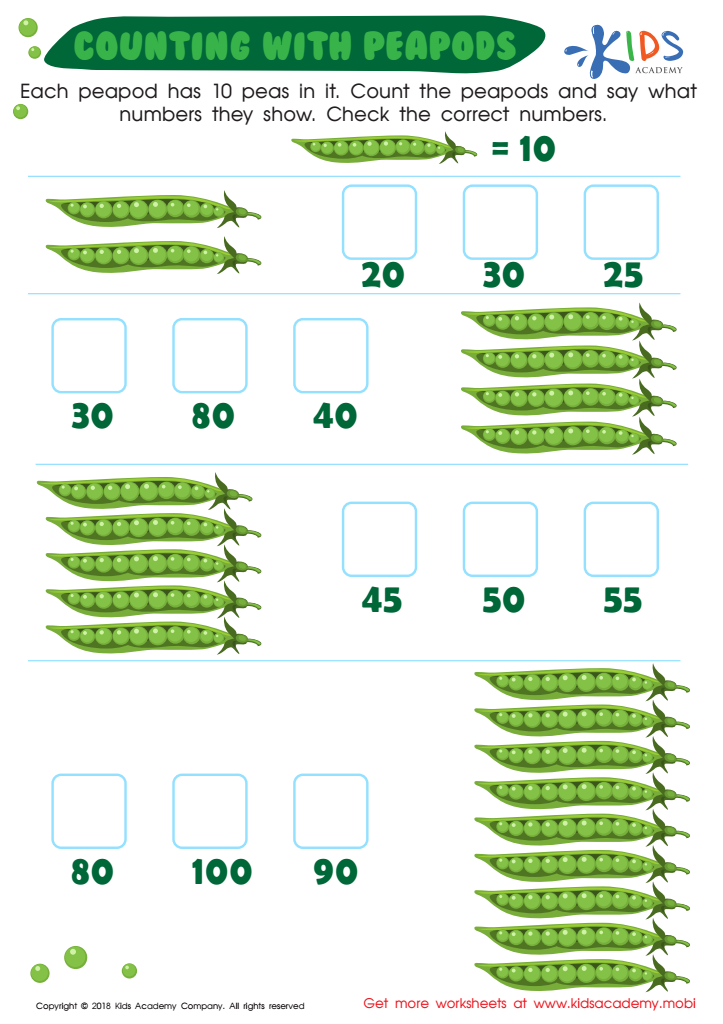
Number Worksheet: Counting With Peapods
 Assign to My Students
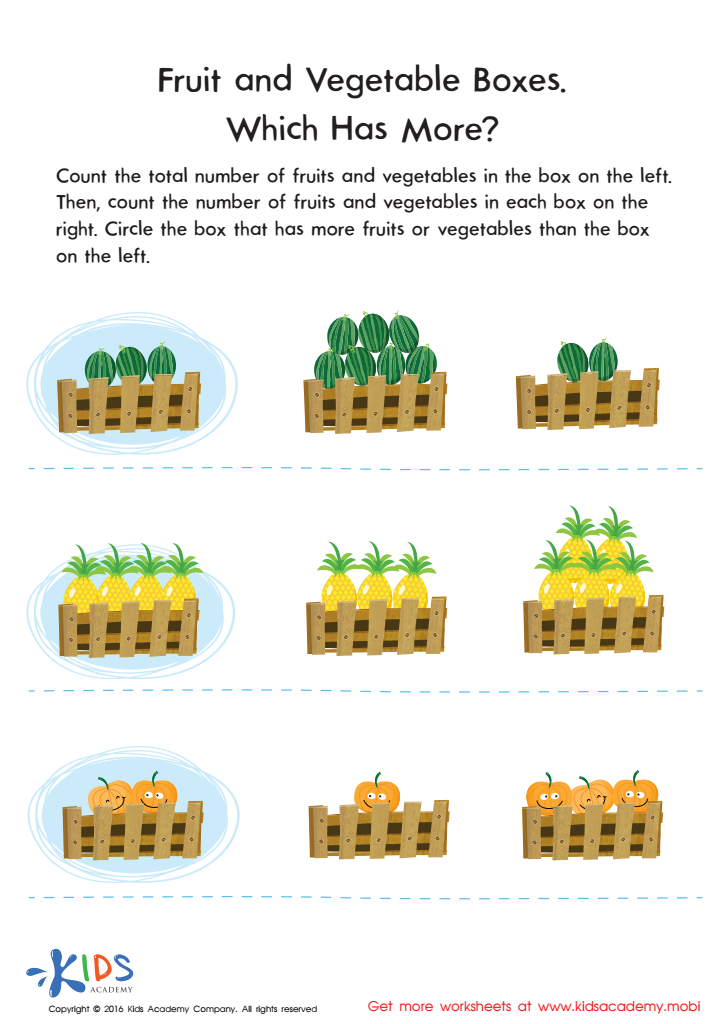
Which Has More? Size Worksheet
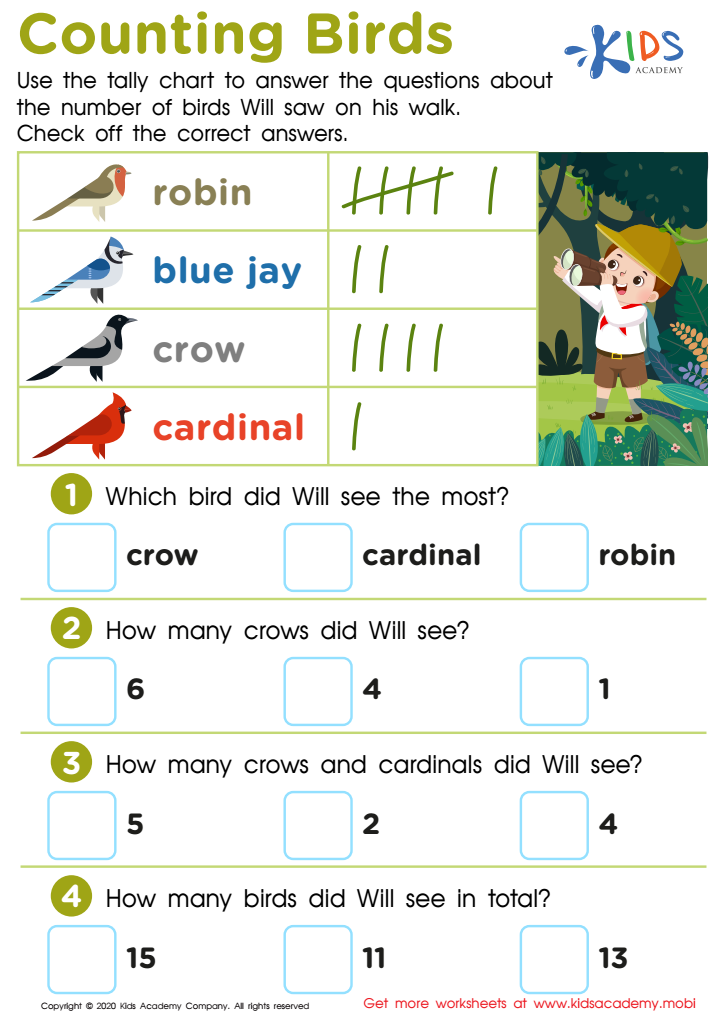
Counting Birds Worksheet
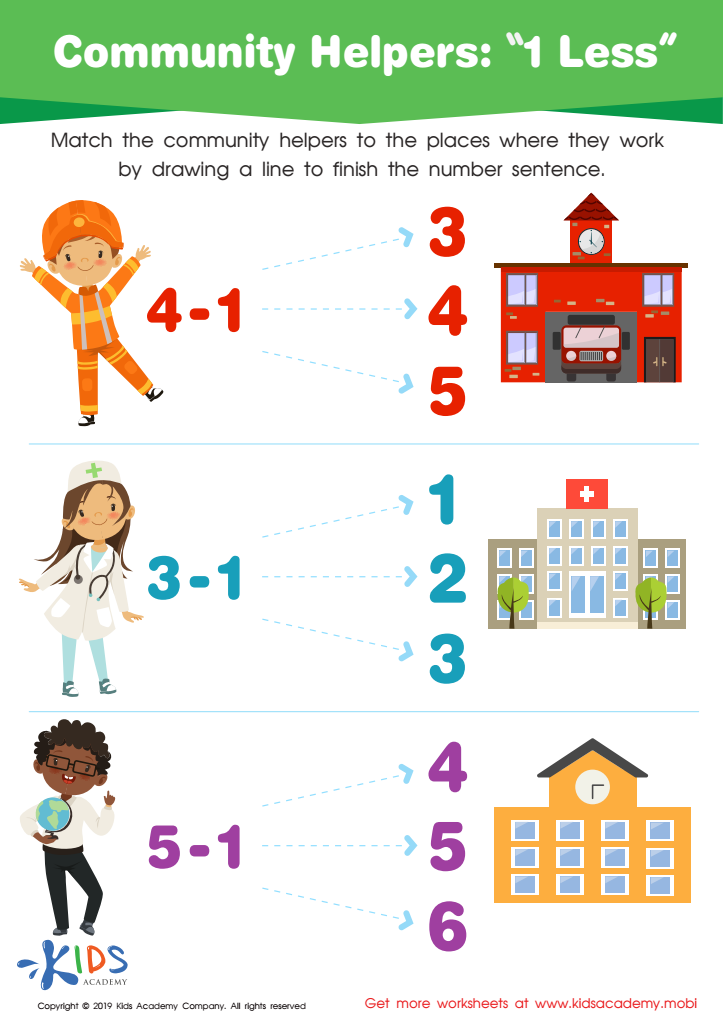
Community Helpers: 1 less Worksheet








Basic counting skills are foundational for children aged 6-9 as they form the essential building blocks for all future mathematics learning. This age period is critical for cognitive development, where children transition from recognizing numbers, to grasping more complex math concepts such as addition, subtraction, and eventually multiplication and division. Ensuring that children are not only exposed to counting but also challenged to improve these skills through extra tasks can solidify their understanding and make math a more intuitive subject.
Extra challenges encourage critical thinking, problem-solving, and logical reasoning. When children encounter problems that push their counting abilities, they learn persistence and resilience—key life skills that extend beyond mathematics. These challenges can enhance self-esteem as children overcome difficulties and experience the joy of mastering a new skill.
Moreover, advanced counting activities promote attentive focus and foster an inquisitive mindset. They prepare children for more rigorous academic subjects ahead, boosting overall academic success. Additionally, a solid grasp of counting aids in daily activities, such as telling time and handling money, fostering independence and practical life skills.
Teachers and parents caring about these early competencies can provide an enriched learning environment, making math a positive experience paving the way for a lifetime of confidence and success in the subject.








