
Basic counting skills Extra Challenge Math Worksheets for Ages 6-9
4 filtered results
Difficulty Level
Grade
Age
-
From - To
Subject
Activity
Standards
Enhance your child's math abilities with our "Basic Counting Skills: Extra Challenge Math Worksheets for Ages 6-9." These printable worksheets are designed to help young learners solidify their counting skills through engaging and increasingly challenging tasks. Perfect for kids who have mastered counting basics and are ready to take their abilities to the next level, our worksheets make learning fun and effective. From skip counting and number patterns to more complex problems, this series supports mathematical growth and confidence. Download now and watch your young mathematician excel!
Explore more here: Kids Academy Basic Counting Skills Worksheets
Favorites
With answer key
Interactive
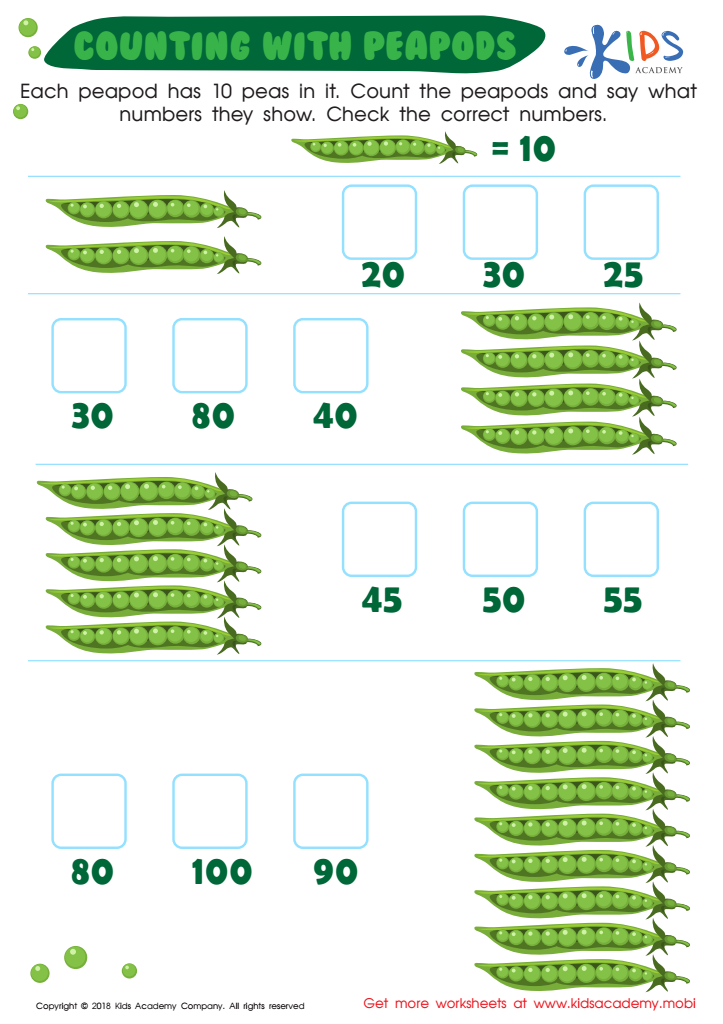
Number Worksheet: Counting With Peapods
Help your child learn multiplication and develop their place value skills in a fun way with this number worksheet: Counting with Peapods! Each pod has 10 peas, and kids can simply count each one and add a zero to the ones place to get the answer. It's a great, colorful way to learn!
 Assign to My Students
Number Worksheet: Counting With Peapods
Worksheet
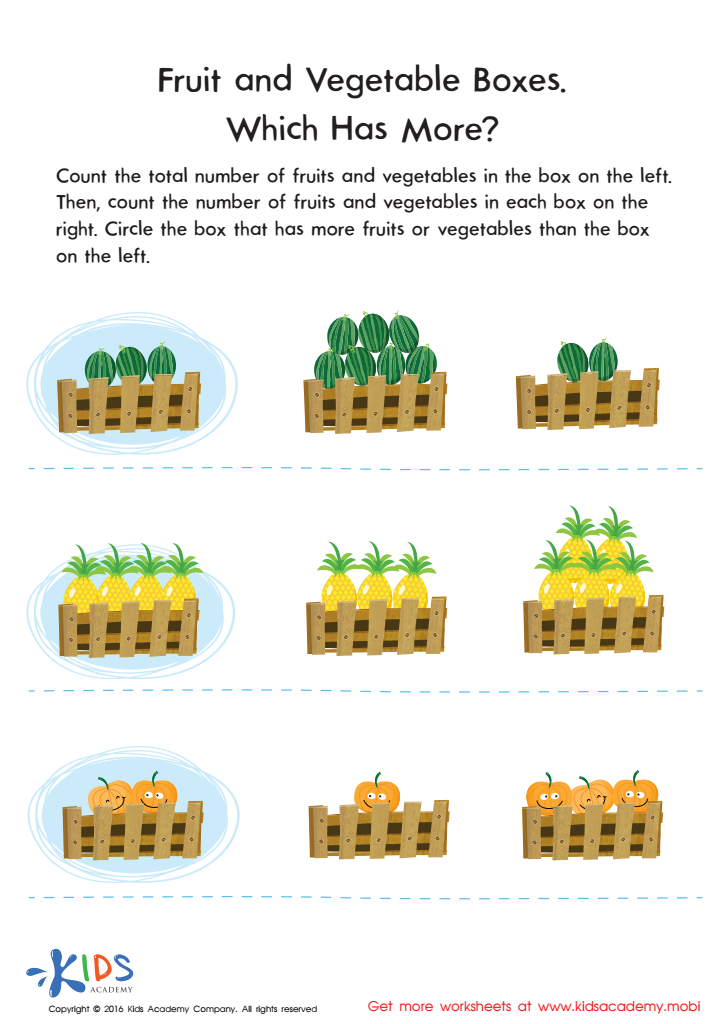
Which Has More? Size Worksheet
This worksheet is perfect for your child to practice critical thinking and logical reasoning. Your child will count and compare the fruits and veggies in the crates to decide which one has more. They will use complex cognitive skills and practice following precise rules. Guide them through the directions and help keep their focus, while enjoying the images.
Which Has More? Size Worksheet
Worksheet
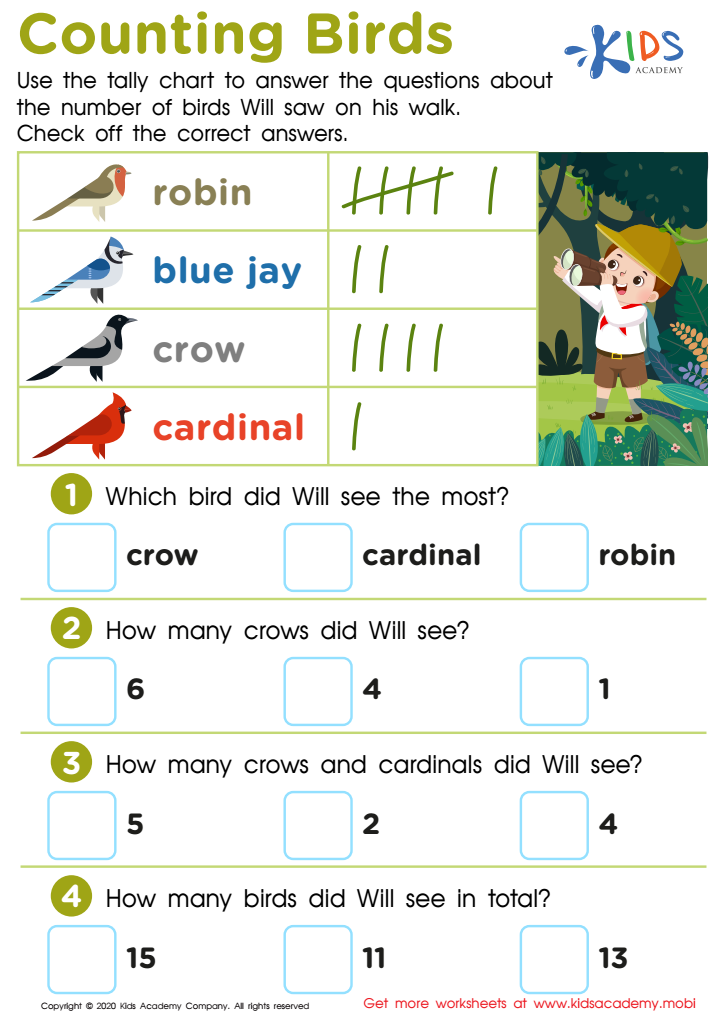
Counting Birds Worksheet
Introduce your child to the exciting activity of bird watching! This PDF worksheet features a tally chart of the different types of birds Will saw on his walk. Have your kid use the tally chart to organize information and use it to answer the questions that follow, thus boosting early science and math skills.
Counting Birds Worksheet
Worksheet
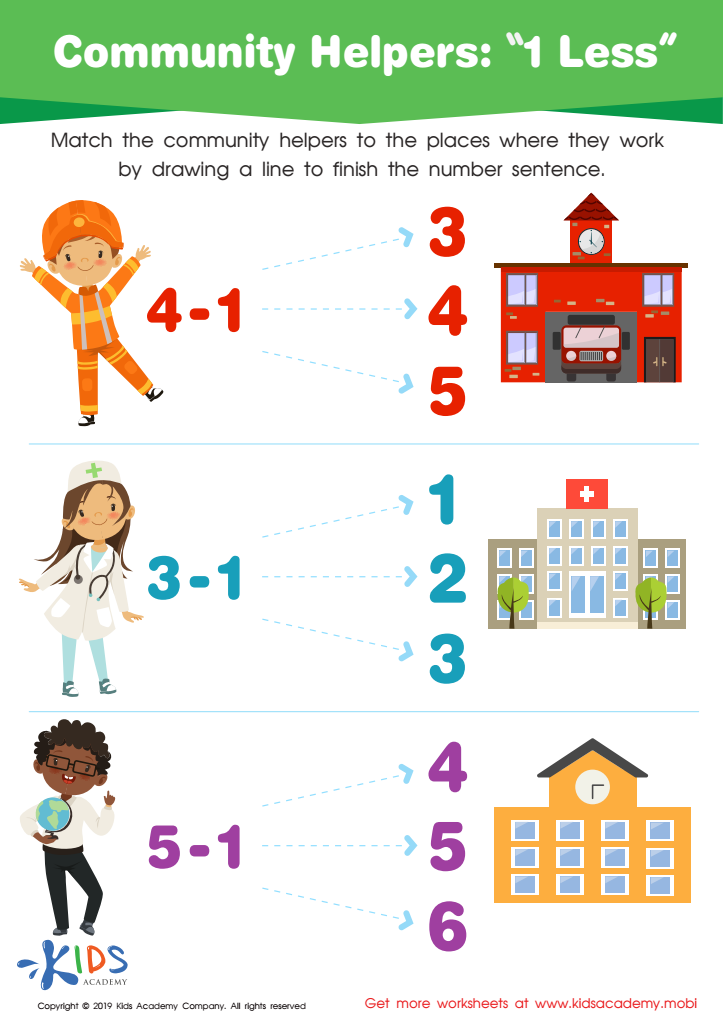
Community Helpers: 1 less Worksheet
Look at this worksheet with your child and ask them to identify the different community helpers. Match them to the places where they work by drawing a line to finish the number sentence. This helps them identify the people that help keep the community organized and running smoothly. Examples of community helpers include doctors, police officers, firefighters, teachers, etc.
Community Helpers: 1 less Worksheet
Worksheet
Join Kids Academy for Free
Who is primarily going to use this learning content?








Basic counting skills are foundational for children's overall mathematical development and future academic success. For ages 6-9, incorporating an extra challenge in math, such as advanced counting exercises, is especially beneficial. At this stage, children are transitioning from concrete to more abstract thinking, and enhanced counting activities can foster essential cognitive skills like problem-solving, logical thinking, and memory.
Challenging counting exercises help develop a deeper understanding of number concepts and relationships, enabling children to handle more complex math operations with ease as they progress. By introducing tasks that push their boundaries, we encourage perseverance and adaptability, traits that are crucial for tackling academic challenges.
Extra challenge math activities also keep children engaged and excited about learning by transforming counting from a routine task into an intellectually stimulating experience. This positive engagement is pivotal for fostering a love for math and building confidence. For parents and teachers, observing how children handle these challenges provides valuable insights into their strengths and areas needing support, which helps tailor teaching strategies to better meet individual learning needs.
Therefore, investing time in advanced counting challenges not only fortifies basic math skills but also sets the foundation for a resilient and inquisitive approach to learning that benefits children well beyond their early school years.








