Understanding graphs Extra Challenge Math Worksheets for Ages 6-9
3 filtered results
-
From - To
Unlock your child's mathematical potential with our "Understanding Graphs Extra Challenge Math Worksheets" designed specifically for ages 6-9. These engaging worksheets provide a fun yet educational way to develop critical graphing skills. Through a variety of stimulating activities, young learners will enhance their ability to interpret and create different types of graphs, fostering analytical thinking and problem-solving abilities. Tailored for early grade students, these extra challenges help reinforce their classroom learning while keeping them entertained. Watch as your child becomes a confident grapher and matures into a math-savvy individual! Perfect for home or classroom use—let the learning begin!
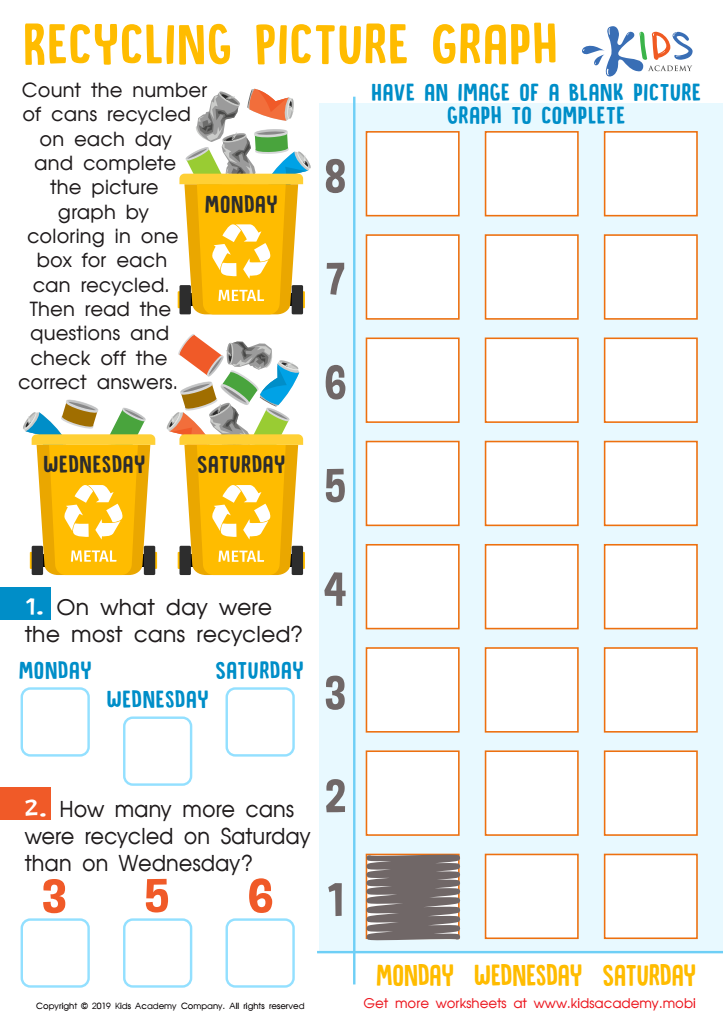
Recycling Picture Graph Worksheet
 Assign to My Students
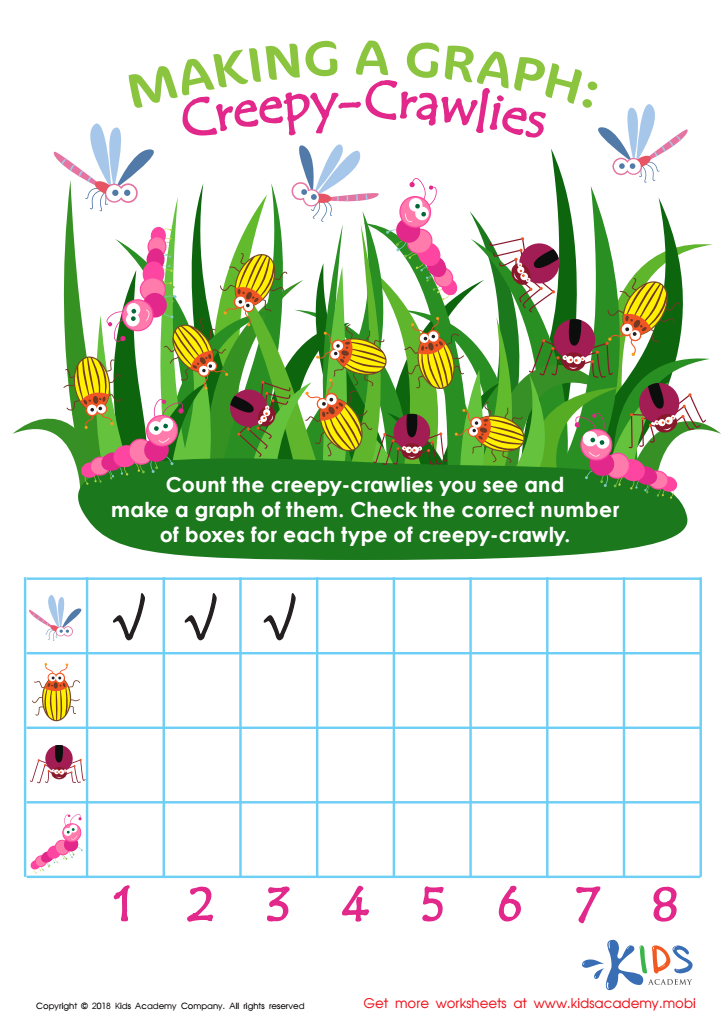
Making a Graph: Creepy Crawlies Worksheet
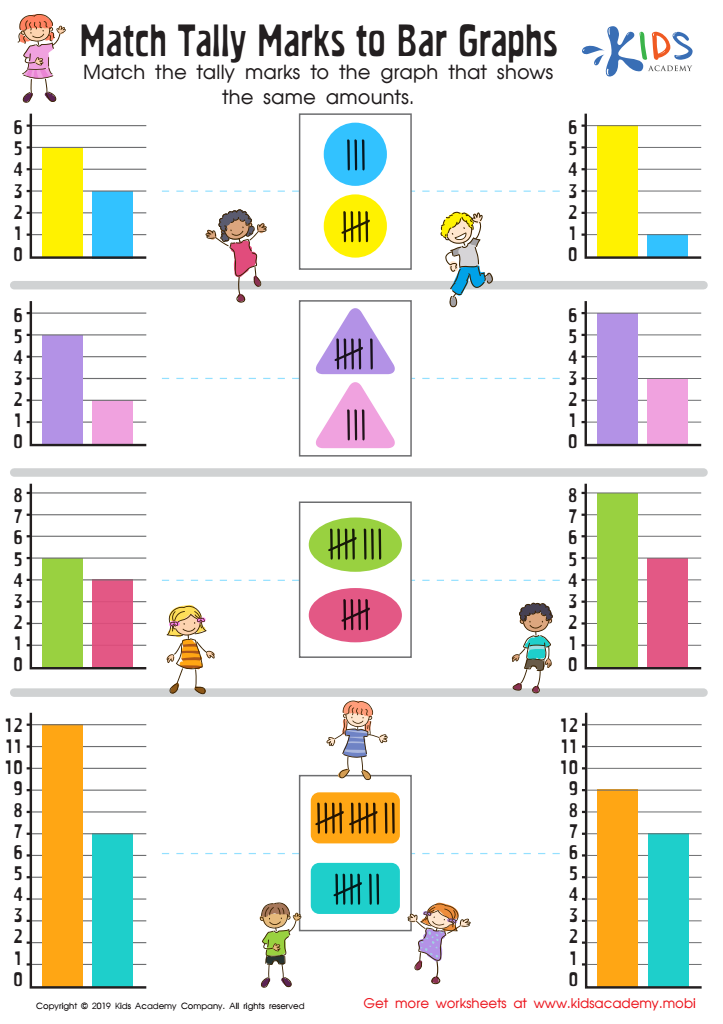
Match Tally Marks to Bar Graphs Worksheet








Understanding graphs is a fundamental skill for children aged 6-9, and parents or teachers should prioritize it for several reasons. First, graphs are a common way to visually represent data, making complex information easier to comprehend. When children learn to interpret graphs, they gain valuable skills in critical thinking and analysis, enabling them to draw conclusions from visual information. This is essential for developing an early appreciation for math and science.
Moreover, understanding graphs fosters a child’s ability to communicate their findings effectively. In an era where data-driven decisions are increasingly prevalent, equipping young learners with graph literacy enhances their future academic and professional opportunities. Additionally, graphing activities can reinforce concepts of addition, subtraction, and comparisons, aligning with various math curricula and helping to build a solid foundation for more advanced topics later on.
Engaging children in graph-related activities nurtures curiosity and encourages exploration, motivating them to ask questions and seek answers through data analysis. Whether mapping daily temperatures, election results, or sports statistics, these real-world applications make learning math engaging and relevant. By investing time in teaching graph comprehension, parents and teachers empower children to navigate an increasingly data-oriented world.








