Shape Recognition Extra Challenge Matching Worksheets for Ages 6-9
3 filtered results
-
From - To
Enhance your child's shape recognition skills with our "Shape Recognition Extra Challenge Matching Worksheets" designed for ages 6-9. These engaging, interactive worksheets provide a fun way for young learners to identify, compare, and match various shapes. The activities reinforce critical thinking and problem-solving skills while promoting visual discrimination in shapes. With a variety of exciting challenges, children will enjoy the learning process as they progress through each worksheet, boosting their confidence in math concepts. Ideal for home or classroom use, these worksheets like puzzles that make shape learning both enjoyable and effective. Download now and watch your child's skills soar!
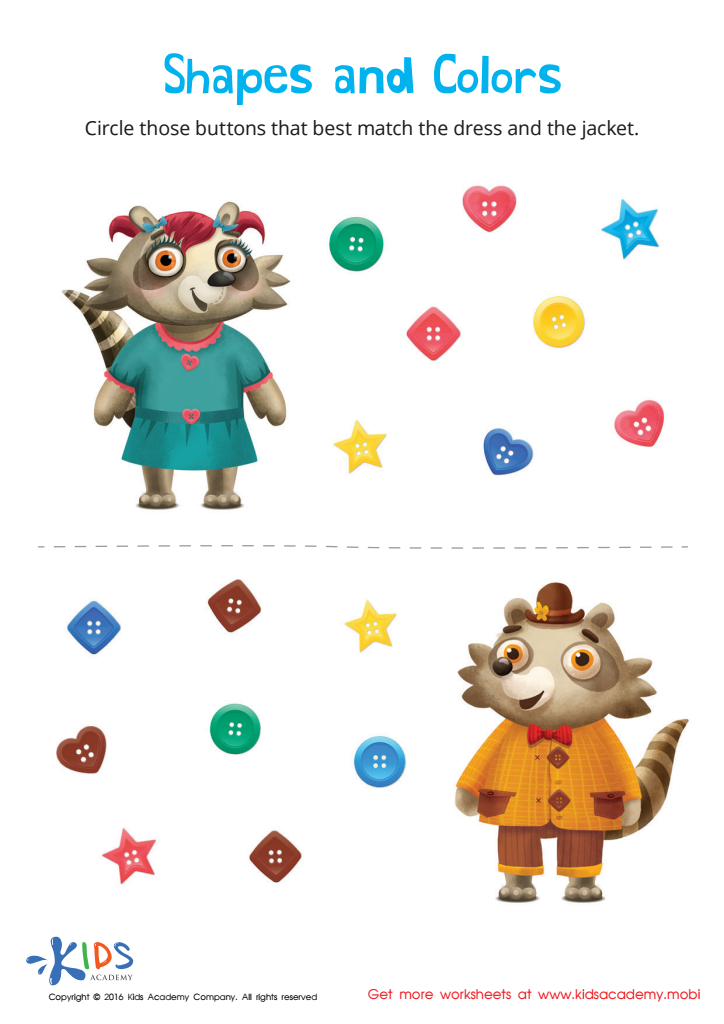
Matching: Shapes and Colors Worksheet
 Assign to My Students
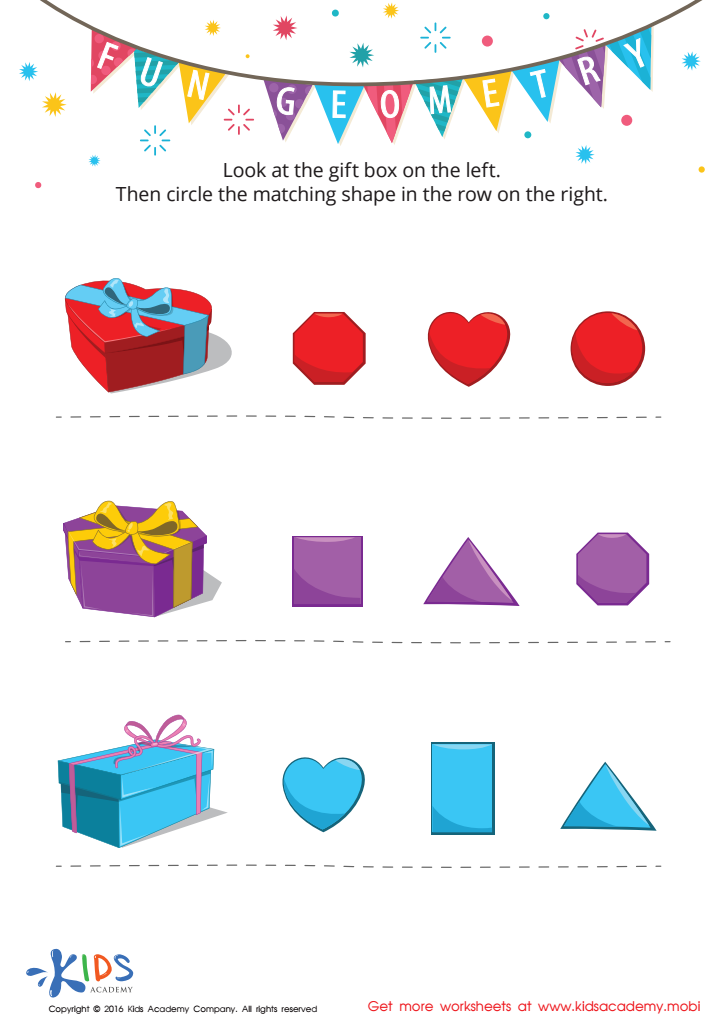
Fun Geometry Worksheet
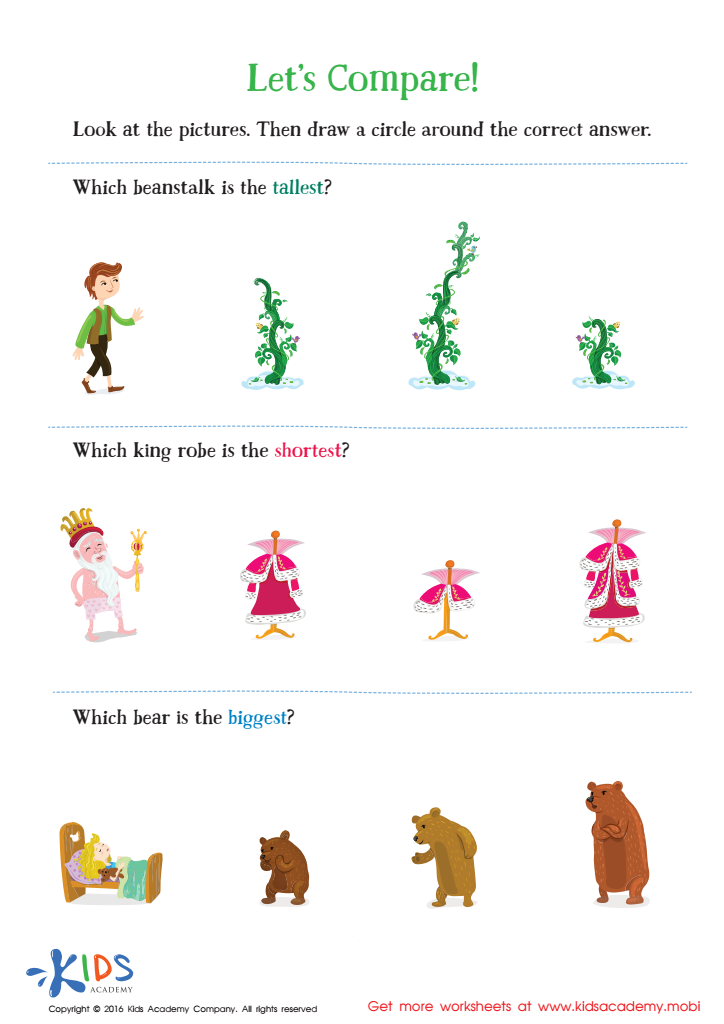
Fairy Tale Worksheet: Let's Compare








Shape Recognition Extra Challenge Matching for ages 6-9 serves as an essential educational tool that nurtures critical cognitive and developmental skills during foundational learning years. This activity encourages children to identify, compare, and match various geometric shapes, enhancing their visual-spatial awareness, which is crucial for problem-solving and everyday tasks.
By engaging in shape recognition challenges, children improve their ability to categorize and differentiate between dimensions and properties, fostering analytical thinking. Moreover, these skills are fundamental in advancing their understanding of more complex mathematical concepts such as geometry, symmetry, and volume.
For parents and teachers, incorporating such challenges into learning routines can ensure that children become adept at pattern recognition and spatial relationships, critical skills that have broader implications for science, technology, engineering, and mathematics (STEM) education.
Additionally, these activities promote fine motor skills and concentration, as children actively engage in the matching process, and they can be designed in playful, interactive formats to sustain interest. Ultimately, prioritizing shape recognition challenges during early education empowers children with foundational skills, instills a love for learning, and prepares them for future academic success. Engaging children in these activities reinforces their confidence and enjoyment in learning, making it a worthwhile endeavor for parents and teachers alike.