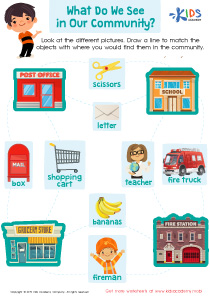
Logical thinking Extra Challenge Math Worksheets for 6-Year-Olds
4 filtered results
-
From - To
Boost your child's cognitive skills with our "Logical Thinking Extra Challenge Math Worksheets for 6-Year-Olds"! Perfectly crafted for young learners, these worksheets engage children in fun, brain-stimulating activities that enhance their logical reasoning and problem-solving abilities. Each worksheet offers a variety of puzzles, patterns, and sequences designed to challenge your child while maintaining their interest. Ideal for reinforcing classroom learning or providing additional at-home practice, our worksheets lay a solid foundation for future math success. Visit Kids Academy and download your free printable worksheets today to support your child's educational journey and foster a love for learning!
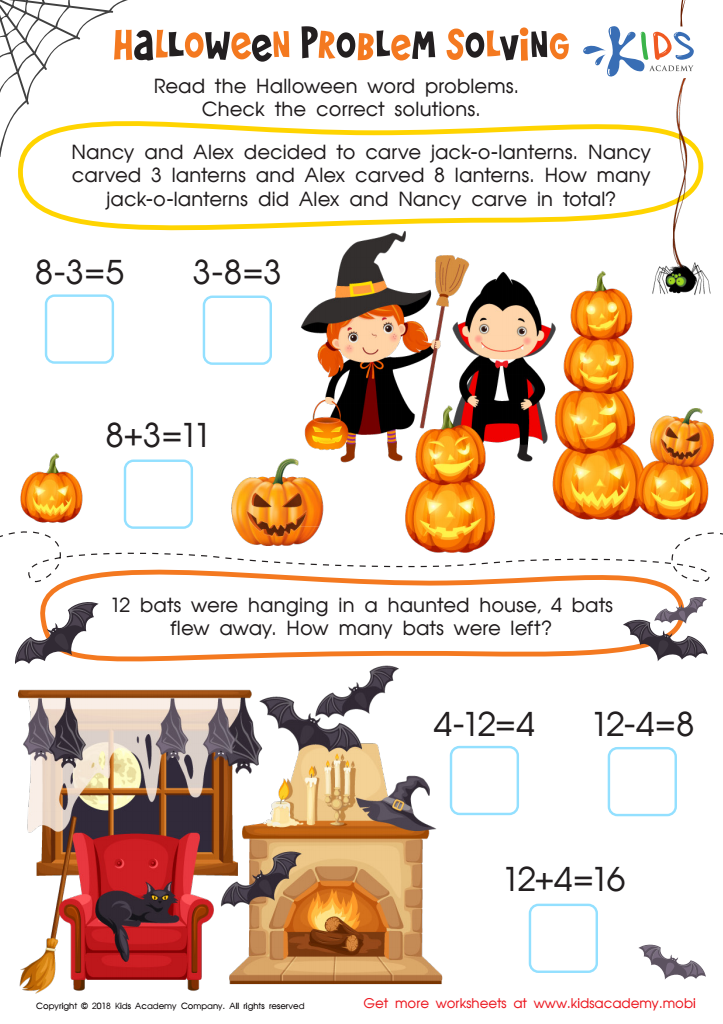
Halloween Problem Solving Worksheet
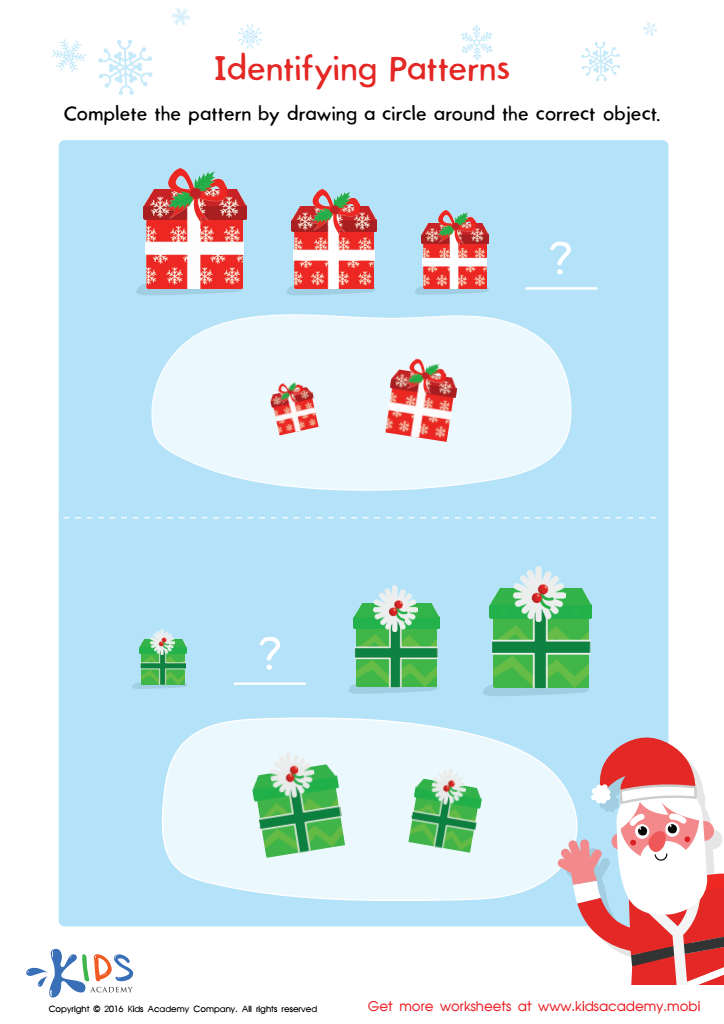
Identifying Patterns Worksheet
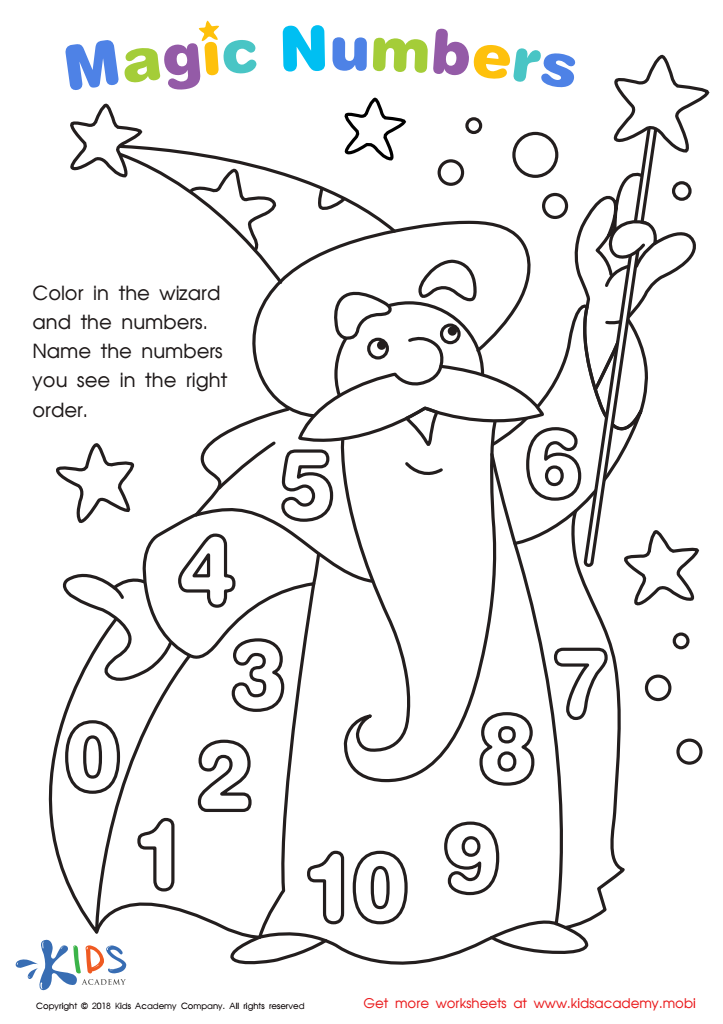
Magic Numbers Worksheet
 Assign to My Students
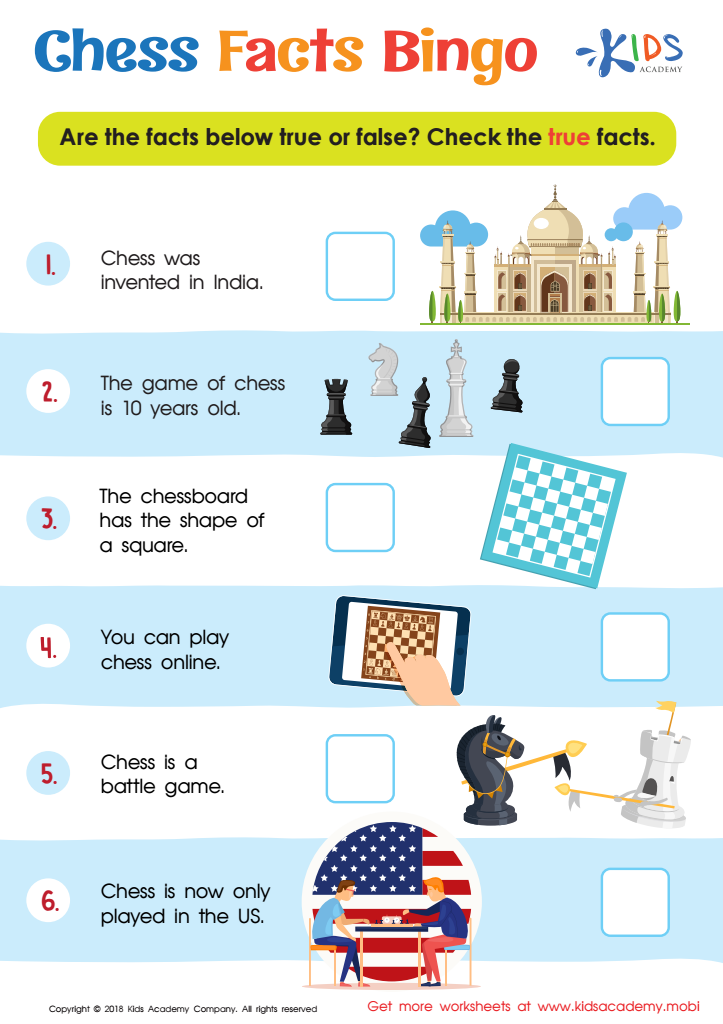
Chess Facts Bingo Worksheet








Parents and teachers should care about Logical Thinking Extra Challenge Math for 6-year-olds because it fosters critical cognitive development and instills essential skills that benefit children both academically and in daily life. At this developmental stage, children's brains are highly receptive to new concepts, making it an optimal time to introduce logical thinking exercises. These activities go beyond basic arithmetic by encouraging problem-solving, pattern recognition, and strategic thinking which are foundational skills for more advanced math and science learning.
Logical thinking challenges stimulate curiosity and intellectual exploration, making learning more engaging and enjoyable for children. This engagement can help foster a positive attitude towards math from an early age, counteracting potential math anxiety as they grow older. Furthermore, developing logical reasoning helps children in decision-making and understanding complex information, which are invaluable life skills.
Moreover, such math challenges can have interdisciplinary benefits. For example, they can enhance linguistic abilities through better comprehension and planification of thoughts, bolster social skills through collaborative problem-solving, and even augment motor skills in the context of hands-on activities or using physical tools for problem-solving. By incorporating these exercises into regular educational curriculums or home routines, parents and teachers provide rich, multi-faceted growth opportunities crucial for holistic child development.