Subtraction practice Extra Challenge Math Worksheets for 6-Year-Olds - Page 2
26 filtered results
-
From - To
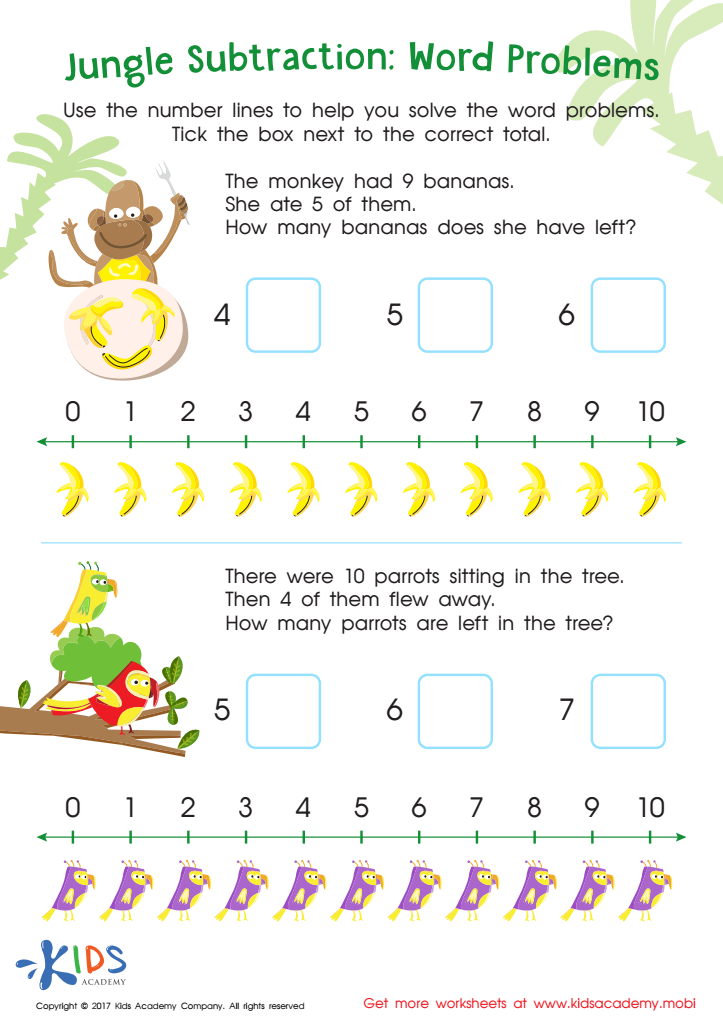
Jungle Subtraction Word Problems Substraction Worksheet
 Assign to My Students
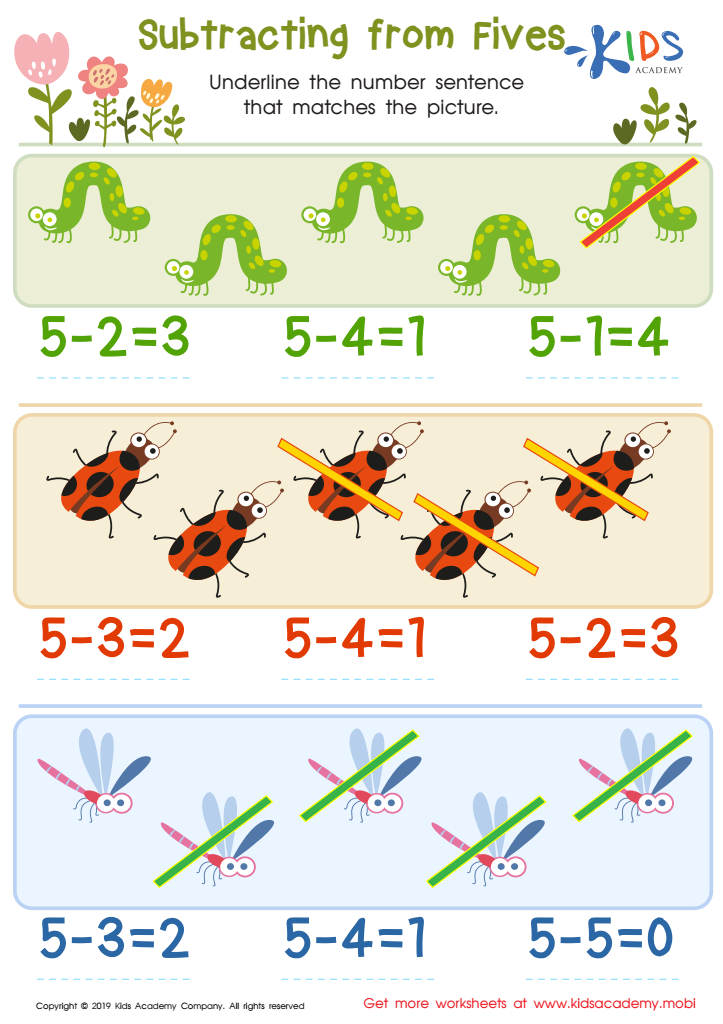
Subtracting From Fives Worksheet








Parents and teachers should prioritize subtraction practice through Extra Challenge Math for 6-year-olds for several compelling reasons. First, mastery of subtraction lays a crucial foundation for future mathematics. As children progress, concepts in addition, multiplication, and division are often intertwined with their understanding of subtraction.
Furthermore, engaging in Extra Challenge Math helps build not just arithmetic skills but also critical thinking and problem-solving abilities. Early exposure to challenging questions fosters resilience and boosts confidence. Children learn to approach problems systematically and develop strategies for overcoming difficulties, skills that are invaluable across all subjects.
Additionally, math practice, especially in a challenge format, aids in improving concentration and focus. When students tackle complex problems, they learn to maintain attention and perseverance, traits that will benefit them in academic settings and beyond.
Lastly, embedding fun and challenge into learning prompts a love for mathematics, helping to eliminate math anxiety typically seen in later years. Parents and teachers who support these practices instill in children a positive attitude toward math, ensuring that they become not only competent mathematicians but also lifelong learners excited to engage with new challenges.








