Alphabet Recognition Extra Challenge Alphabet Worksheets for Ages 7-8
3 filtered results
Difficulty Level
Grade
Age
-
From - To
Subject
Activity
Standards
Introducing "Alphabet Recognition Extra Challenge Alphabet Worksheets for Ages 7-8"! Perfectly crafted to enhance your child’s learning adventure, our worksheets are designed to push alphabet mastery to the next level. Each worksheet encourages children aged 7-8 to recognize, identify, and write both uppercase and lowercase letters with greater proficiency. Including a variety of engaging activities like matching, tracing, and letter puzzles, these worksheets make alphabet practice fun and educational. Parents and educators will love the progress they see as these comprehensive exercises boost reading and writing readiness. Elevate your child's alphabet skills today with our inventive and challenging worksheets!
Favorites
With answer key
Interactive
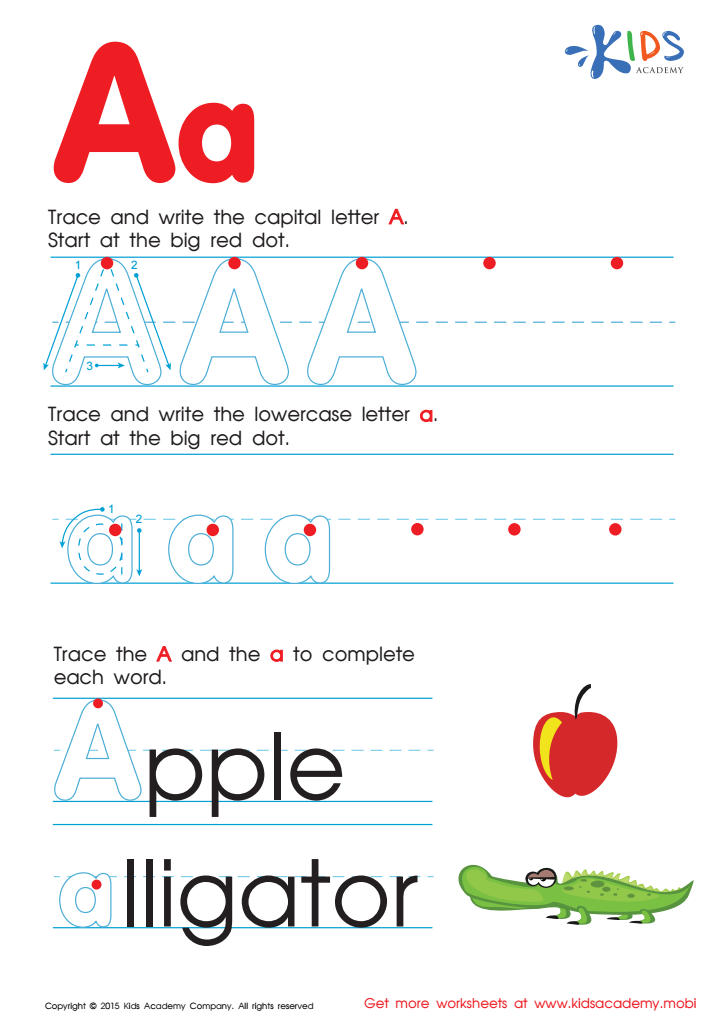
Letter A Tracing Page
Trace and write the letter "A"! Start with the big red dot, then do the capital and lowercase versions. Then write it again with two words - apple and alligator. Download more tracing worksheets at Kids Academy.
 Assign to My Students
Letter A Tracing Page
Worksheet
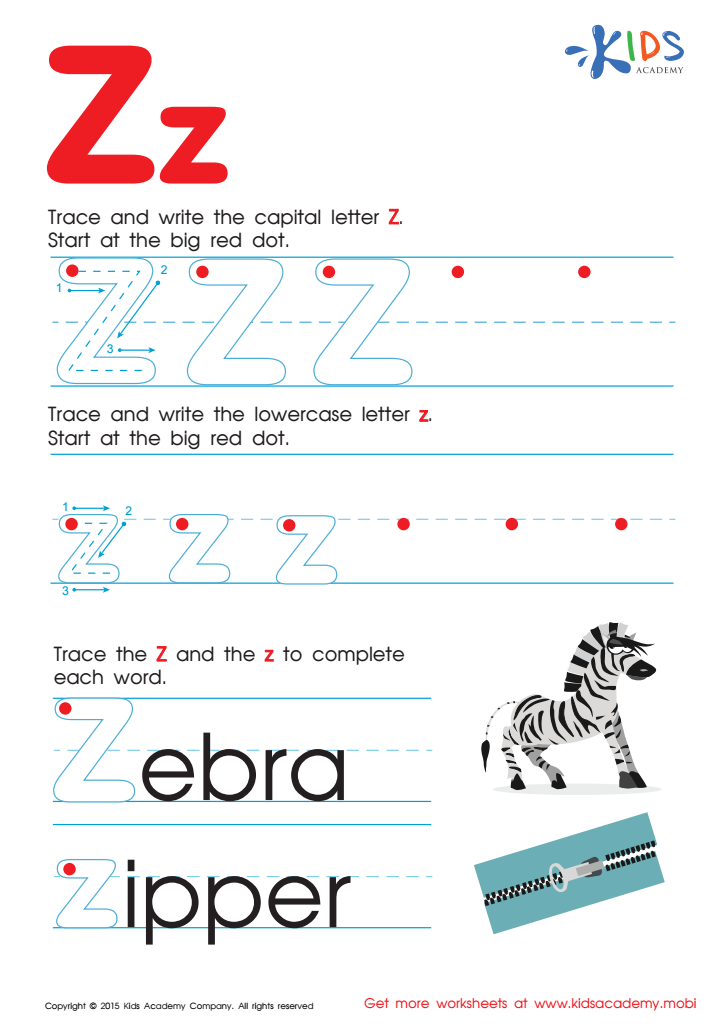
Letter Z Tracing Page
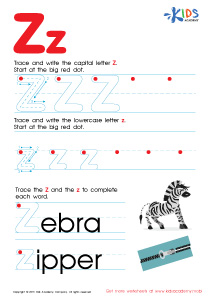
Trace and write capital "Z" and lowercase "z". Complete words "zebra" and "zipper". Be attentive and have fun! (80 words)
Letter Z Tracing Page
Worksheet
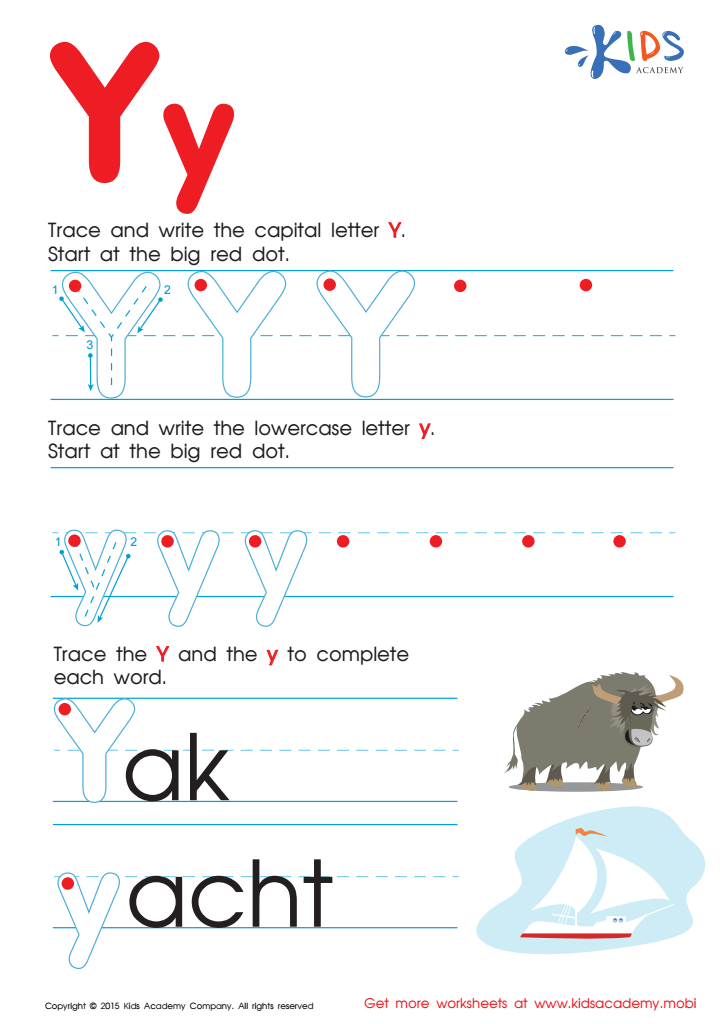
Letter Y Tracing Page
Trace the capital letter "Y" on the red dot, then trace and write the lowercase letter. Complete the words to help the Yak walk and the yacht swim. More worksheets at Kids Academy.
Letter Y Tracing Page
Worksheet
Join Kids Academy for Free
Who is primarily going to use this learning content?








Alphabet Recognition Extra Challenge is essential for children ages 7-8 because it supports the further development of their reading and writing skills, which are critical at this learning stage. Even though children start recognizing alphabets at a younger age, reinforcing and challenging their skills at ages 7-8 ensures that they have a solid foundation. At this age, students transition from simple letter recognition to more complex language tasks such as reading fluently and writing competently.
Parents and teachers should care about these challenges because they provide opportunities for children to practice and strengthen their literacy skills in fun and engaging ways. Alphabet recognition enhances a child's ability to decode words, improving their reading comprehension. Mastery of the alphabet is also closely linked to effective spelling, which is vital for writing development.
Additionally, challenging alphabet activities activate cognitive processes like memory, attention, and problem-solving, aiding overall brain development. This preparatory work can yield long-term benefits, including better academic performance and a more profound love for learning. When parents and teachers invest time in Alphabet Recognition Extra Challenges, they help children build confidence and proficiency, ensuring a smooth transition into more advanced literacy demands in the future.