Recognizing shapes Extra Challenge Math Worksheets for Ages 7-8
3 filtered results
-
From - To
Take shape recognition skills to the next level with our "Recognizing Shapes Extra Challenge Math Worksheets for Ages 7-8". These advanced worksheets are designed to engage young learners while enhancing their geometric knowledge. Perfect for students who have mastered the basics, each worksheet presents exciting and unique challenges that stimulate critical thinking and spatial awareness. Activities include identifying complex shapes, understanding shape properties, and exploring symmetry. Ideal for both classroom use and at-home practice, these worksheets ensure a comprehensive and enjoyable learning experience. Unlock a deeper understanding of shapes and bolster your child's mathematical abilities today!
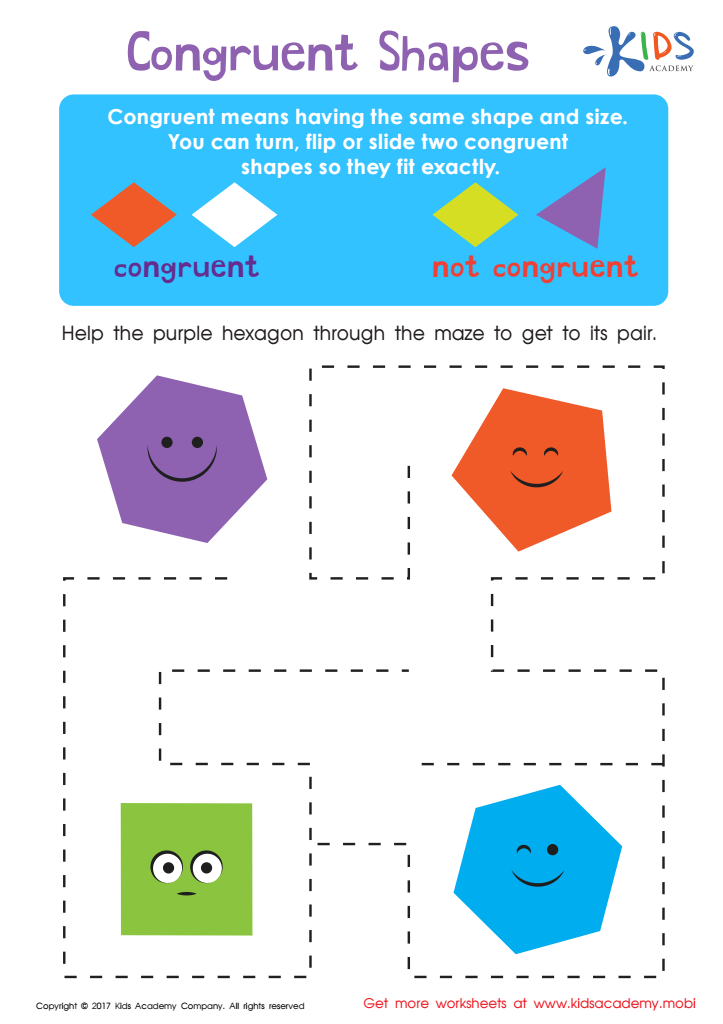
Congruent Shapes Worksheet
 Assign to My Students
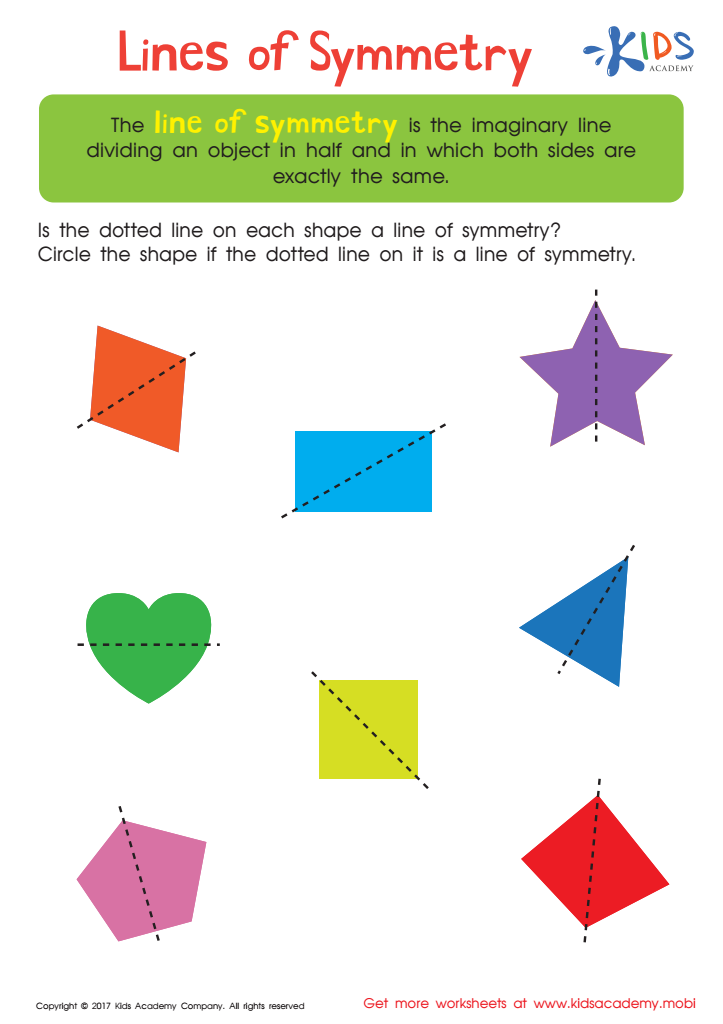
Lines of Symmetry Printable
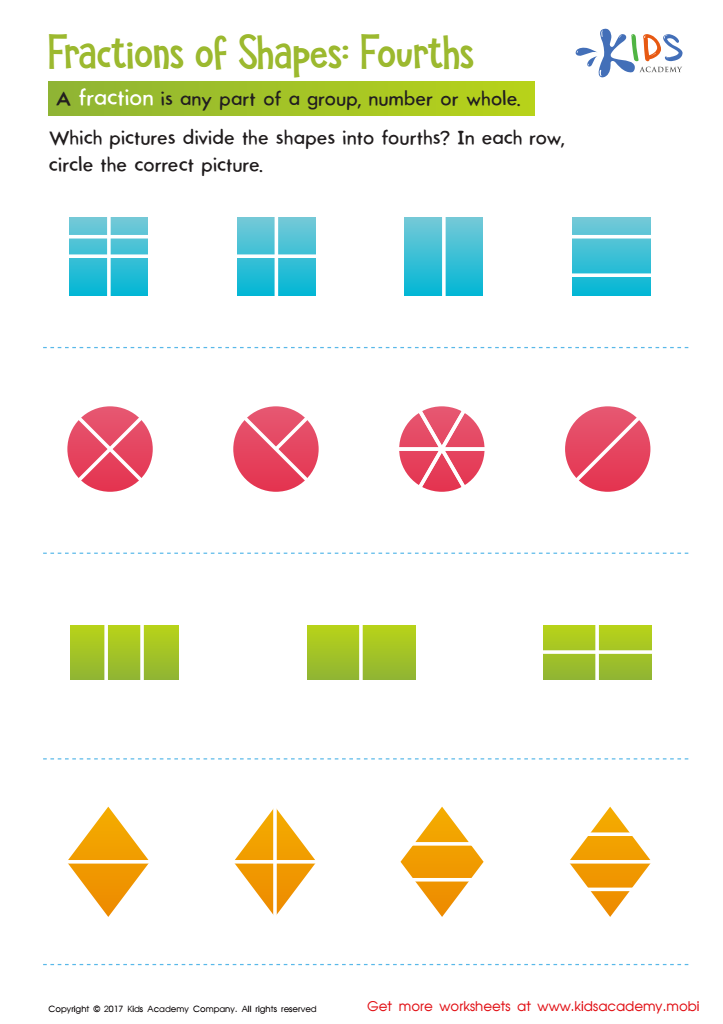
Fractions of Shapes Worksheet








Recognizing Shapes Extra Challenge Math for ages 7-8 holds significant importance for both parents and teachers as it forms a foundational aspect of early geometry and spatial awareness, crucial skills in a child's cognitive development. For children aged 7-8, these activities transcend basic shape identification by encouraging problem-solving, critical thinking, and analytical skills.
Firstly, engaging with more challenging shape recognition exercises helps children understand the properties and relationships between different shapes. This knowledge plays a pivotal role in more advanced mathematical concepts such as symmetry, area, and volume, which they will encounter in higher grades.
Additionally, Recognizing Shapes Extra Challenge Math stimulates visual-spatial intelligence. This form of intelligence aids children in understanding and organizing their physical world as well as improving skills in areas such as science, technology, engineering, and math (STEM).
For parents and teachers, these activities foster a growth mindset and resilience by exposing children to tasks that require them to apply logic and reasoning skills. It prepares them for more complex subjects and nurtures a love for mathematics at an early age, promoting lifelong learning and curiosity. Deeper engagement in these challenges ensures that children not only meet but exceed educational standards, setting a strong foundation for future academic success.








