Understanding patterns Extra Challenge Multiplication Worksheets for Ages 7-8
3 filtered results
-
From - To
Enhance your child's multiplication skills with our "Understanding Patterns Extra Challenge Multiplication Worksheets" designed specifically for ages 7-8. These engaging resources help kids identify and apply numerical patterns, making multiplication both fun and effective. Each worksheet promotes critical thinking and boosts confidence as children solve challenging problems that reinforce their understanding of multiplication. Perfect for at-home learning or as classroom supplements, these worksheets encourage a deeper grasp of mathematical concepts through patterns. Help your young learner master multiplication with these thoughtfully designed challenges and watch them thrive in their mathematical journey! Download now and spark a love for math!

Teepee Multiplication Worksheet
 Assign to My Students
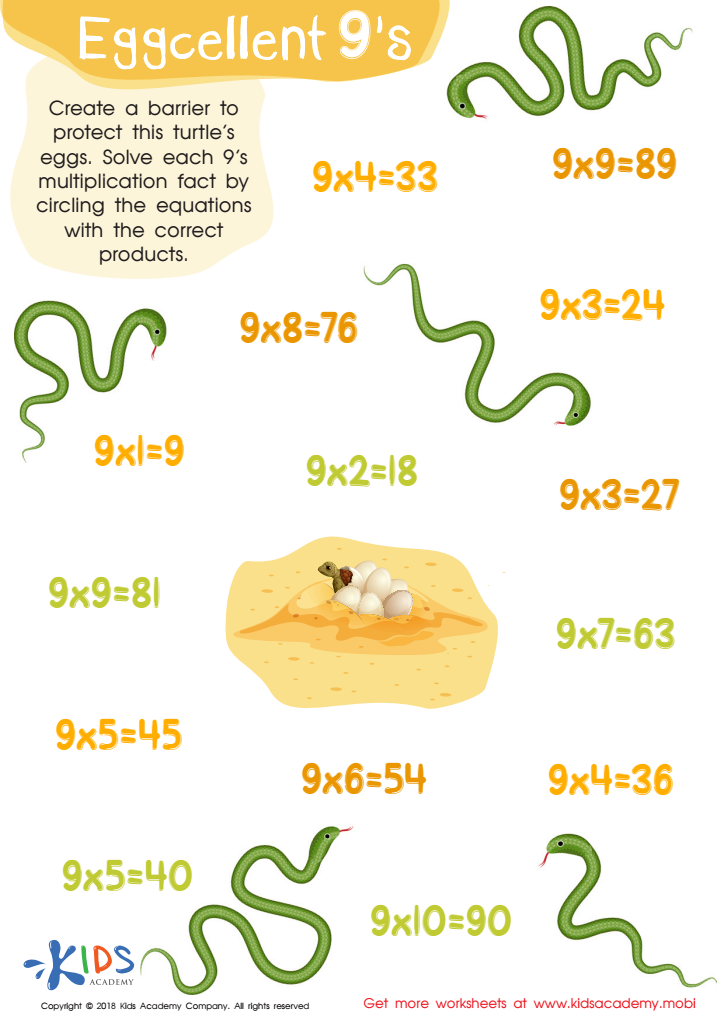
Eggcellent 9’s Worksheet
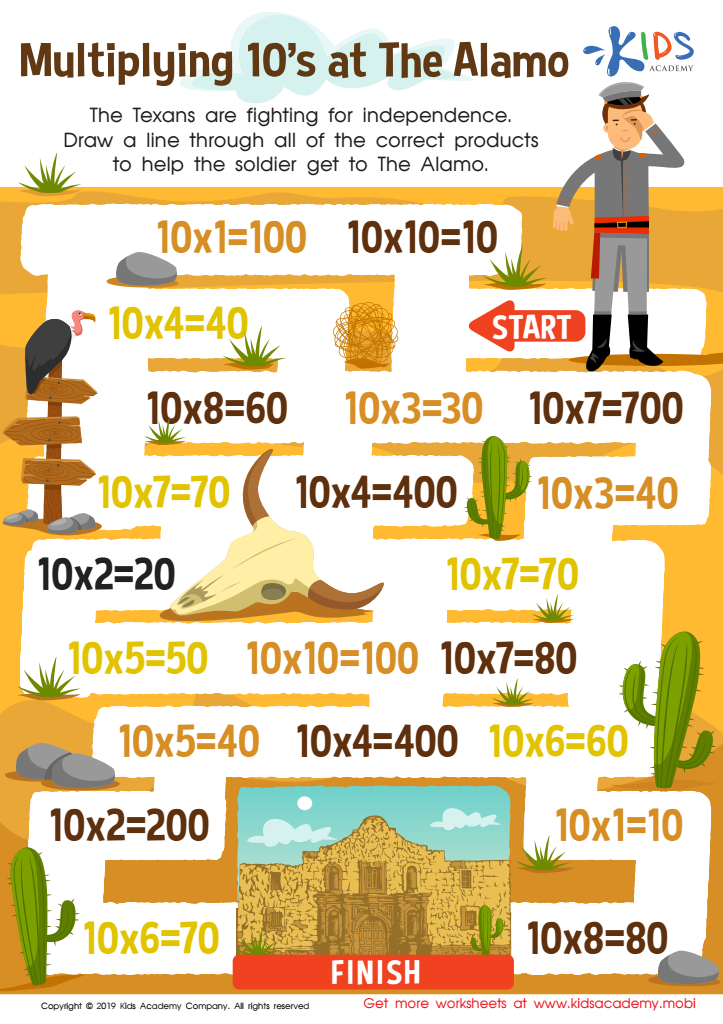
Multiplying 10’s at The Alamo Worksheet






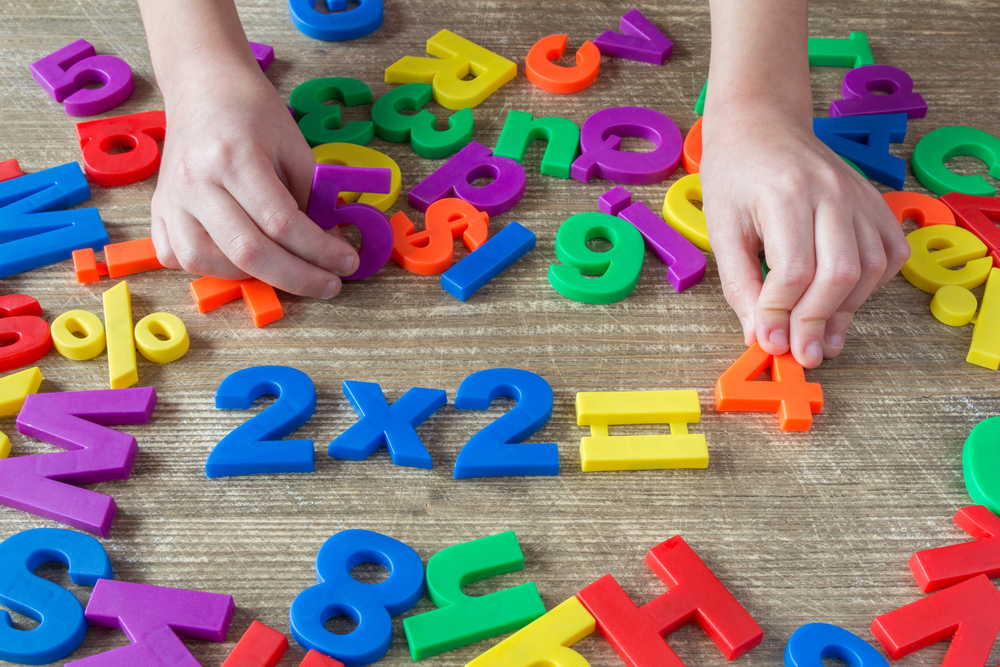

Understanding patterns, especially in multiplication, is a foundational skill for children ages 7-8. This critical understanding helps students not only perform calculations but also develop mathematical reasoning. Patterns in multiplication, such as the commutative (a × b = b × a) and distributive (a × (b + c) = a × b + a × c) properties, make it easier for children to solve problems and grasp higher-level concepts in math.
When parents and teachers focus on teaching these patterns, they equip children with strategies that promote confidence and competence. Recognizing patterns helps students avoid the need for rote memorization, boosting their problem-solving skills and flexible thinking. Moreover, identifying patterns in multiplication facilitates connections to other areas of math, such as division and fractions, reinforcing their overall math comprehension.
Beyond academics, understanding these concepts can spark an interest in learning as children see the relevance of math in everyday life. By encouraging children to explore and recognize patterns, parents and teachers engage them in critical thinking, laying the groundwork for lifelong learning. If adults emphasize the importance of these skills early on, students will feel empowered and motivated to tackle future mathematical challenges with confidence and creativity.








