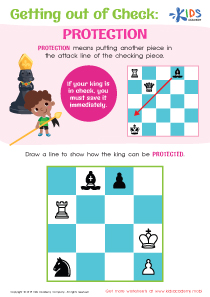
Critical thinking development Extra Challenge Chess Worksheets for 7-Year-Olds
4 filtered results
-
From - To
Enhance your 7-year-old’s critical thinking skills with our Extra Challenge Chess Worksheets! Designed to make learning fun, these engaging worksheets offer a unique blend of chess strategy and cognitive exercises. Your child will face thought-provoking scenarios that inspire problem-solving, decision-making, and analytical thinking. As they navigate the world of chess, they'll not only improve their gameplay but also develop essential life skills. Perfect for both classroom settings and at-home learning, these worksheets promote a deeper understanding of chess while fostering creativity and logical reasoning. Unlock your child's potential in critical thinking and watch them thrive both on and off the chessboard!
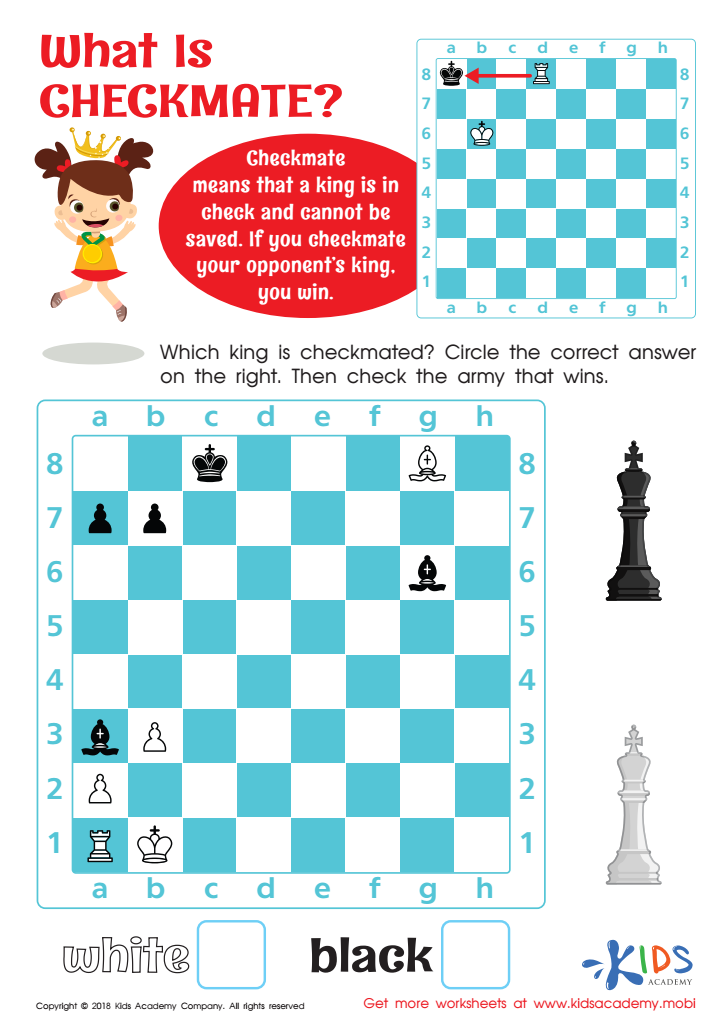
What is Checkmate? Worksheet
 Assign to My Students
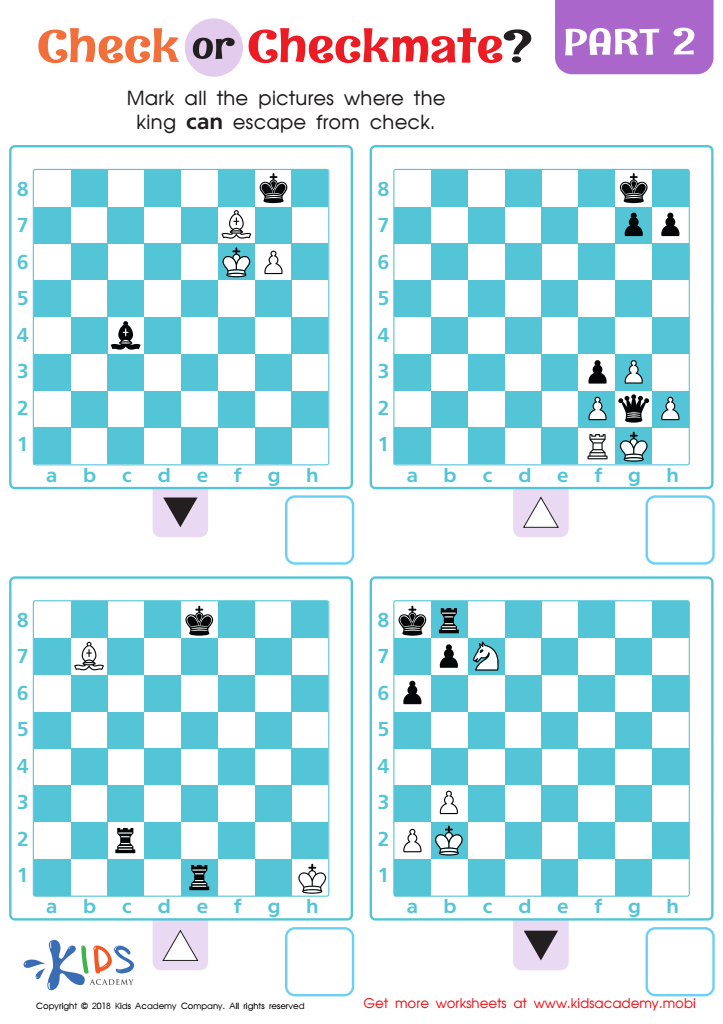
Check or Checkmate: Part 2 Worksheet
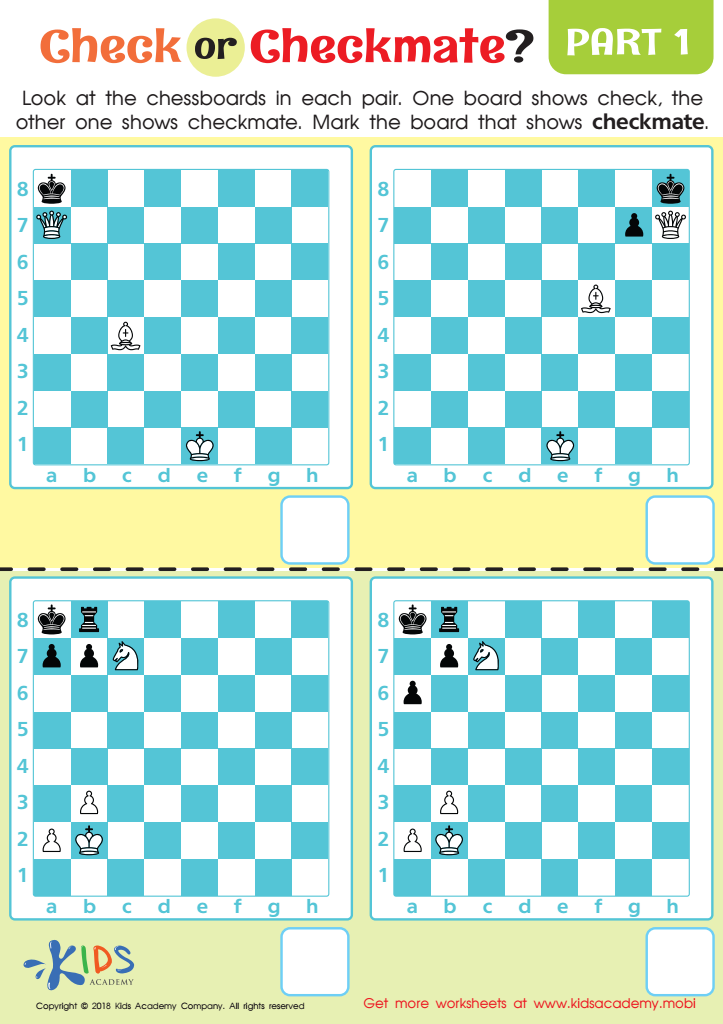
Check or Checkmate: Part 1 Worksheet
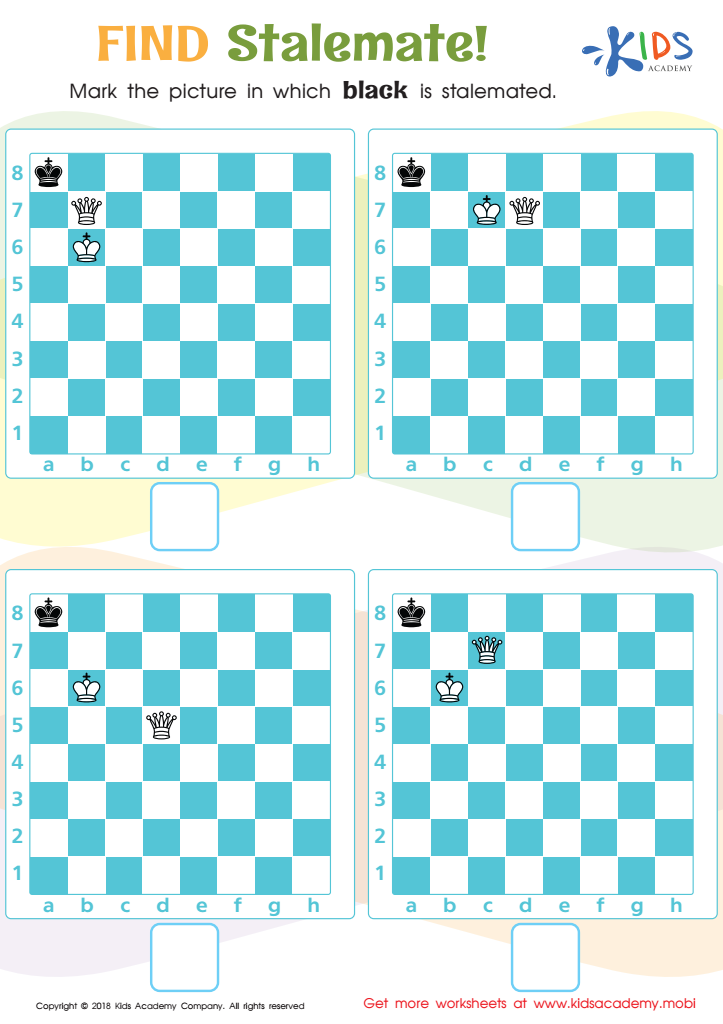
Find Stalemate! Worksheet






Critical thinking is an essential skill for children's lifelong success, and incorporating activities like Extra Challenge Chess can significantly enhance this development. For parents and teachers, engaging 7-year-olds in chess encourages analytical reasoning, problem-solving, and strategic thinking—all critical components of critical thinking.
Chess requires players to plan their moves, anticipate opponents' strategies, and adapt to evolving situations on the board. By facing these challenges, children learn to evaluate alternatives, make informed decisions, and reflect on consequences—skills that translate to various areas of their academic and personal lives.
Additionally, participating in chess promotes patience and persistence. Kids learn that not every challenge can be solved instantaneously, fostering resilience in the face of setbacks. The game's structured environment encourages social interactions, collaboration, and respectful competition, essential for healthy emotional development.
Beyond the immediate cognitive gains, promoting critical thinking through chess lays a strong foundation for future learning. When parents and teachers prioritize these activities, they empower children to navigate complexities, think independently, and become confident decision-makers. Ultimately, fostering critical thinking through engaging challenges like chess prepares children not just for school, but for the diverse demands of the world they will encounter.