Critical thinking development Extra Challenge Worksheets for 7-Year-Olds
4 filtered results
-
From - To
Enhance your child's analytical abilities with our Critical Thinking Development Extra Challenge Worksheets for 7-Year-Olds! Designed to stimulate young minds, these engaging worksheets encourage creativity and problem-solving skills. Each activity challenges students to think critically about various topics, fostering their natural curiosity and enabling them to explore different perspectives. From puzzles to and brainteasers, our worksheets are perfect for independent learning or supplementary classroom activities. Equip your child with the essential skills to decipher information, draw conclusions, and make informed decisions. Dive into a world of exploration and discovery, where critical thinking becomes a fun and rewarding adventure!
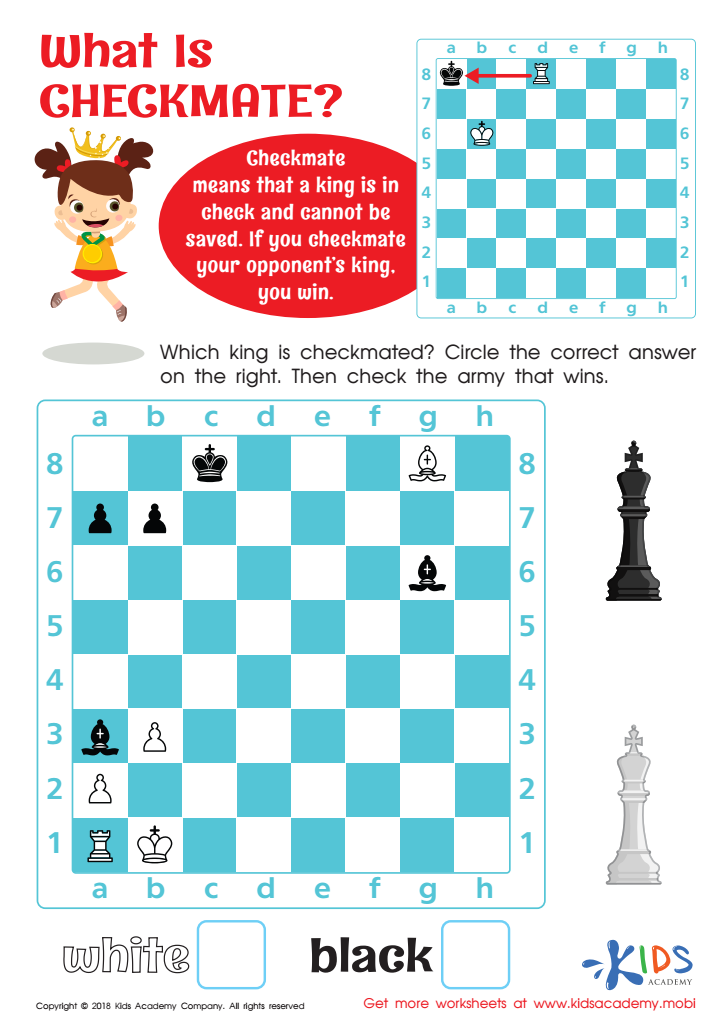
What is Checkmate? Worksheet
 Assign to My Students
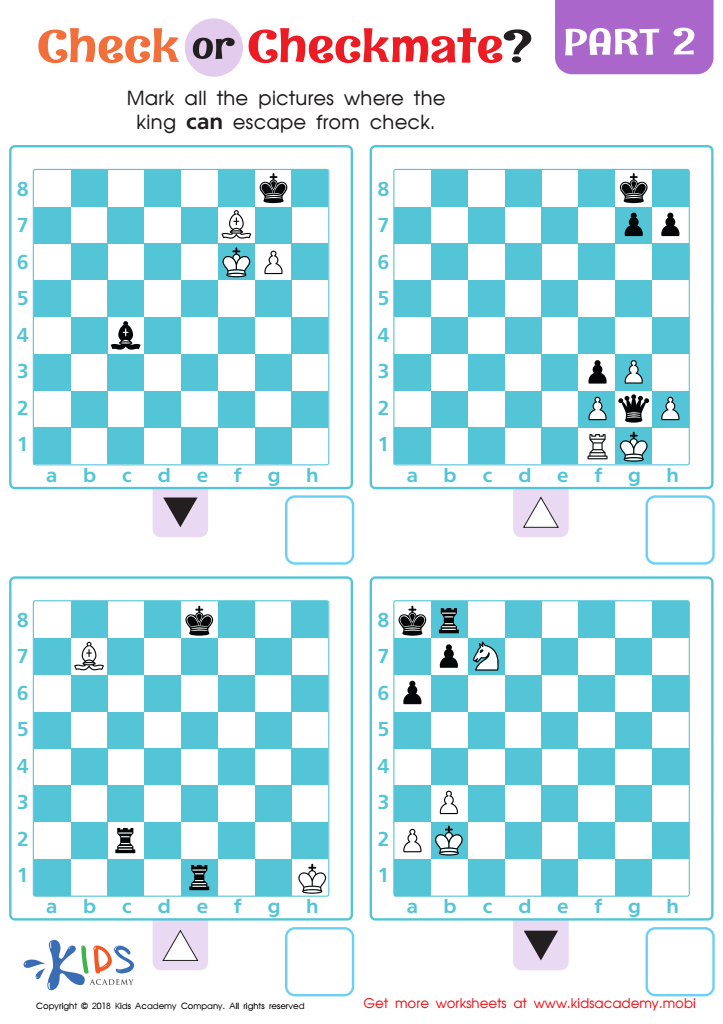
Check or Checkmate: Part 2 Worksheet
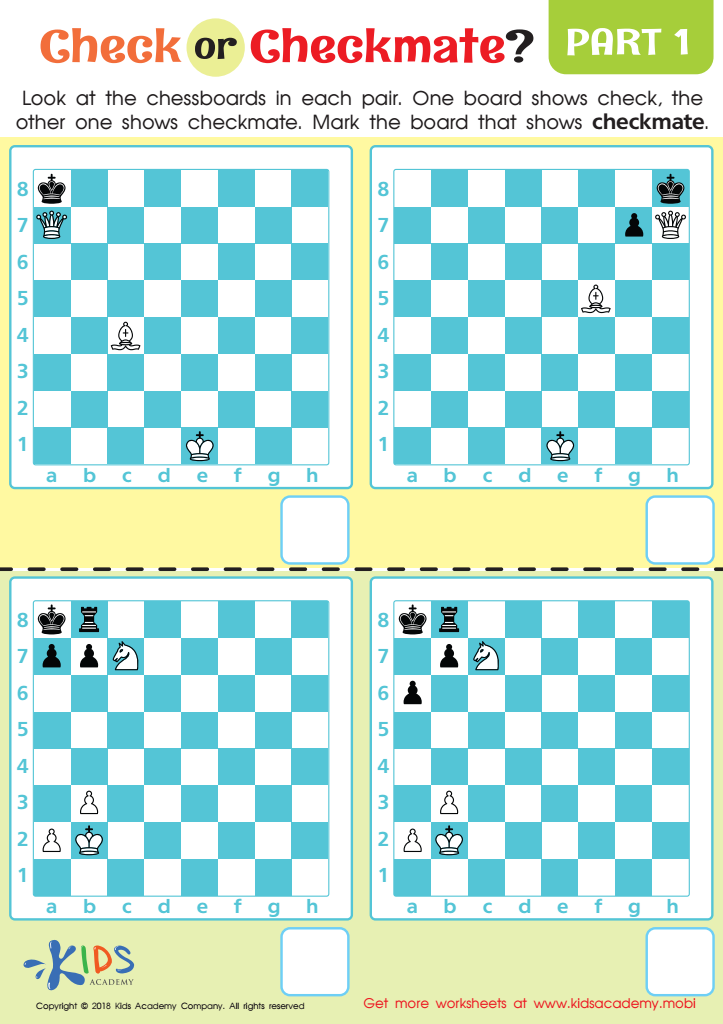
Check or Checkmate: Part 1 Worksheet
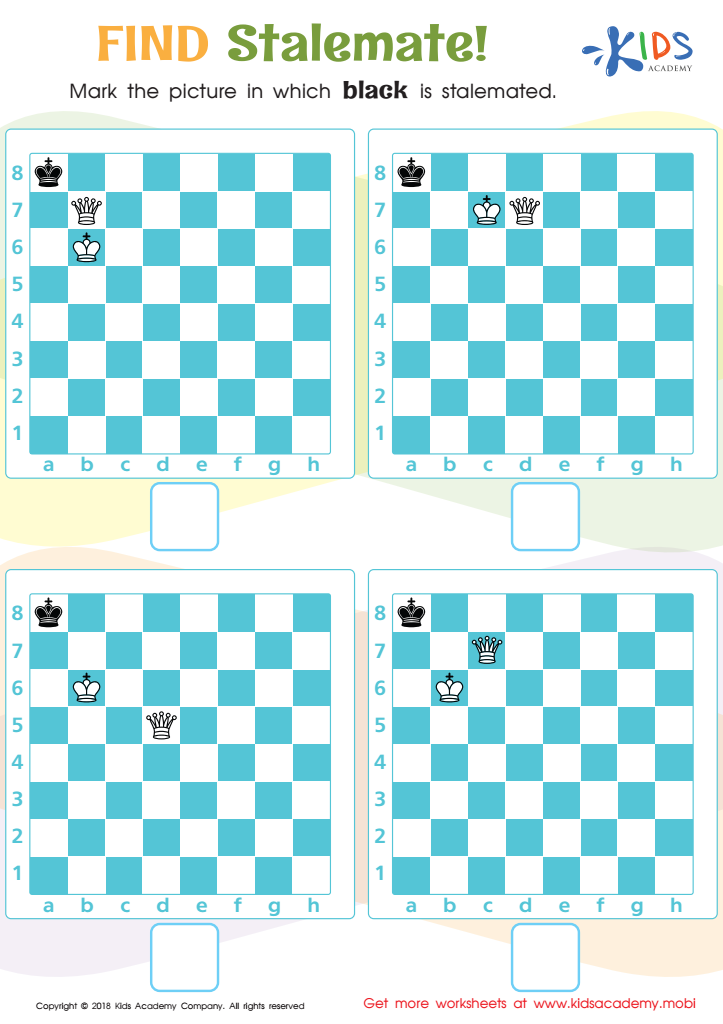
Find Stalemate! Worksheet








Parents and teachers should prioritize the development of critical thinking skills in 7-year-olds due to its significant long-term benefits for children's academic and personal lives. At this young age, children are naturally curious and eager to understand the world around them. Encouraging critical thinking nurtures this curiosity, helping them analyze, evaluate, and synthesize information rather than simply memorizing facts.
Critical thinking promotes creativity, problem-solving, and decision-making skills, equipping children with the ability to tackle challenges they will face in the future, both in school and in real-life situations. It enhances their communication abilities, allowing them to express ideas clearly and understand differing perspectives. This is essential not only for their current learning environment but also for fostering positive social interactions and collaboration skills.
Moreover, as children learn to think critically, they become more confident and independent decision-makers. This is particularly important in today's fast-paced, information-rich world, where discernment is crucial. By focusing on critical thinking development, parents and teachers empower children to become lifelong learners, prepared to navigate complex issues and contribute positively to society. Hence, cultivating critical thinking skills in young learners is an investment in their future.








