
Animal recognition Extra Challenge Math Worksheets for 7-Year-Olds
3 filtered results
Difficulty Level
Grade
Age
-
From - To
Subject
Activity
Standards
Introduce your 7-year-old to a thrilling educational adventure with our "Animal Recognition Extra Challenge Math Worksheets"! Engage young learners in fun, interactive math problems that seamlessly blend with fascinating animal facts, enhancing both their math skills and animal knowledge. These expertly designed worksheets offer a variety of challenging exercises tailored to stimulate critical thinking, problem-solving, and cognitive development. Perfect for home or classroom use, our worksheets captivate curious minds while reinforcing essential math concepts. Join Kids Academy to transform learning into a delightful experience, fostering a love for both mathematics and the animal kingdom!
Favorites
With answer key
Interactive
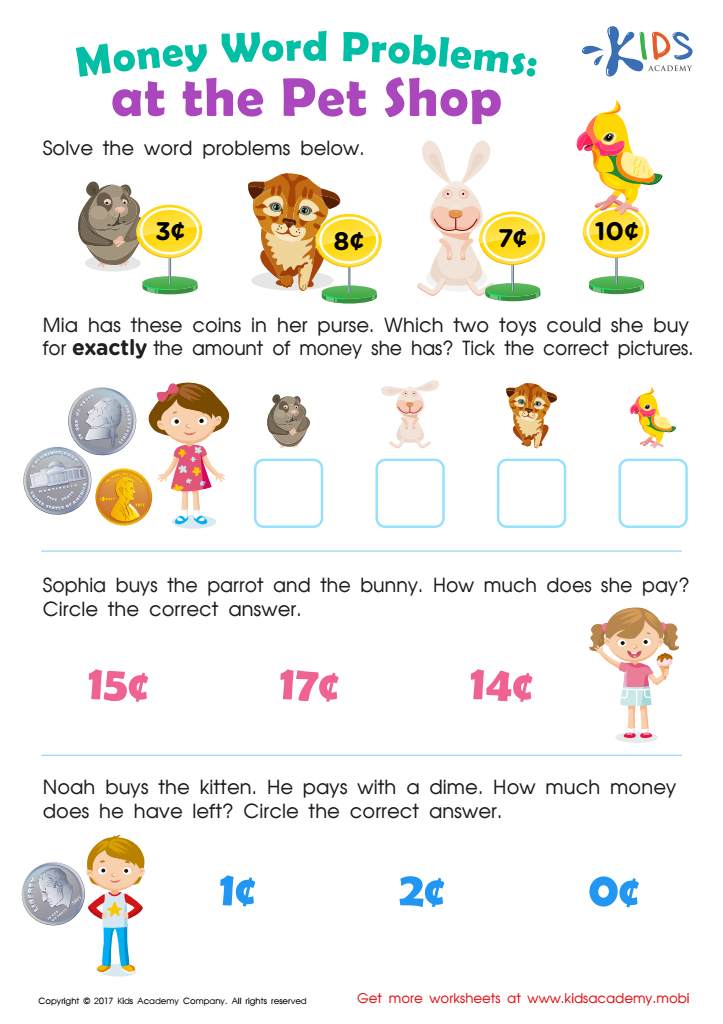
Pet Shop Worksheet
Teach your child a key life skill: counting and managing money. With this worksheet, they'll learn to count coins and calculate purchases at the pet shop. Give them colorful, fun math practice!
 Assign to My Students
Pet Shop Worksheet
Worksheet
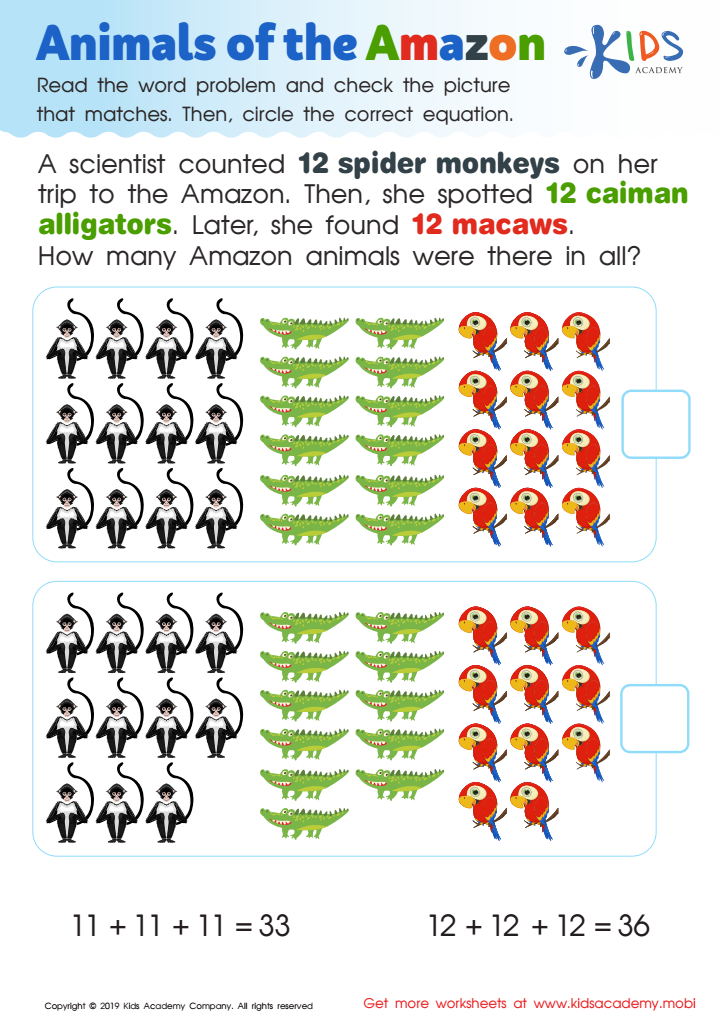
Animals of Amazon Worksheet
Kids will love exploring the Amazon while solving addition problems on this colorful PDF worksheet. They need to pay attention to the bolded info in each word problem to figure out the equation picture that matches. It's an exciting way to learn about the Amazon and practice adding multiple numbers!
Animals of Amazon Worksheet
Worksheet
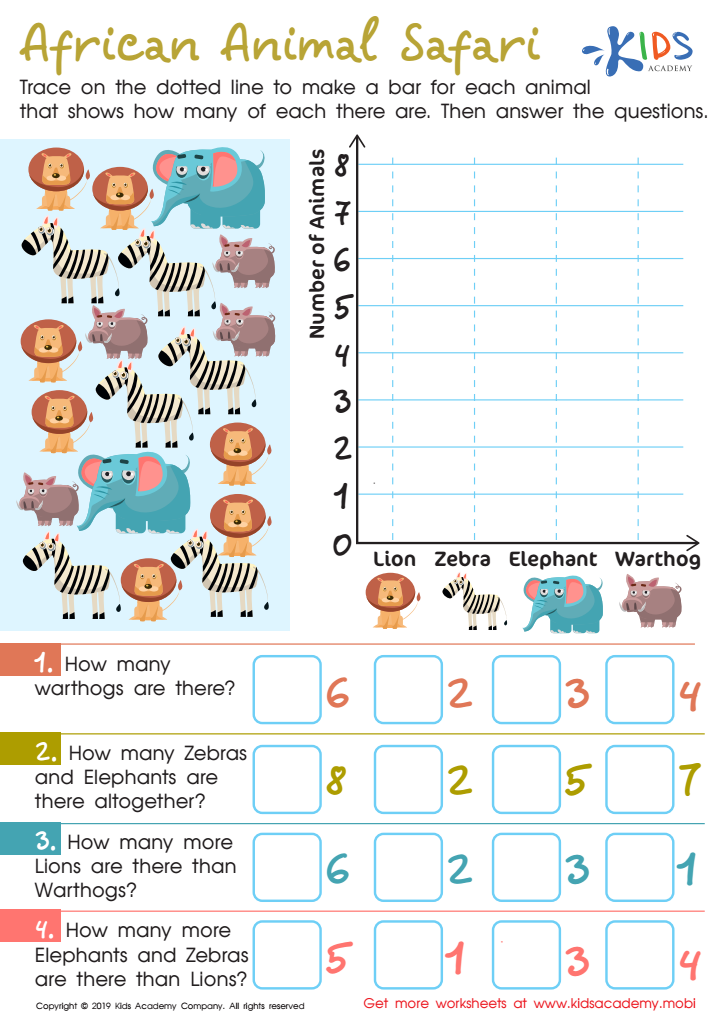
African Animal Safari Worksheet
Help students learn geography and math, with this worksheet. Examine the graph and ask your students questions. Have them answer using the graph and addition/subtraction exercises. This can help them name continents, countries, and animals unique to each.
African Animal Safari Worksheet
Worksheet
Join Kids Academy for Free
Who is primarily going to use this learning content?


.jpg)



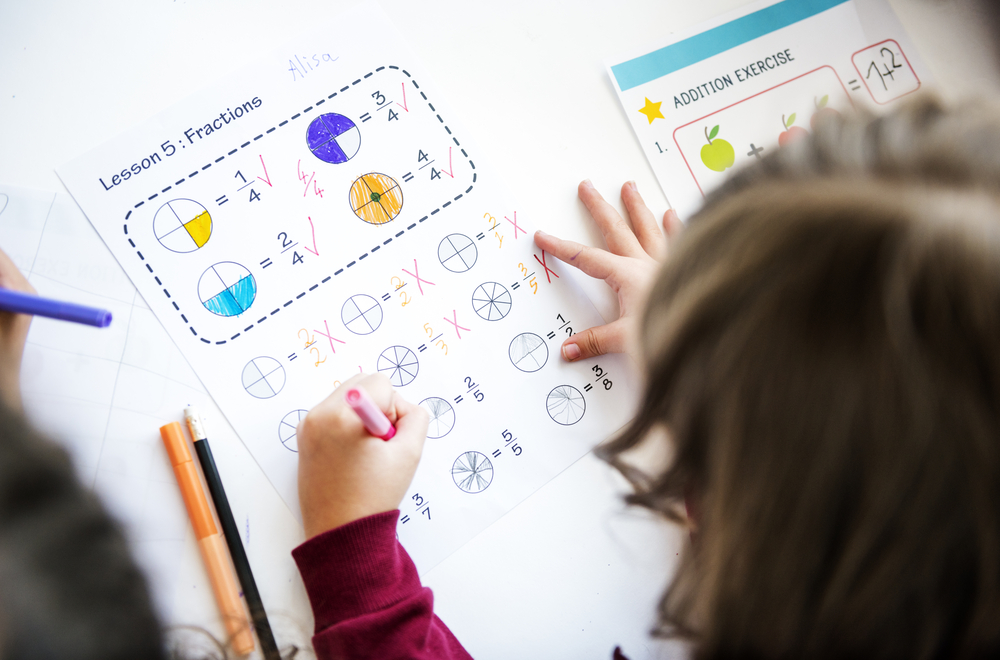

Parents and teachers should care about incorporating Animal Recognition Extra Challenge Math for 7-year-olds as it presents an innovative and engaging way to combine learning fundamental subjects. At this age, children are naturally curious and drawn to animals, which can be leveraged to enhance their mathematical abilities and critical thinking skills through interactive and thematic challenges.
Using animals to frame math problems helps in contextualizing abstract concepts, making them more relatable and understandable for young learners. For instance, counting animals, identifying patterns or sequences in their images, and solving simple arithmetic problems involving animal groups can deeply engage students. This not only helps improve their math skills but also reinforces knowledge retention by linking learning with visual and real-world references.
Moreover, animal-themed math challenges can stimulate broader cognitive benefits such as improving observational skills, promoting logical reasoning, and nurturing a sense of curiosity about the natural world. This holistic learning approach supports the development of both analytical and creative thinking skills.
Lastly, involving parents and teachers enhances a child’s learning experience by sharing positive reinforcement and collaborative problem-solving, fostering a supportive learning environment. Such methods can cultivate a lifelong appreciation for learning and critical thinking in young students.








