Addition Practice Extra Challenge Addition & Subtraction Worksheets for Ages 8-9
4 filtered results
-
From - To
Transform math practice into an exciting challenge with our "Addition Practice Extra Challenge Addition & Subtraction Worksheets" designed for ages 8-9. Perfect for honing addition and subtraction skills, these advanced worksheets blend fun and learning seamlessly. Kids Academy provides structured and progressive content, helping students build strong arithmetic foundations while enjoying the journey. Unlock confidence and precision in math through engaging exercises that cater to your child’s developmental stage. Visit our webpage to discover creative and educational resources aimed at making math practice a thrilling adventure for young learners, and see how we turn challenge into achievement!
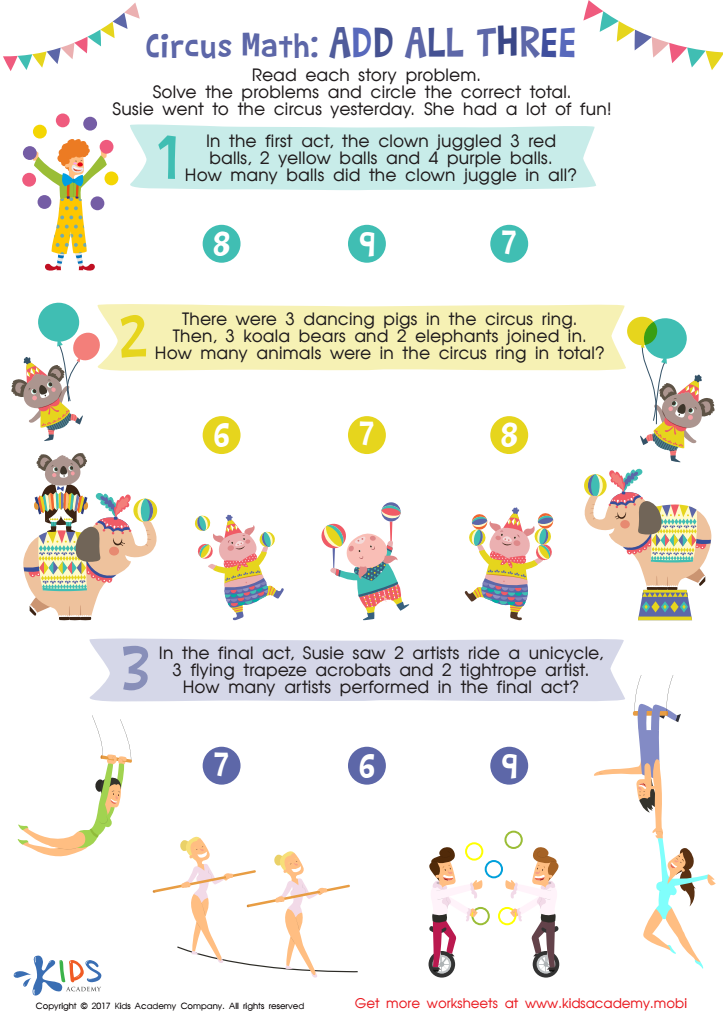
Circus Math Printable
 Assign to My Students
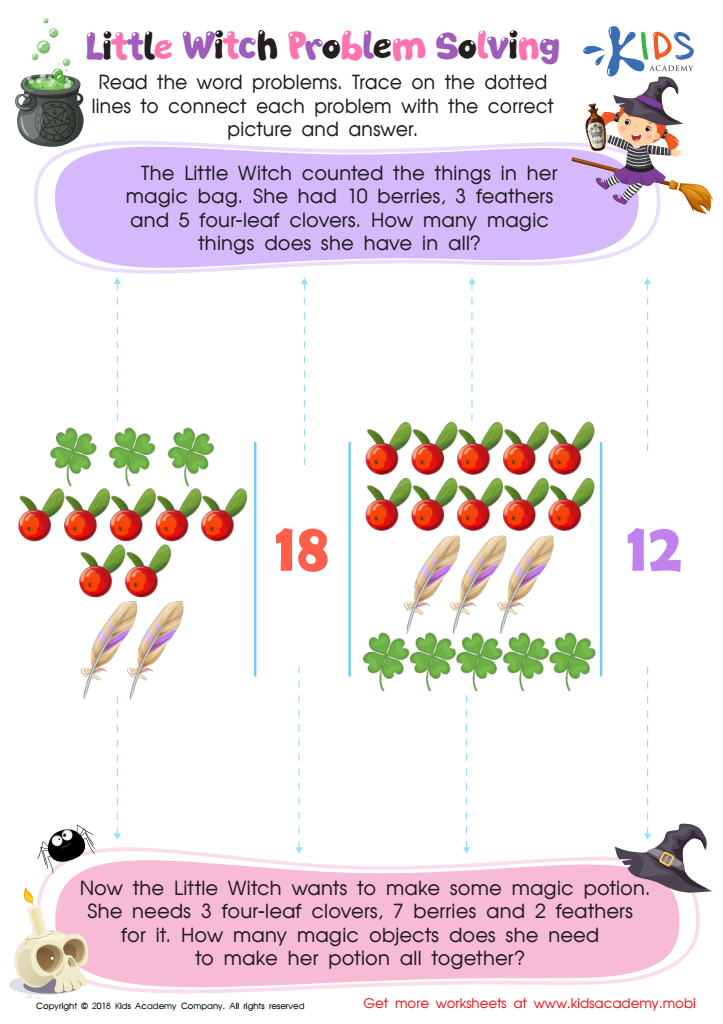
Little Witch Problem Solving Worksheet
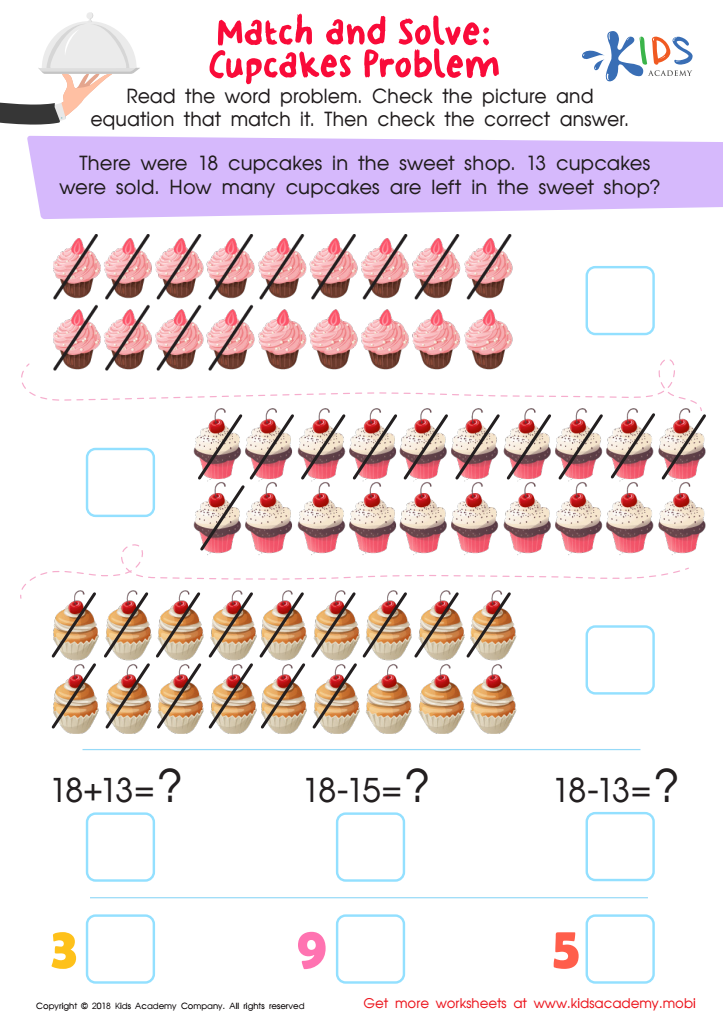
Match and Solve: Cupcakes Problem Worksheet
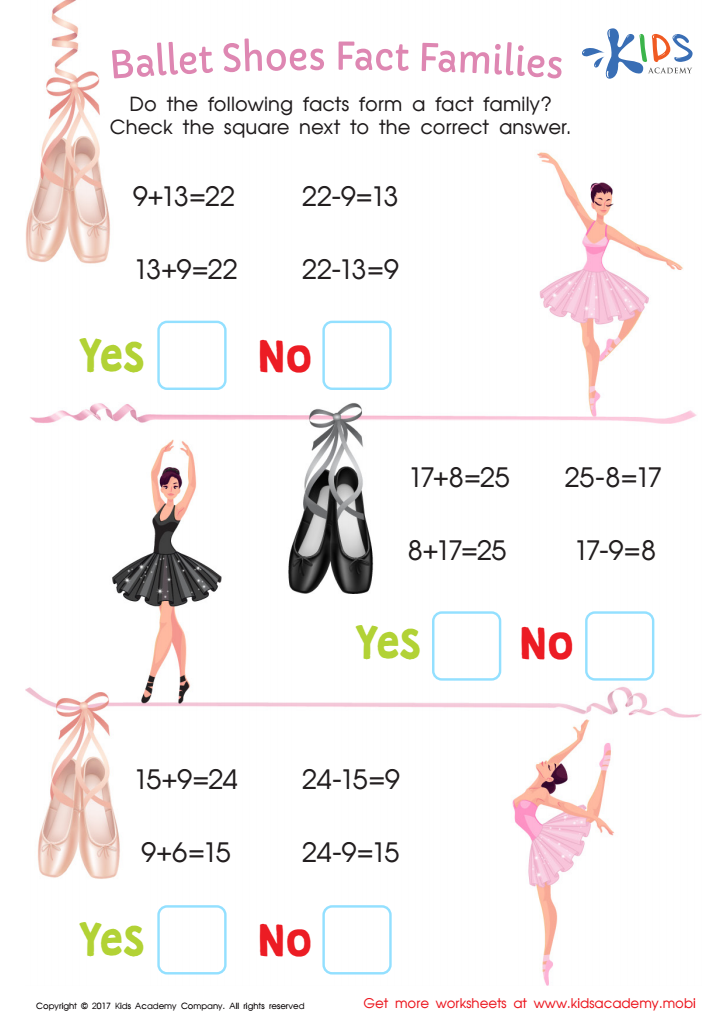
Ballet Shoes Fact Family Printable








Parents and teachers should prioritize activities like Addition Practice Extra Challenge Addition & Subtraction for children ages 8-9 because these foundational math skills are crucial to their academic development and day-to-day problem-solving abilities. At this age, students are typically in the third grade, a critical period for building a strong mathematical framework. Mastering addition and subtraction is essential as these concepts underpin more advanced topics such as multiplication, division, fractions, and eventually, algebra.
Engaging in challenging addition and subtraction practice enhances a child's mental arithmetic skills, which improves their speed and accuracy in solving problems. This practice develops critical thinking, reasoning, and attention to detail, all of which are required competencies not only in math but across their entire education. Moreover, confidence gained through mastering these basic skills fosters a positive attitude towards math, reducing math anxiety and fostering a lifelong interest in learning.
Parents and teachers who encourage extra practice at this stage will also help identify and address any learning gaps early on, preventing future struggles. By offering support and reinforcement through such challenges, children are better equipped for academic success and are more likely to develop the skills they need for varied real-world applications.








