Basic Math Skills Extra Challenge Numbers Worksheets for Ages 8-9
3 filtered results
Difficulty Level
Grade
Age
-
From - To
Subject
Activity
Standards
Boost your child's math proficiency with our "Basic Math Skills Extra Challenge Numbers Worksheets" for ages 8-9. These educational worksheets are meticulously designed to advance young learners' understanding of numbers and enhance key math skills. Through a variety of engaging exercises, children will encounter more challenging problems to solidify concepts like addition, subtraction, multiplication, and division. Students will also gain confidence in number patterns and sequences by exploring real-world applications. Perfect for extra practice at home or as supplementary classroom material, our worksheets make learning math fun and effective, setting a strong foundation for future success.
Favorites
With answer key
Interactive
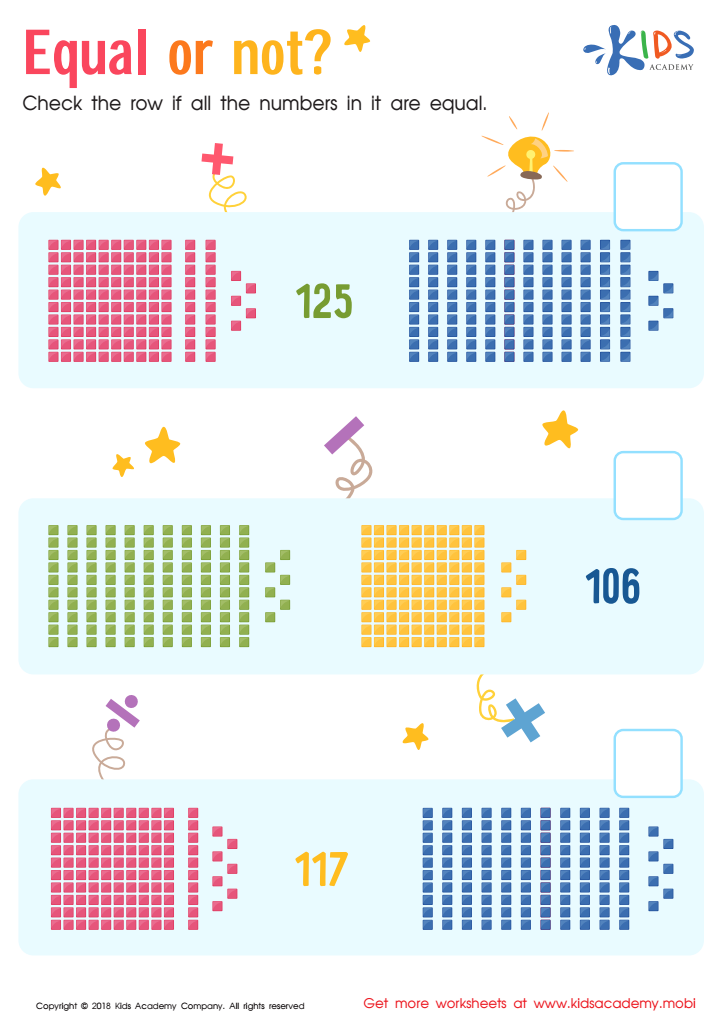
Equal or not Worksheet
To grow your child's learning, challenge them with new tasks. Stimulate their brains with activities that will build their knowledge and thinking skills. Take advantage of this worksheet exercise: ask your child to check the rows where all the numbers are equal. This simple exercise will improve their learning.
 Assign to My Students
Equal or not Worksheet
Worksheet

Sweet Shop – Counting Coins Worksheet
Help your child get ready to buy sweet treats with this coin counting worksheet. It'll challenge them to use the fewest coins possible. With knowledge of coin values, they'll work out the right combination to get the sweets!
Sweet Shop – Counting Coins Worksheet
Worksheet
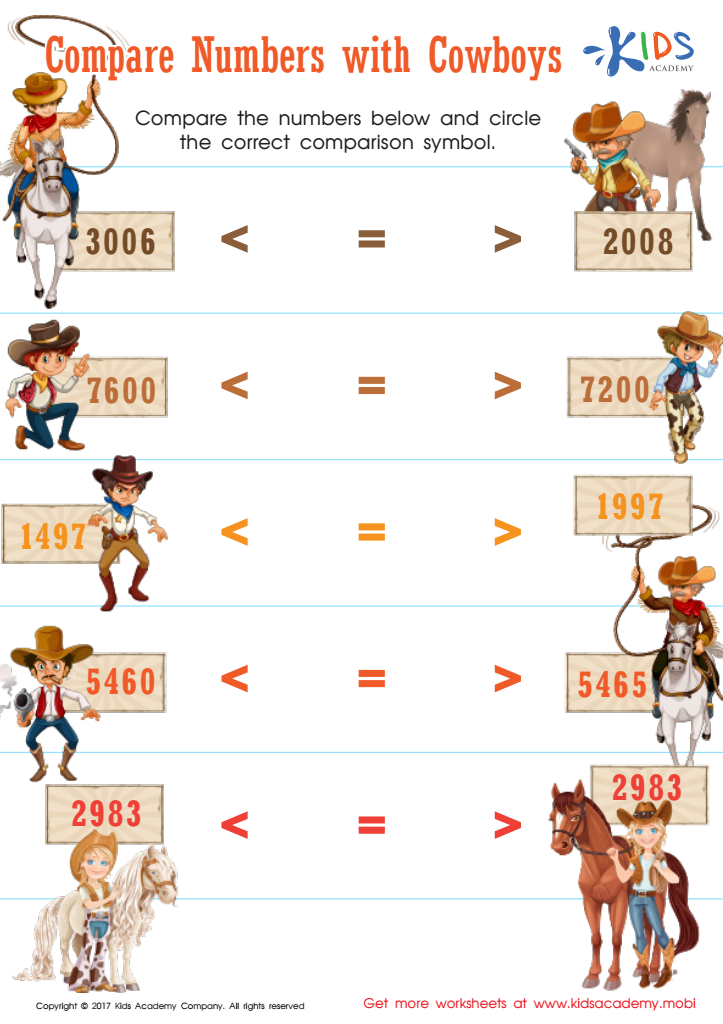
Compare Numbers Worksheet for 3rd Grade
Time to get a roundup on big numbers! Help your 3rd grader practice comparing thousands with this compare numbers worksheet. They'll use >, <, and = symbols for tricky numbers. Jump in and join the cowboys!
Compare Numbers Worksheet for 3rd Grade
Worksheet
Join Kids Academy for Free
Who is primarily going to use this learning content?








Parents and teachers should prioritize Basic Math Skills Extra Challenge Numbers for children aged 8-9 as these formative years are crucial for developing foundational math skills. At this age, children are transitioning from simple arithmetic to more complex, multi-step problems. These extra challenges help solidify their understanding of basic concepts such as addition, subtraction, multiplication, and division. Additionally, tackling challenging problems can enhance critical thinking and problem-solving abilities, which are vital skills beyond math.
Extra math challenges also foster a growth mindset. By presenting problems that are slightly more difficult than their regular coursework, children learn to embrace challenges and persevere through difficult tasks. This encourages a positive attitude toward learning and resilience in facing obstacles.
Moreover, stronger math skills at this age set the stage for future academic success. Proficiency in math is linked to higher achievements in other subjects and standardized tests. Early mastery builds confidence and a positive attitude toward math in later years.
Lastly, engaging with challenging material at home or in the classroom provides an opportunity for parents and teachers to identify and address any learning gaps early on. This proactive approach ensures that children have a strong numerical foundation, making future learning experiences more fruitful and enjoyable.