Mental math skills Extra Challenge Times Tables Worksheets for 8-Year-Olds
3 filtered results
-
From - To
Welcome to our "Mental Math Skills Extra Challenge Times Tables Worksheets" designed especially for 8-year-olds! These engaging worksheets focus on enhancing mental math capabilities through fun and interactive exercises. Tailored to develop quick recall and confidence in multiplication, each worksheet presents unique challenges that motivate young learners while reinforcing essential math concepts. Whether at home or in the classroom, these resources are perfect for supplementing your child's education and making math enjoyable. Dive into our collection and watch your child conquer times tables with ease, boosting their problem-solving skills for future success in mathematics! Perfect for budding math enthusiasts!
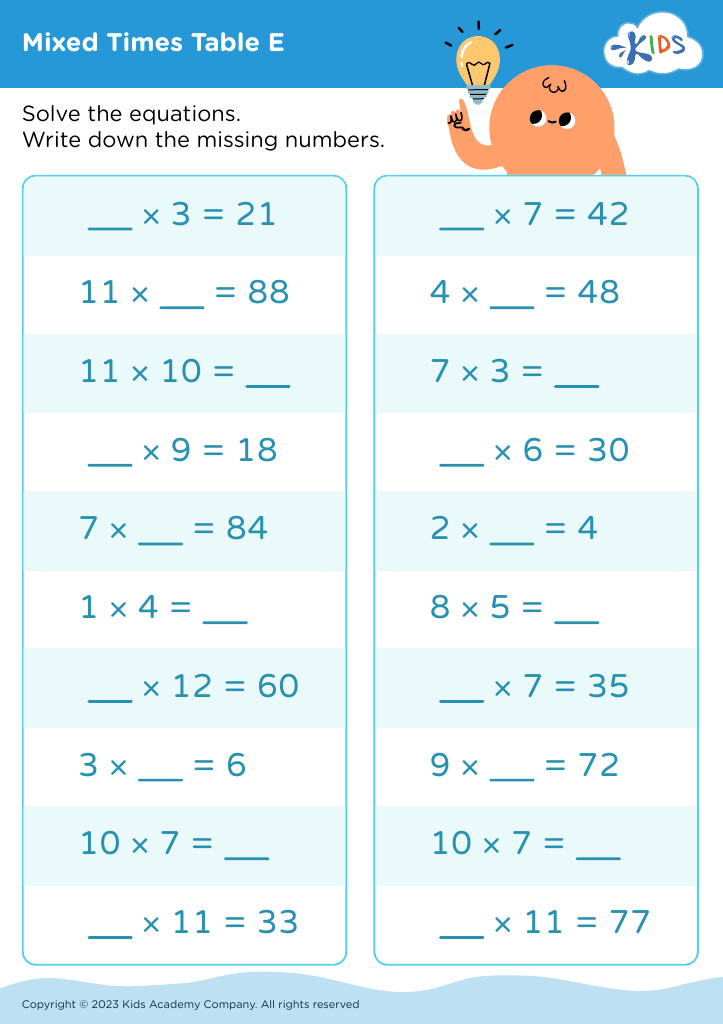
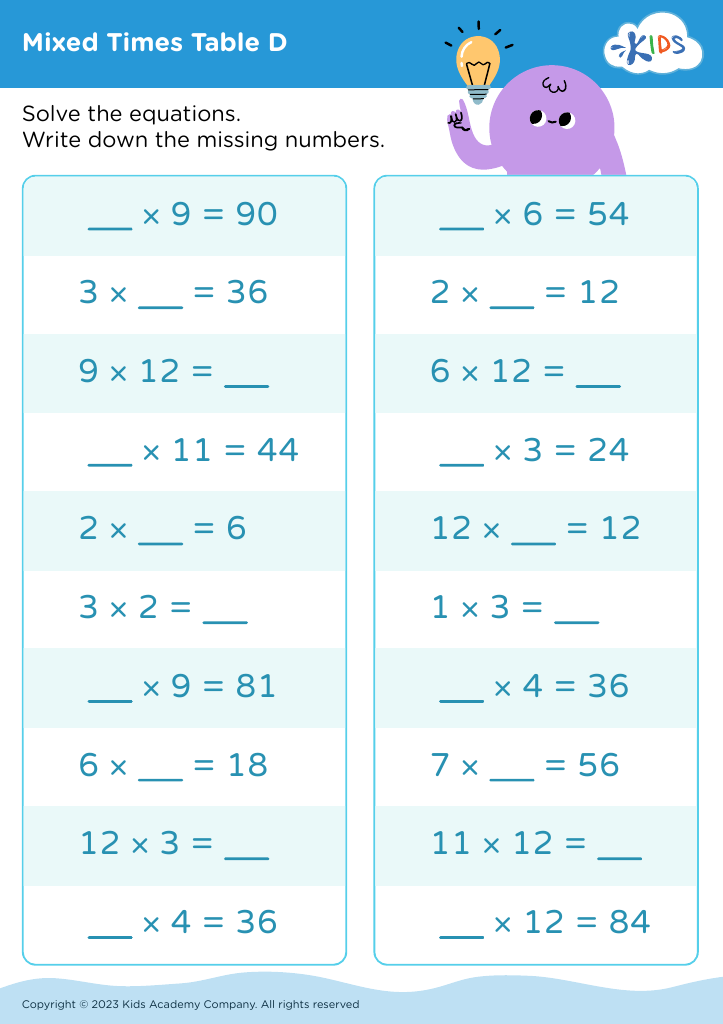
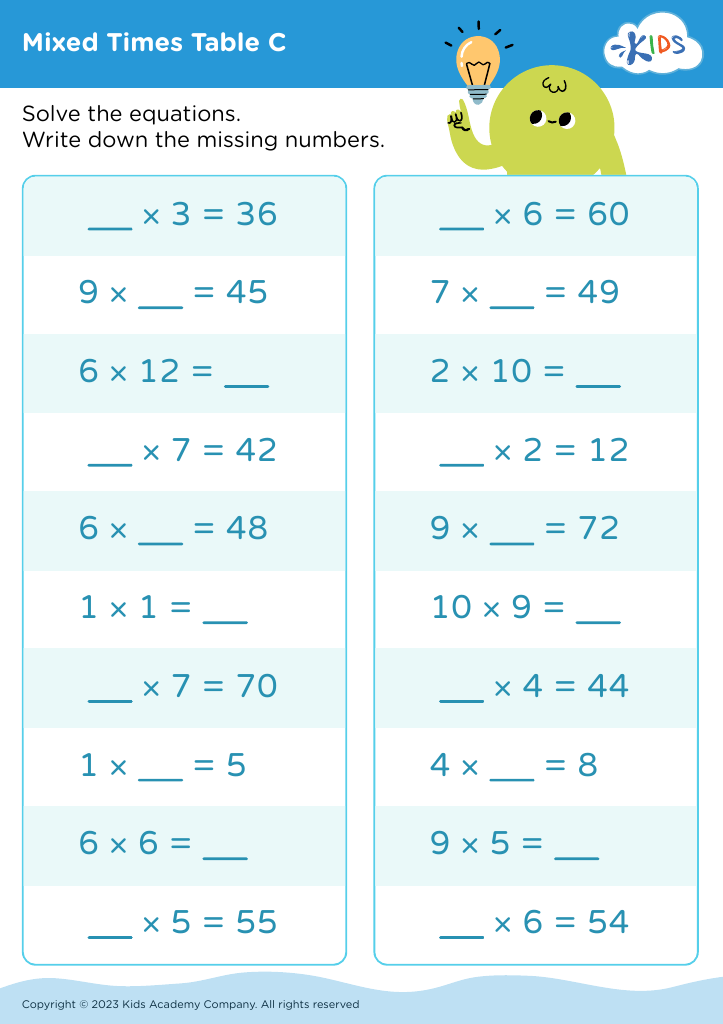





Parents and teachers should prioritize mental math skills, specifically extra challenge times tables for 8-year-olds, because these foundational skills significantly boost children's overall mathematical competency and confidence. At this age, children are diving deeper into multiplication and the mastery of times tables lays the groundwork for more complex arithmetic in later years.
Strong mental math skills, especially with times tables, encourage fluency and swift recall, which are essential in problem-solving scenarios. Engaging children with challenges helps develop critical thinking and cognitive flexibility, skills valuable in all areas of life. Furthermore, fluency in multiplication supports proficiency in division, fractions, and even percentages, allowing for a smoother academic progression.
These activities also foster perseverance and resilience. Children learn that practice translates into improvement, helping them appreciate the value of hard work and dedication. Additionally, as they gain confidence in their mental calculations, they become more eager to participate in classroom discussions and activities, promoting a positive learning environment.
Ultimately, prioritizing mental math skills is not just about mastering numbers; it’s about instilling a love and curiosity for learning, preparing children for future academic challenges, and empowering them with skills that are essential in everyday life.








