Alphabet Recognition Extra Challenge Alphabet Worksheets for 9-Year-Olds
3 filtered results
Difficulty Level
Grade
Age
-
From - To
Subject
Activity
Standards
Discover our engaging Alphabet Recognition Extra Challenge Worksheets designed specifically for 9-year-olds! These worksheets provide an exciting way to reinforce and enhance young learners' alphabet recognition skills. Through a variety of dynamic activities, including matching games, puzzles, and tracing exercises, children will not only solidify their familiarity with letters but also improve their cognitive abilities. Perfect for both classroom use and at-home practice, our worksheets are tailored to challenge students while keeping them entertained. Help your child excel in their literacy journey with these fun, educational tools that make learning the alphabet an adventure! Explore our worksheets today!
Favorites
With answer key
Interactive
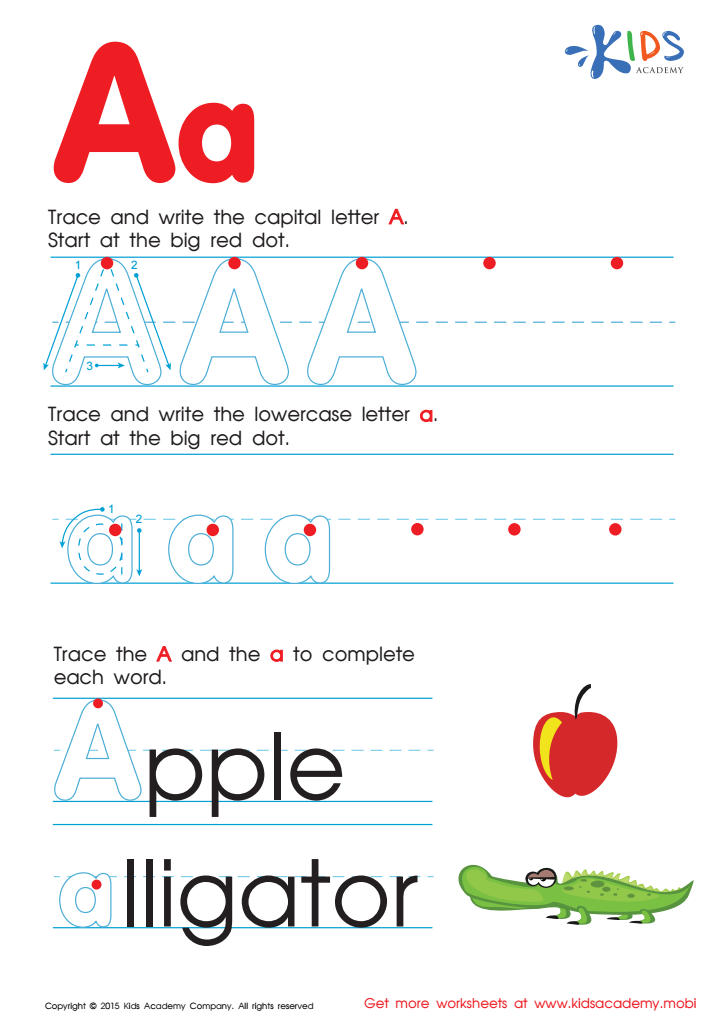
Letter A Tracing Page
Trace and write the letter "A"! Start with the big red dot, then do the capital and lowercase versions. Then write it again with two words - apple and alligator. Download more tracing worksheets at Kids Academy.
 Assign to My Students
Letter A Tracing Page
Worksheet
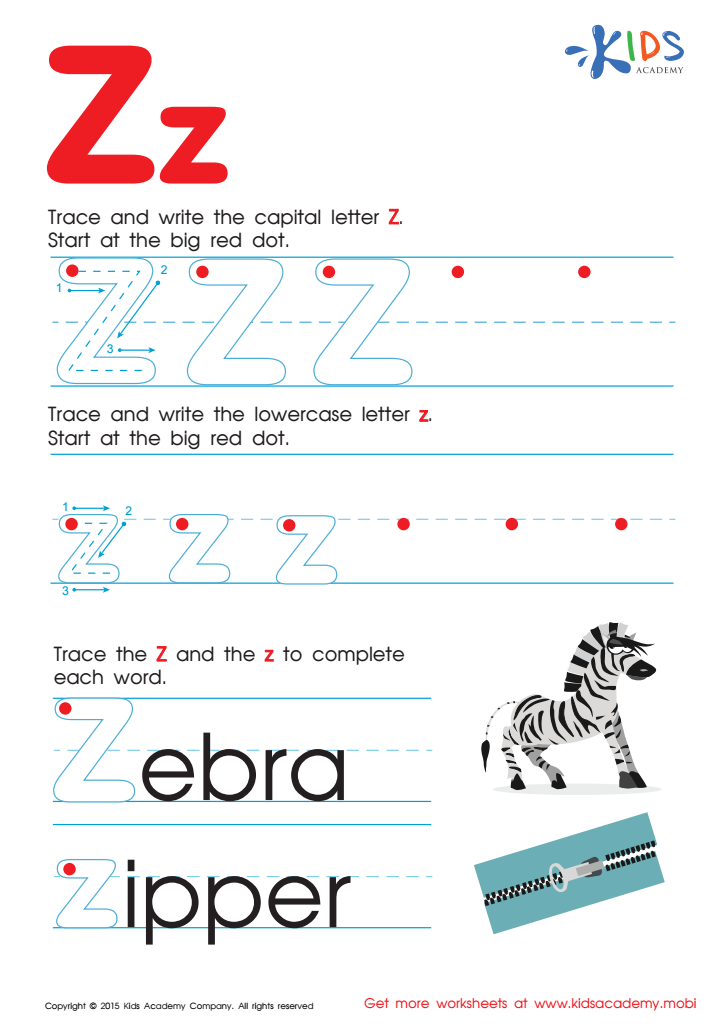
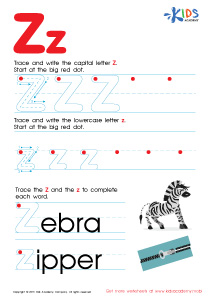
Letter Z Tracing Page
Trace and write capital "Z" and lowercase "z". Complete words "zebra" and "zipper". Be attentive and have fun! (80 words)
Letter Z Tracing Page
Worksheet
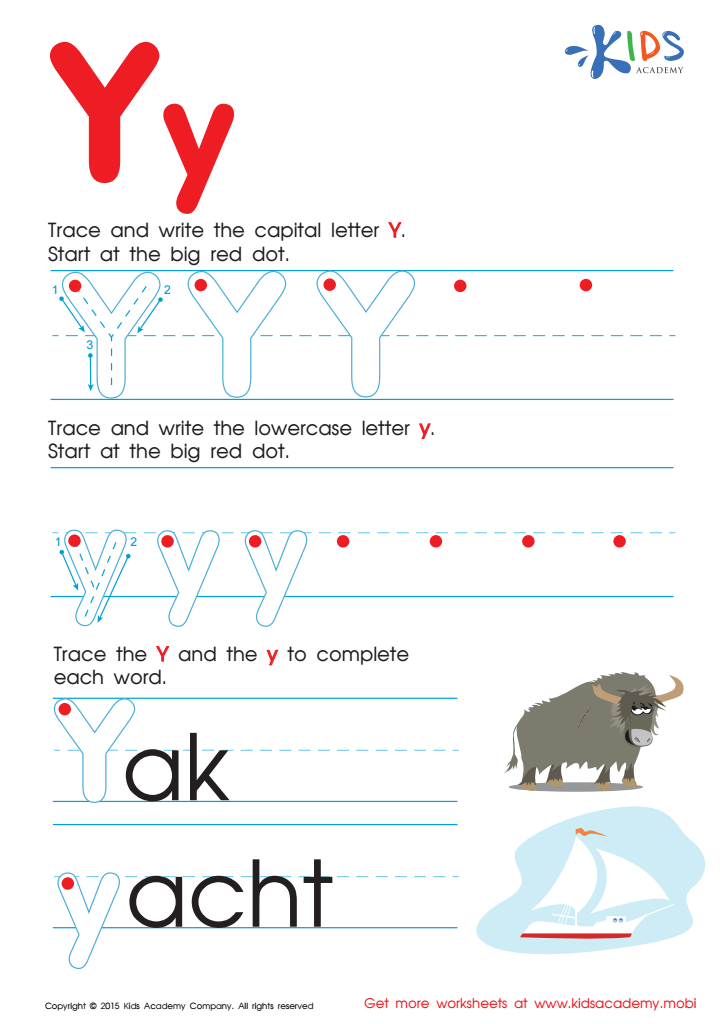
Letter Y Tracing Page
Trace the capital letter "Y" on the red dot, then trace and write the lowercase letter. Complete the words to help the Yak walk and the yacht swim. More worksheets at Kids Academy.
Letter Y Tracing Page
Worksheet
Join Kids Academy for Free
Who is primarily going to use this learning content?







Alphabet recognition remains a foundational component of literacy, even for children as old as nine who are navigating more complex reading and writing skills. For parents and teachers, the "Alphabet Recognition Extra Challenge" fosters both academic and cognitive development.
Firstly, mastering the alphabet is critical for reading fluency. At nine, children should not only recognize letters but understand their unique sounds and applications in words. Engaging in challenges reinforces this knowledge, helping children advance to more complex language structures.
Moreover, this challenge promotes confidence and motivation. For children struggling with literacy, a fun and interactive approach can make learning less daunting, transforming anxiety about reading into enthusiasm. It also encourages healthy competition—fuelling their desire to improve while fostering a sense of accomplishment.
Furthermore, early mastery of the alphabet facilitates better spelling, vocabulary acquisition, and ultimately, more effective communication skills that are essential for overall academic success. Thus, by focusing on alphabet recognition activities, parents and teachers can support comprehensive literacy development, ensuring children are well-prepared for future academic challenges. Emphasizing the importance of foundational skills at all ages sets the stage for a lifetime of learning and communication.