Money recognition Extra Challenge Math Worksheets for 9-Year-Olds
4 filtered results
-
From - To
Enhance your child’s financial literacy with our "Money Recognition Extra Challenge Math Worksheets" designed specifically for 9-year-olds! These engaging worksheets offer a fun and interactive way for kids to recognize, compare, and calculate various denominations of money. Through challenging exercises, your child will gain confidence in identifying coins and bills while improving essential math skills. With diverse activities ranging from real-life scenarios to word problems, these worksheets make learning about money both enjoyable and educational. Perfect for supporting classroom learning or reinforcing skills at home, these resources will prepare your young learner for future financial success. Dive into our money recognition challenges today!
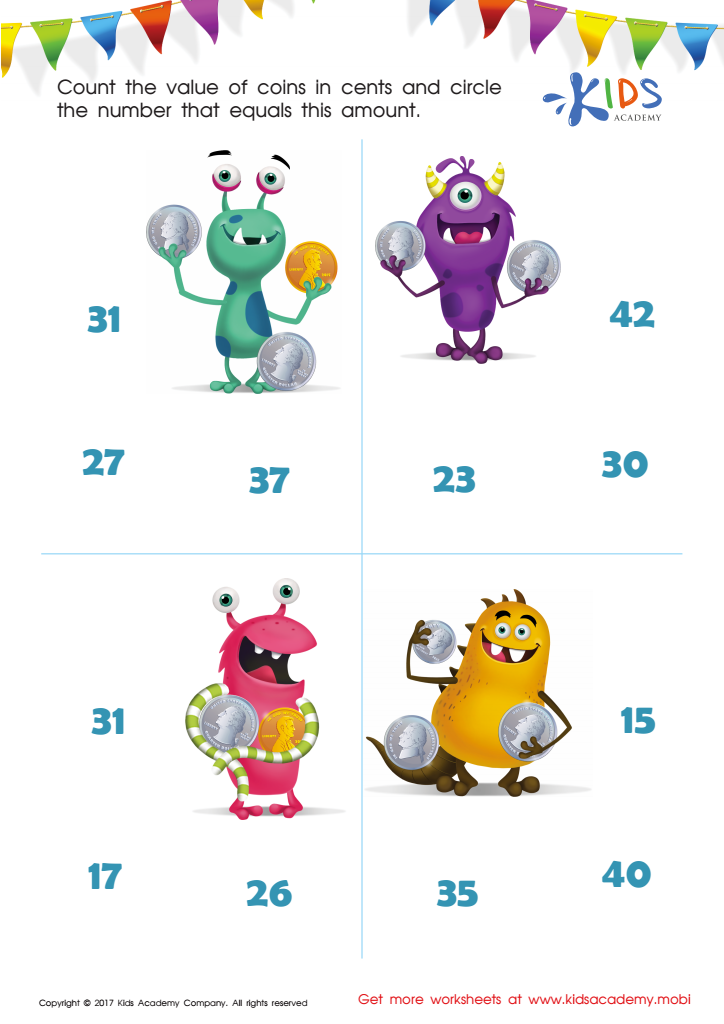
How Many Coins Money Worksheet
 Assign to My Students
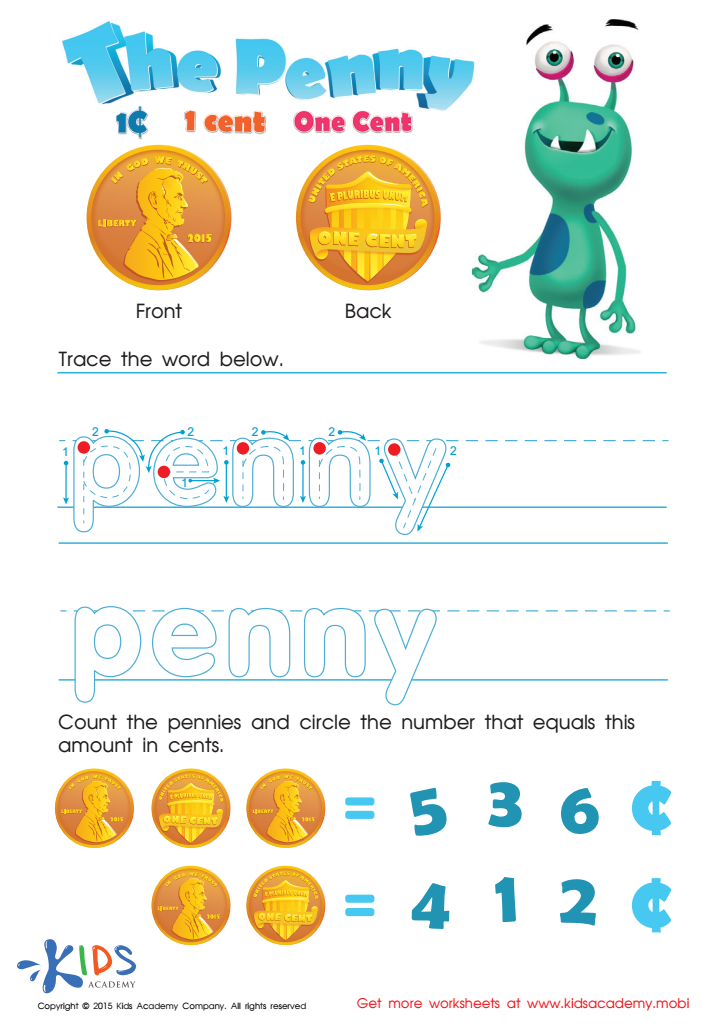
One Cent or the Penny Money Worksheet
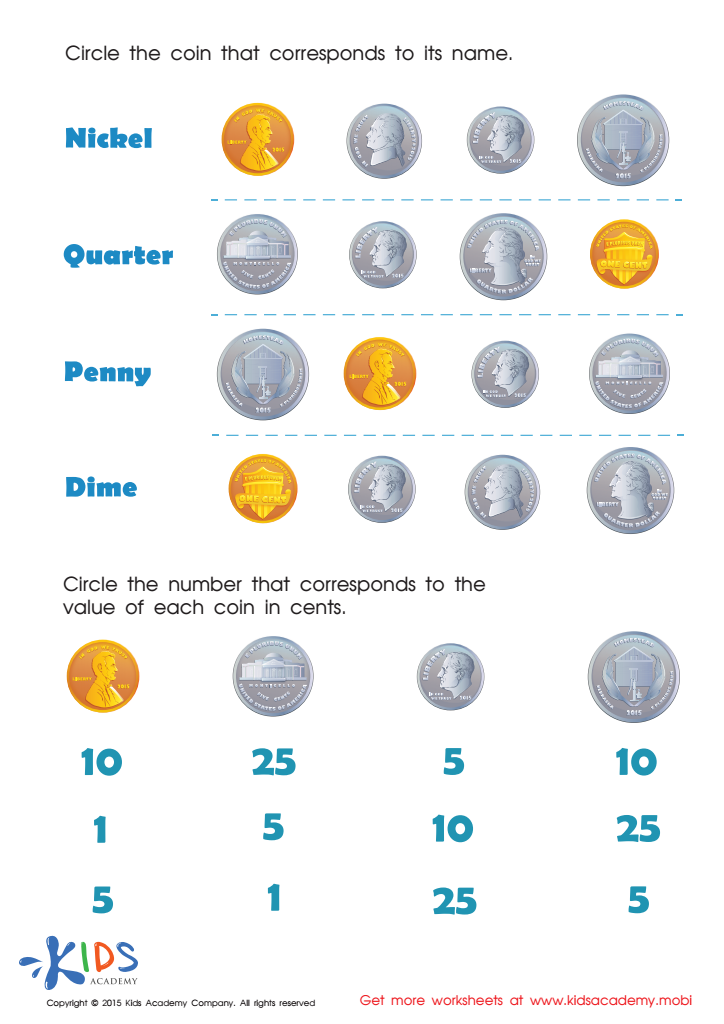
Coin Names and Values Money Worksheet
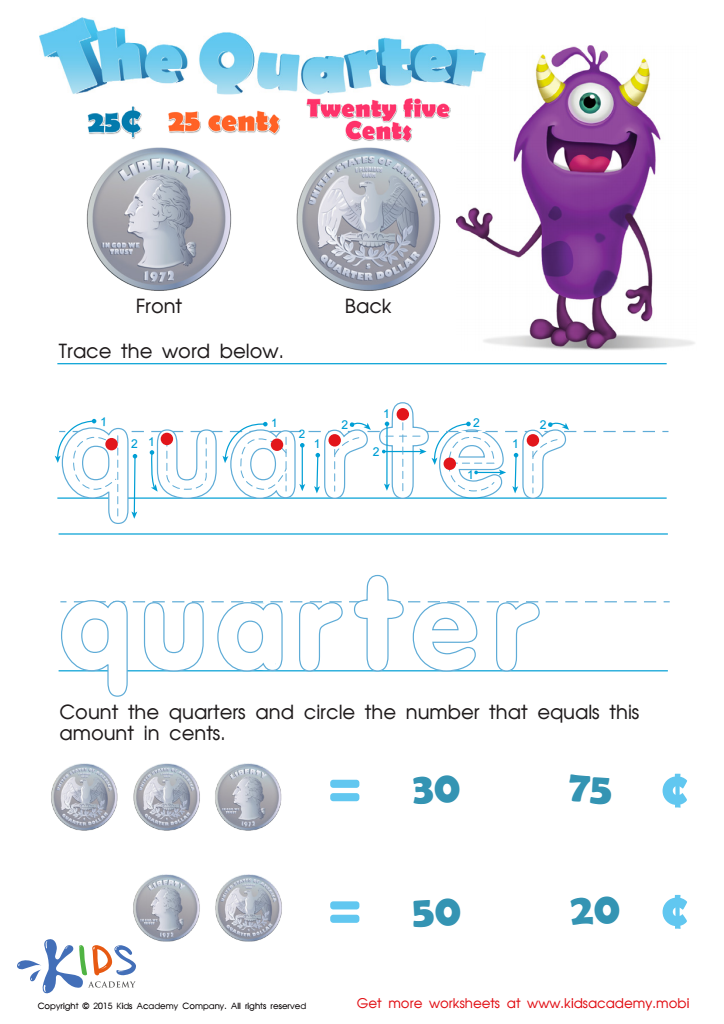
Twenty Five Cents or the Quarter Money Worksheet








Parents and teachers should prioritize money recognition and math for 9-year-olds because these skills form the foundation of financial literacy. At this age, children are gaining the cognitive ability to understand complex concepts, making it an ideal time to teach them about currency and its practical applications. Money recognition helps children identify different coins and bills, empowering them to handle transactions confidently.
Moreover, by incorporating money-related math challenges, children not only develop their arithmetic skills, such as addition, subtraction, and basic multiplication, but they also learn valuable problem-solving skills. This hands-on experience helps them grasp the importance of budgeting, saving, and spending wisely, vital lessons for their future personal finance management.
As they navigate real-world scenarios, such as making change or calculating costs while shopping, their math proficiency improves alongside their financial competence. This dual focus not only enhances academic performance but also equips children with essential life skills that foster independence and responsibility. Furthermore, parents and teachers can model positive financial behaviors, reinforcing learning through discussion and practice at home or in the classroom. Overall, investing time in money recognition and math challenges is essential for nurturing financially savvy, capable individuals.








