Basic counting skills Extra Challenge Kindergarten Worksheets
3 filtered results
-
From - To
Discover an engaging way to enhance early math abilities with our "Basic Counting Skills Extra Challenge Kindergarten Worksheets." Specially designed for young learners, these worksheets provide a variety of fun and educational activities to reinforce basic counting skills. Each sheet challenges children to count objects, match numbers, and complete simple addition tasks, ensuring they master the fundamentals of counting. By combining playful images and intuitive exercises, our worksheets make learning to count enjoyable and effective. Ideal for both classroom and home use, these extra challenges will help kindergarteners build a strong foundation in math and develop confidence in their abilities.
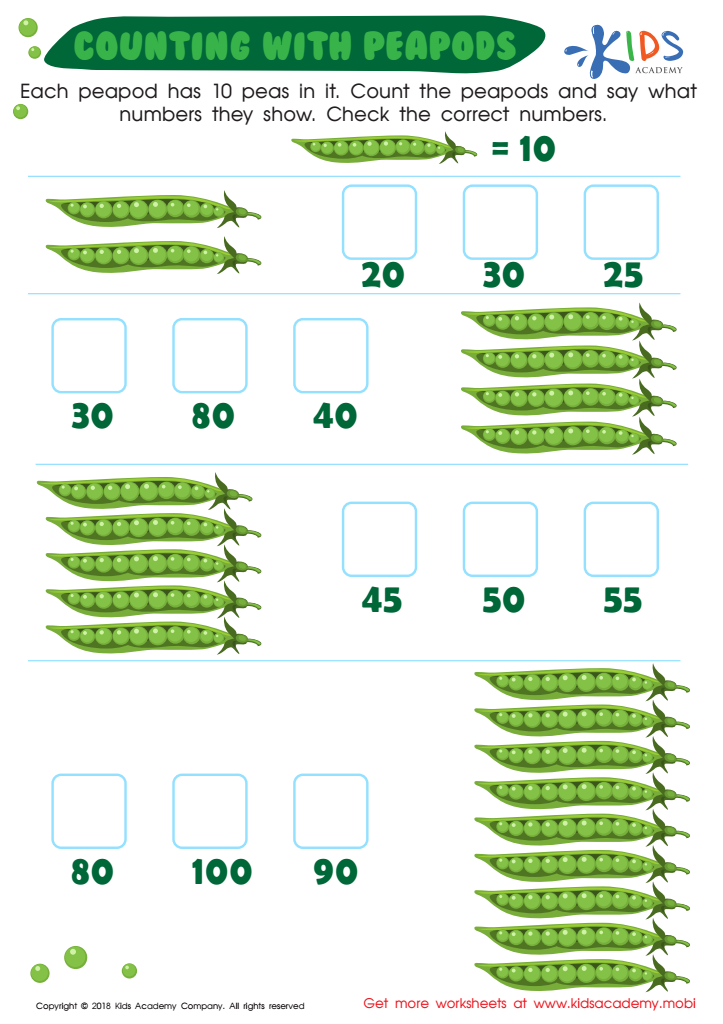
Number Worksheet: Counting With Peapods
 Assign to My Students
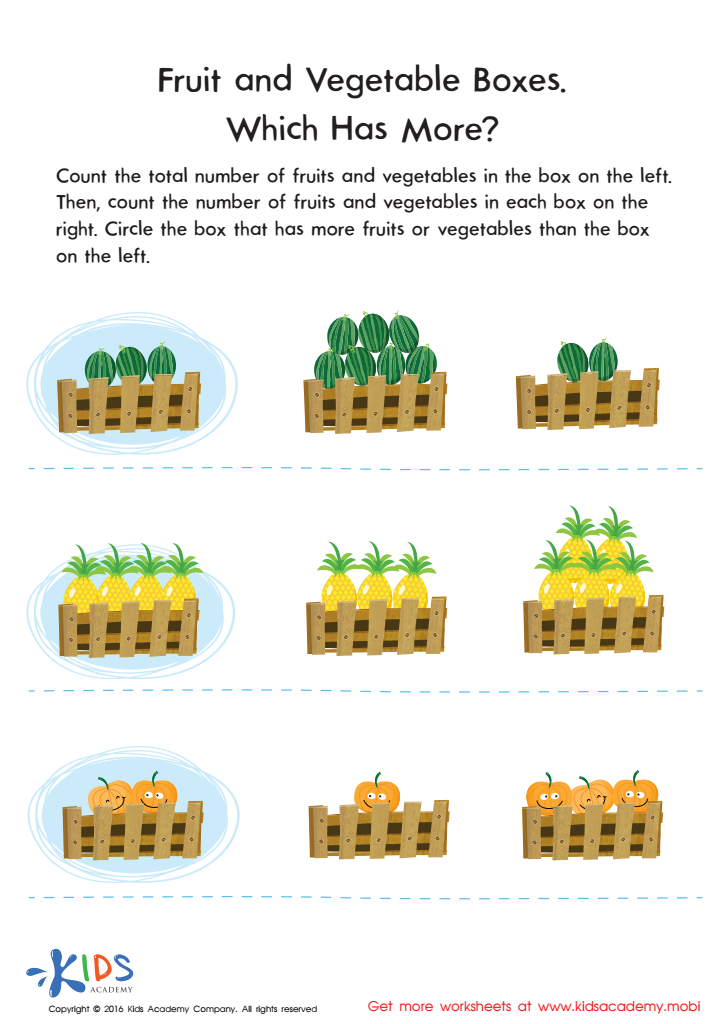
Which Has More? Size Worksheet
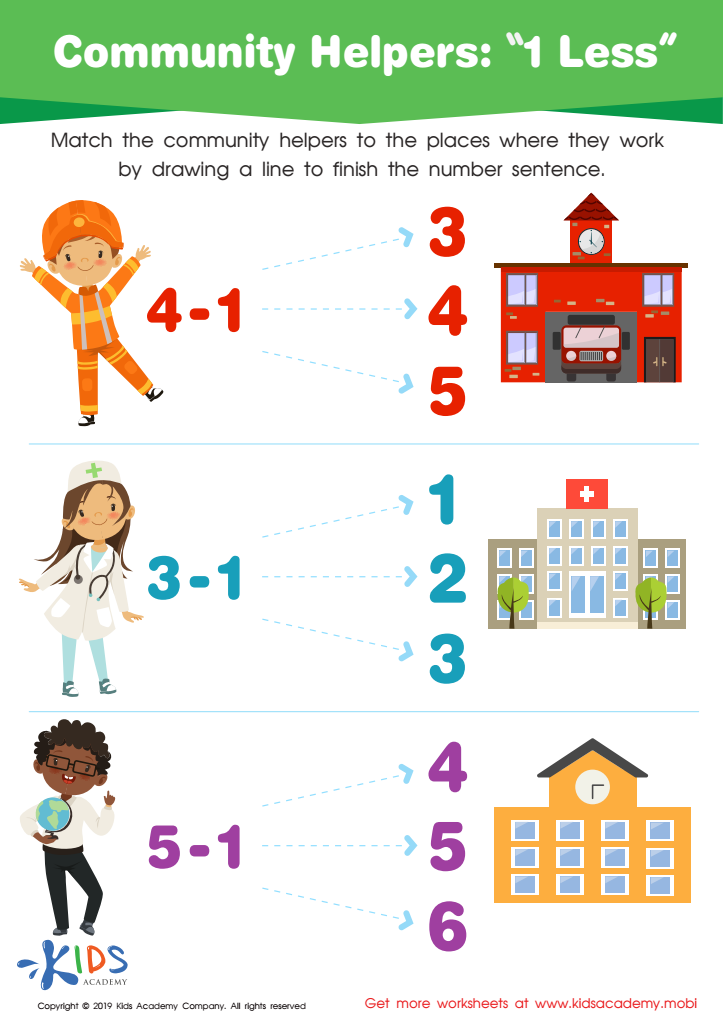
Community Helpers: 1 less Worksheet


.jpg)





Basic counting skills are foundational to a child's overall mathematical development and academic success. Parents and teachers should prioritize and care about fostering these skills in kindergartners for several compelling reasons. First, counting is more than just reciting numbers; it involves understanding one-to-one correspondence, recognizing patterns, and developing number sense. This early grasp of counting sets the stage for more complex mathematics, such as addition, subtraction, and eventually, higher-order concepts.
Providing an extra challenge helps children deepen their understanding and keeps them engaged. When children receive stimulating tasks that go beyond rote memorization, they start creating connections between numbers and real-world experiences, thereby enhancing critical thinking and problem-solving skills.
Moreover, solid counting skills contribute to success in other subjects and day-to-day activities, like following directions, organizing tasks, and even fostering social interactions through games that involve counting.
Igniting a curiosity for numbers at an early age also builds a child's confidence and sets a positive attitude towards learning. By continuously introducing engaging and challenging counting activities, parents and teachers not only equip children with essential academic skills but also inspire a lifelong love of learning and exploration.