Financial literacy Extra Challenge Grade 2 Money Worksheets
3 filtered results
Difficulty Level
Grade
Age
-
From - To
Subject
Activity
Standards
Financial literacy is essential, even for young learners, and our Financial Literacy Extra Challenge Grade 2 Money Worksheets make learning about money fun and engaging. Perfectly designed for second graders, these worksheets help students recognize and count coins and bills, understand value, and grasp basic financial concepts. With various activities and real-world scenarios, children will develop both their math skills and a foundational understanding of money management. Enhanced by colorful illustrations and interactive tasks, these worksheets align with common core standards and support lifelong financial skills. Ideal for both classroom use and at-home reinforcement! Empower your child with financial confidence today!
Favorites
With answer key
Interactive
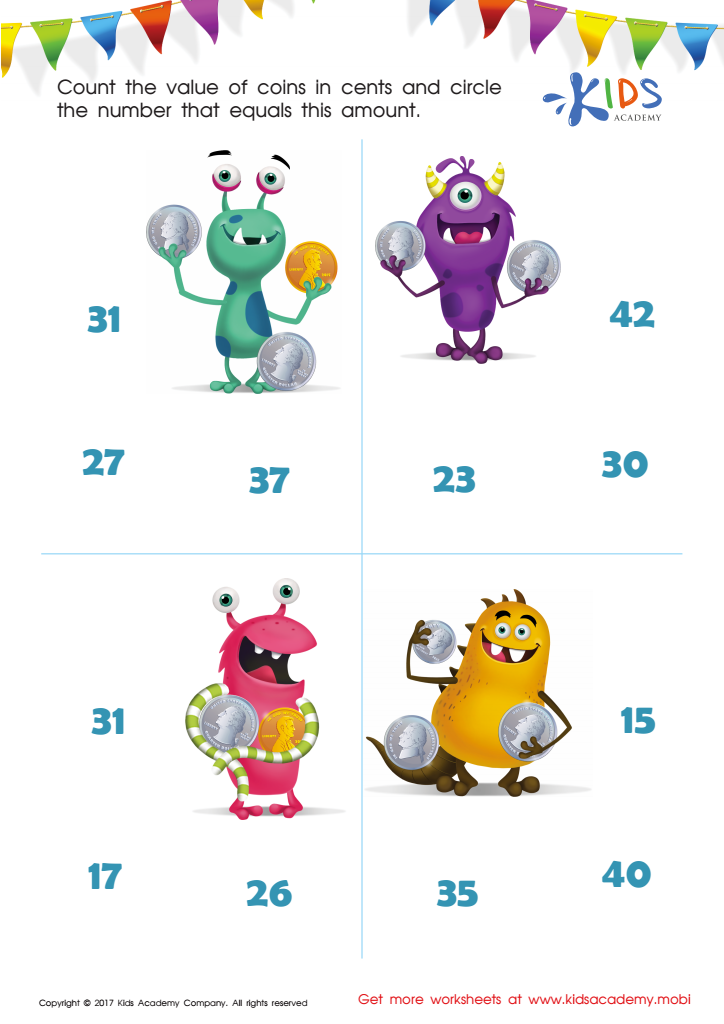
How Many Coins Money Worksheet
Have fun while counting coins: look at the monsters and count the coins in their hands. Challenge your little learners to count and write down the number of coins each one has. Enjoy the time together!
 Assign to My Students
How Many Coins Money Worksheet
Worksheet
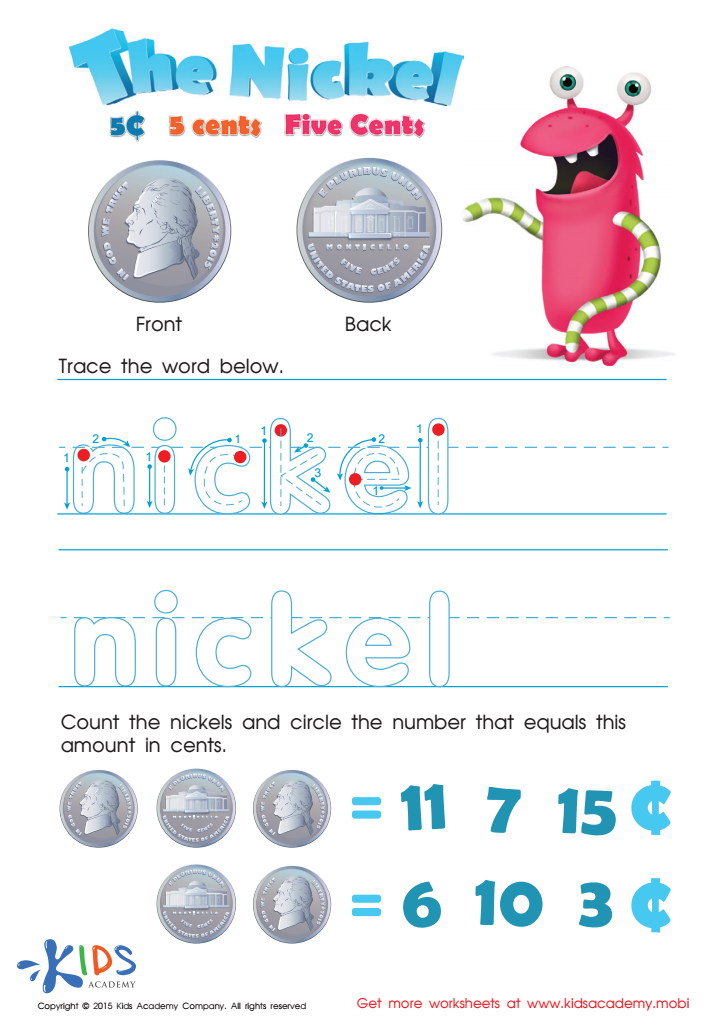
Five Cents or the Nickel Money Worksheet
Counting money games help kids make learning money fun and easy. Next up: the 5 cent coin, or nickel. Look at both sides and remember them. Then, trace the word "nickel" to help you remember. Finally, count the nickels and work out amounts in cents. Let's do this! Kids Academy helps make money learning easy and fun!
Five Cents or the Nickel Money Worksheet
Worksheet
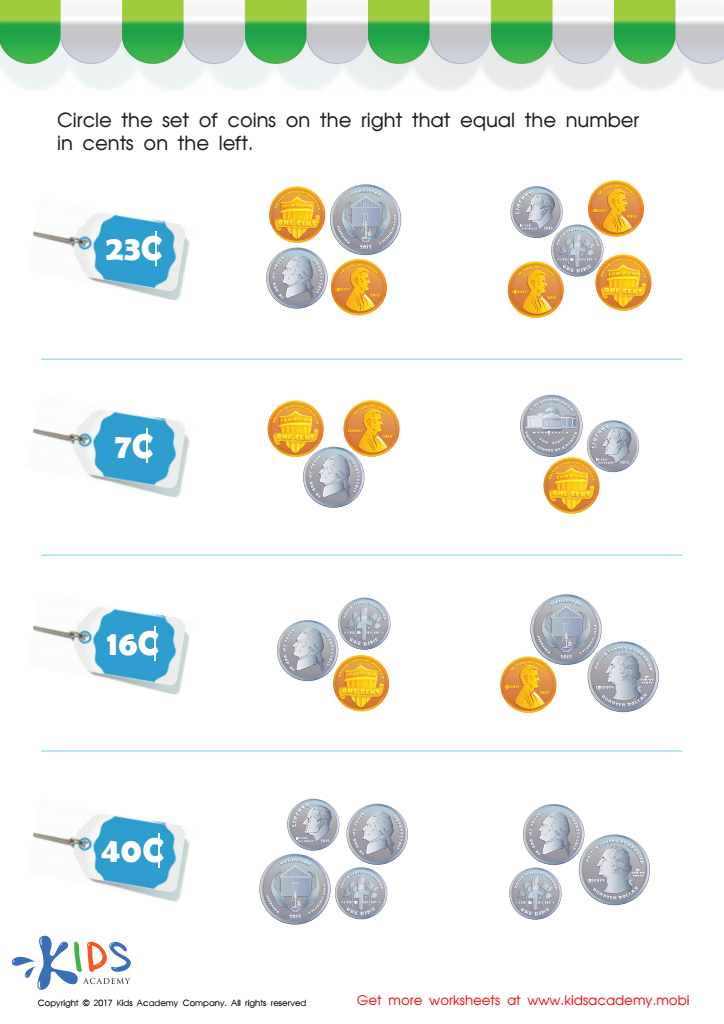
Picking the Coins You Need Money Worksheet
Let's learn to count money with Parents and Kids Academy! Investigate a real shop together: buy a globe, pencils, books, and a school bag using coins. Then, circle the coins you'll need. Visit our website for more free and fun money games for kids!
Picking the Coins You Need Money Worksheet
Worksheet
Join Kids Academy for Free
Who is primarily going to use this learning content?








Financial literacy is a crucial life skill that lays the foundation for responsible money management and financial decision-making in the future. Introducing money concepts to Grade 2 students through an Extra Challenge activity not only makes learning fun but also instills essential financial habits early on.
When parents and teachers engage young children in these activities, they help demystify the concept of money, making it tangible and understandable. Children learn the value of different coins and notes, the importance of saving, budgeting, and making informed financial choices. These skills contribute to their overall cognitive development, enhancing their mathematical and problem-solving abilities.
Moreover, early exposure to financial literacy helps students understand the essential principle that money is earned through work. This can develop an appreciation for the value of effort and reward, fostering a sense of responsibility and the importance of financial discipline.
Parents and teachers who prioritize financial literacy can help children avoid common financial pitfalls when they mature, such as accrued debt and poor saving practices. By equipping children with the basics of money management now, we empower them to lead more financially stable and informed adult lives, ultimately contributing to economically healthier communities.