Number Recognition Extra Challenge Grade 2 Numbers Worksheets
4 filtered results
-
From - To
Welcome to our "Number Recognition Extra Challenge Grade 2 Numbers Worksheets"! Designed specifically for second graders, these worksheets provide an engaging way to boost number recognition skills beyond the basics. They feature fun and interactive activities that challenge kids to identify and work with numbers in diverse formats. From matching numbers to counting exercises and puzzles, our extra challenges keep students motivated and help reinforce their learning. Perfect for classroom use or at-home practice, these resources nurture mathematical confidence and encourage a love for numbers. Explore our collection today and watch your child's skills soar!
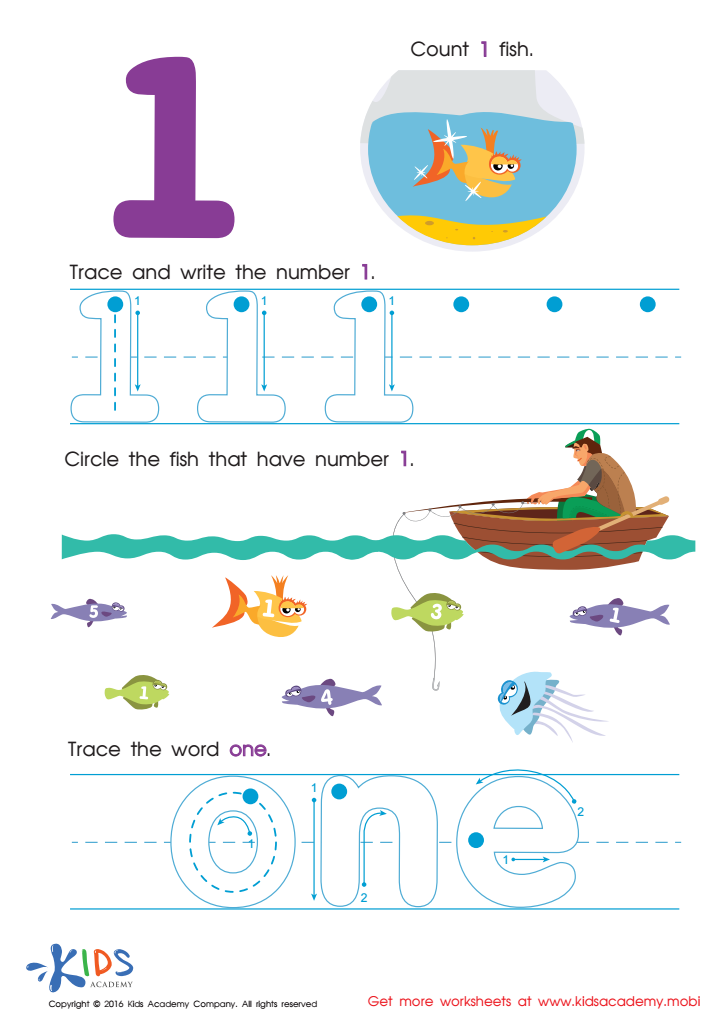
Learning to Write 1 Worksheet
 Assign to My Students
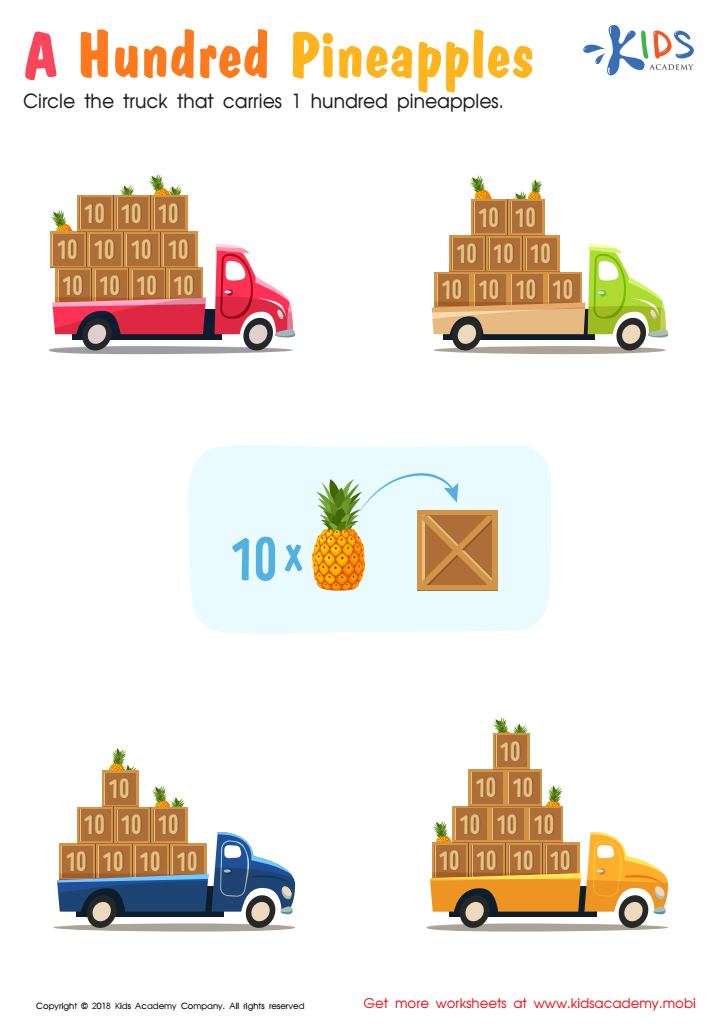
A Hundred Pineapples Worksheet
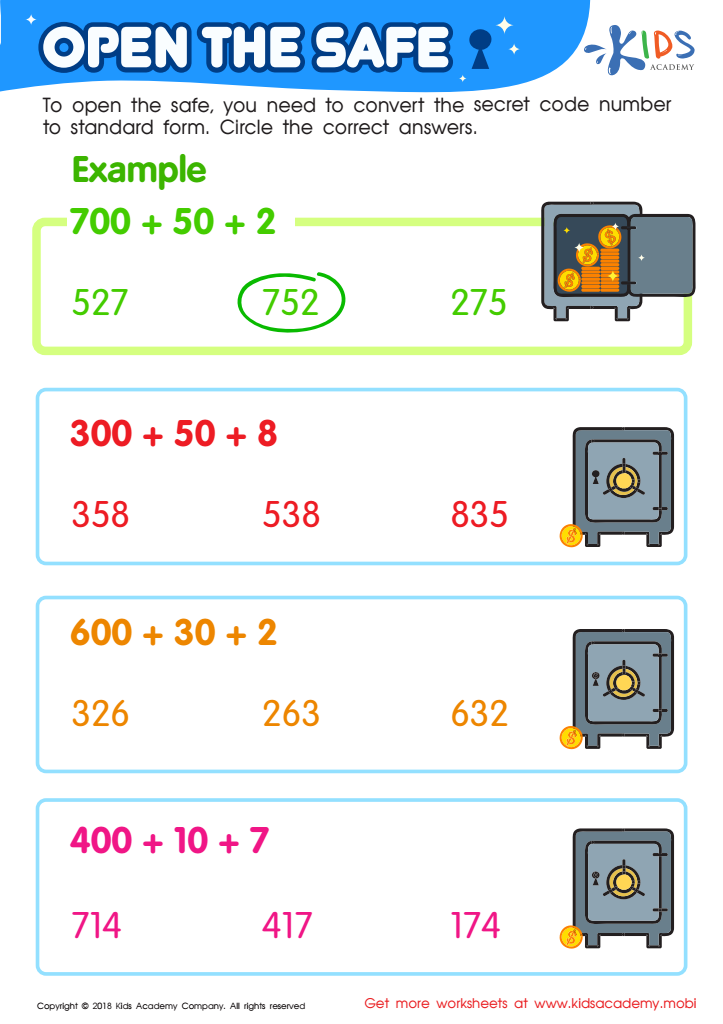
Open the Safe Worksheet
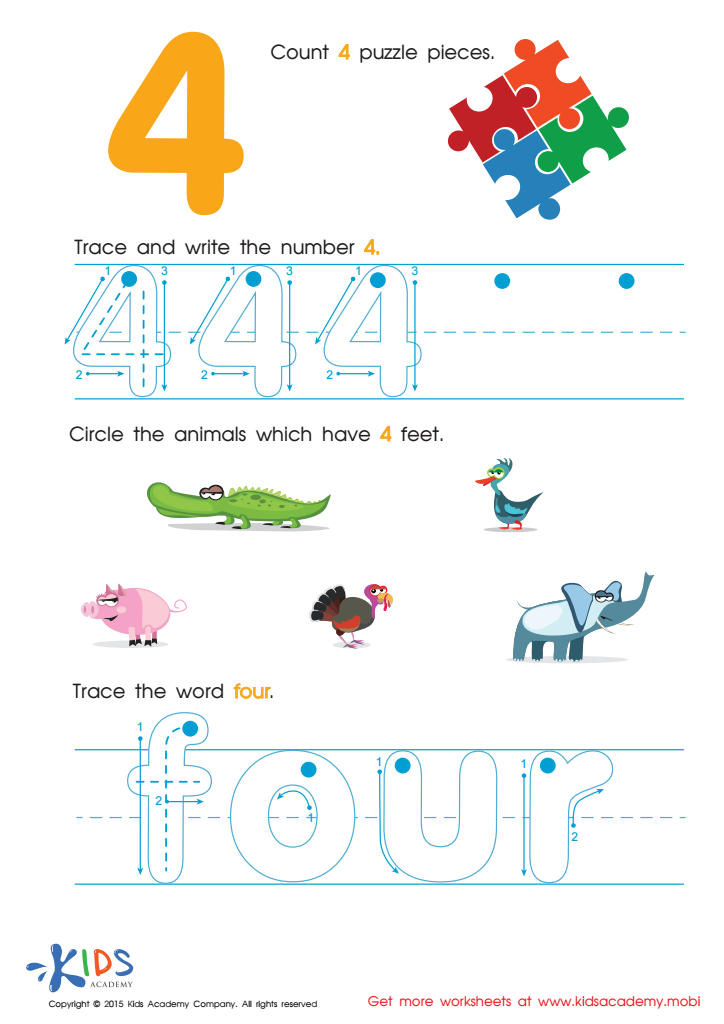
Teaching Children to Write Number 4 Worksheet








Number recognition is a foundational skill for young learners, especially in Grade 2, as it sets the stage for more complex mathematical concepts. When parents and teachers focus on Number Recognition Extra Challenges, they provide students with opportunities to deepen their understanding and enhance their numeracy skills.
Building strong number recognition skills helps children to quickly identify and differentiate between numbers, a necessity not only for performing operations like addition and subtraction but also for problem-solving and critical thinking in real-world contexts. For Grade 2 students, who are transitioning from basic number concepts to more intricate maths like multiplication and division, these challenges serve to solidify their knowledge and boost their confidence.
Furthermore, engaging in extra challenges fosters a love for learning, encouraging children to explore numerical concepts through games, activities, and creative puzzles. It acknowledges each child’s varied learning pace, ensuring that those who may excel have opportunities for enrichment without leaving behind those who need more support.
In summary, investing in number recognition extra challenges equips both parents and teachers to nurture mathematically proficient, confident students prepared to tackle future educational milestones. It not only impacts academic performance but also contributes to lifelong problem-solving abilities.