Multiplication practice Extra Challenge Social Studies Worksheets
3 filtered results
Difficulty Level
Grade
Age
-
From - To
Subject
Activity
Standards
Welcome to our Multiplication Practice Extra Challenge Social Studies Worksheets page! Here, we offer an engaging way to hone multiplication skills while exploring fascinating social studies concepts. Our worksheets feature challenging multiplication problems integrated with themes such as geography, history, and culture. Designed for early grade students, these activities encourage critical thinking and reinforce mathematical understanding in a fun and interactive manner. Ideal for classroom use or at-home practice, our worksheets empower young learners to connect math with real-world subjects. Dive in and boost your child’s confidence in multiplication while expanding their knowledge of the world around them!
Favorites
With answer key
Interactive
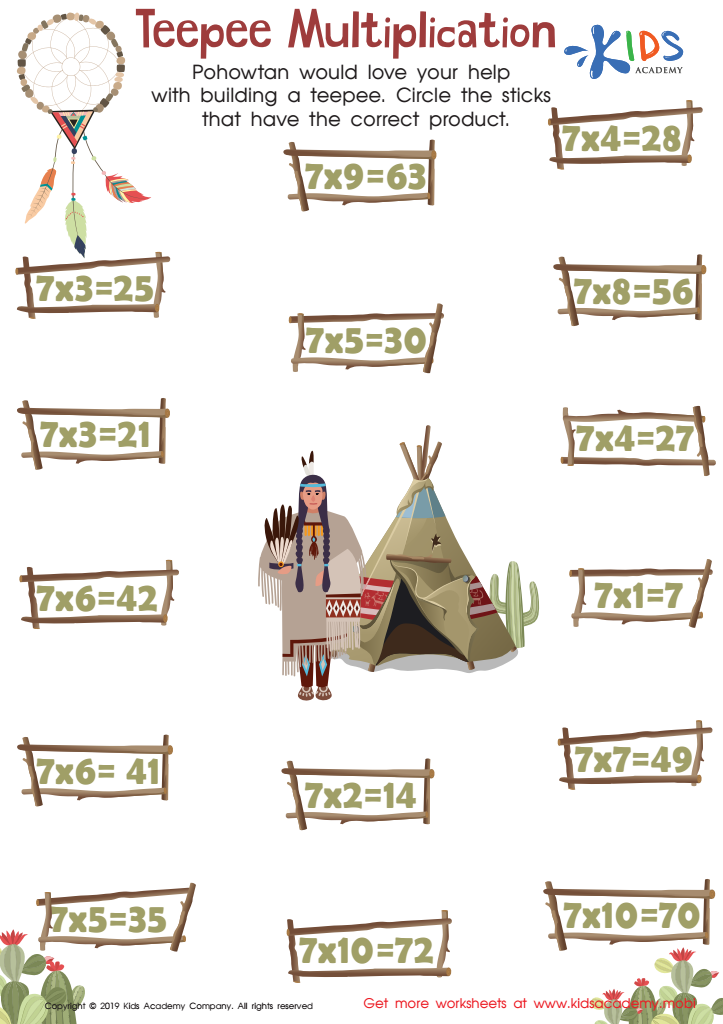
Teepee Multiplication Worksheet
Help the Native American man build his teepee by checking multiplication facts! Learners are given purpose and excitement with this fun math worksheet. Check each set of sticks, find, and circle the ones with the correct product to complete.
 Assign to My Students
Teepee Multiplication Worksheet
Worksheet
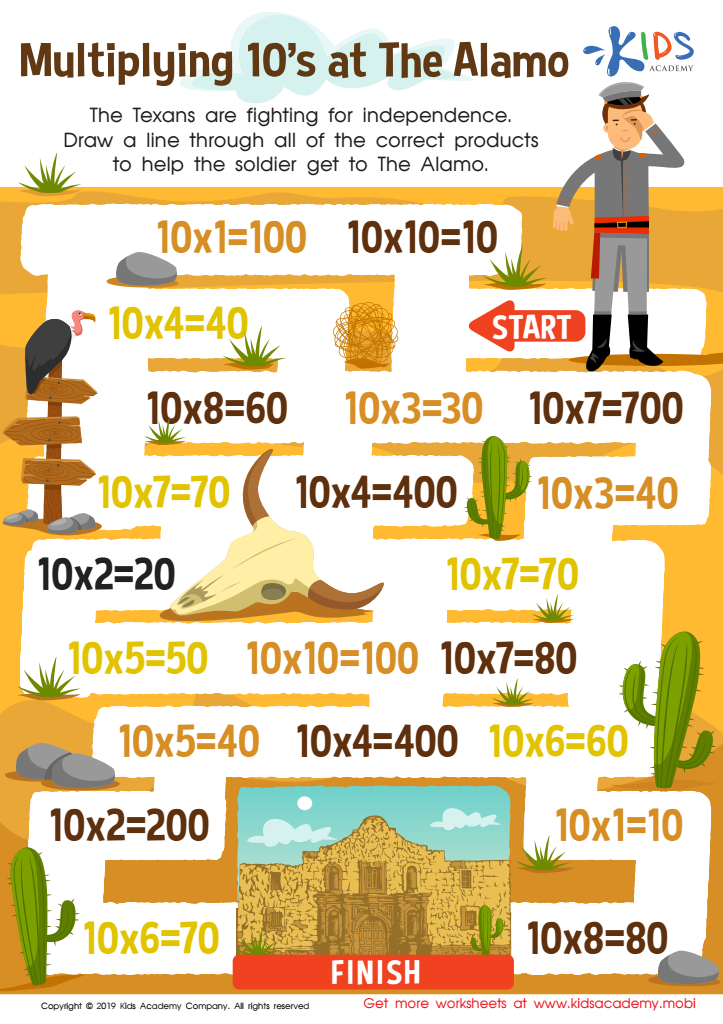
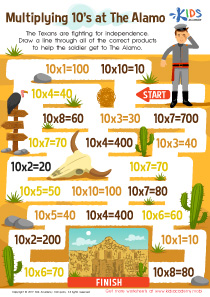
Multiplying 10’s at The Alamo Worksheet
Teach your kids easy tricks to simplify any multiplication problem. For example, when multiplying any number by 10, the result will always end in a zero. To help the Texans in this worksheet, draw a line through all of the correct products to get them to The Alamo.
Multiplying 10’s at The Alamo Worksheet
Worksheet
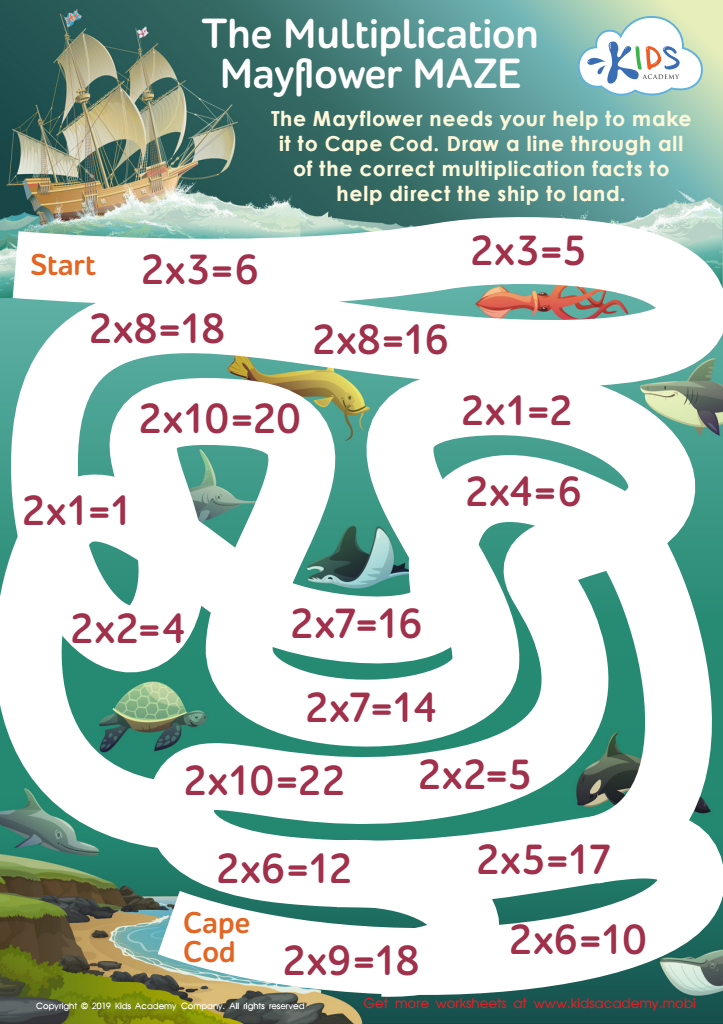
The Multiplication Mayflower Maze Worksheet
Math may not be a favorite subject but it must be tackled. To get minds engaged, use colorful, fun worksheets like this one. Ask students to draw a line connecting all the correct multiplication facts to help the Mayflower get to Cape Cod.
The Multiplication Mayflower Maze Worksheet
Worksheet
Join Kids Academy for Free
Who is primarily going to use this learning content?








Parents and teachers should care about Multiplication practice within the framework of Extra Challenge Social Studies for several compelling reasons. First, multiplication is a foundational math skill vital for advanced mathematical concepts and everyday problem-solving. Proficiency in multiplication enhances students' confidence and boosts their overall academic performance.
Integrating mathematics with Social Studies provides an engaging and contextual learning experience. For instance, exploring historical population statistics, trade economics, or geographical data allows students to apply multiplication in meaningful ways. This interdisciplinary approach not only reinforces multiplication skills but also cultivates critical thinking and analytical abilities as students explore how numbers tell stories about societies and cultures.
Additionally, repetition and practice in multiplication help solidify mental math skills, which are crucial as students progress through their educational journey. Extracurricular challenges that incorporate social studies themes inspire curiosity about the world, thereby fostering a love for learning.
Ultimately, when parents and teachers prioritize this approach, they not only support mathematical literacy but also prepare students to engage thoughtfully with the complex interconnectedness of different subjects, understanding the value of numbers in real-life contexts. By bridging these two fields, educators can create a richer, more meaningful learning experience for children.