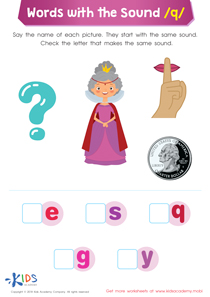
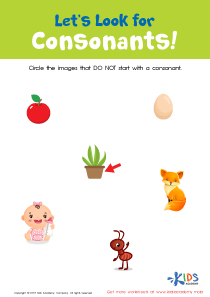
Phonics recognition Kindergarten Elementary Phonics Worksheets
3 filtered results
-
From - To
Unlock your child’s reading potential with our engaging Kindergarten Elementary Phonics Worksheets, designed specifically for phonics recognition. Our worksheets promote early literacy skills through fun and interactive exercises, helping young learners recognize sounds and letters, blending them to form words. With colorful, kid-friendly designs and clear instructions, children stay motivated while gaining foundational reading abilities. Created by educational experts from Kids Academy, these activities provide essential practice to sharpen phonics skills, boosting confidence and understanding. Perfect for use in classrooms or at home, our phonics worksheets ensure kids are well-prepared for their ongoing reading journey. Start exploring today!
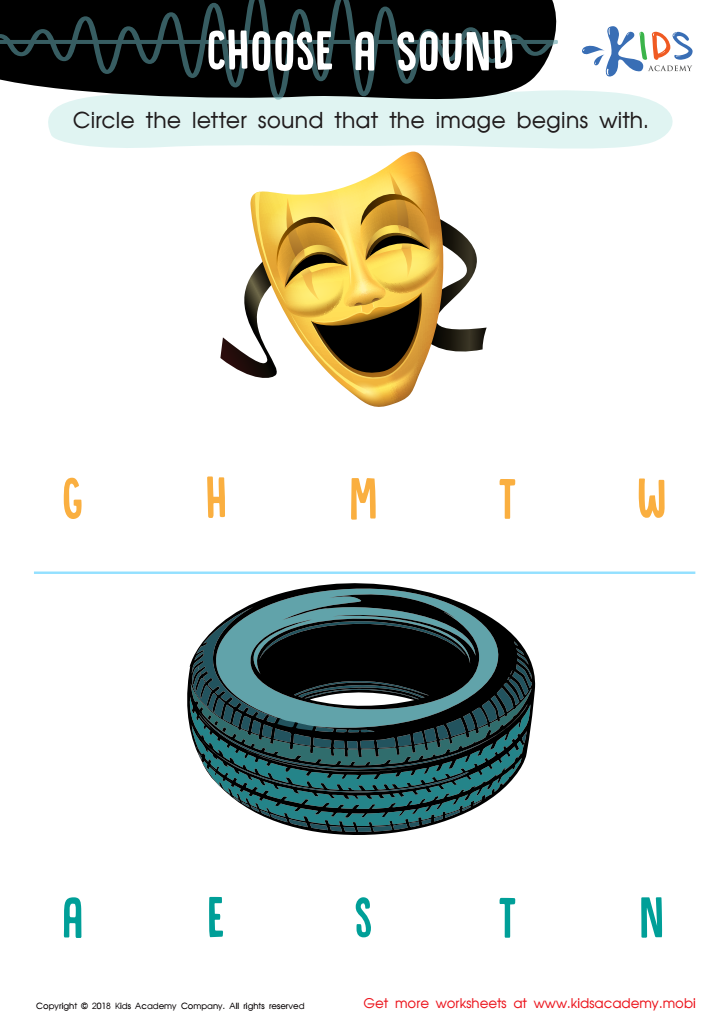
Choose a Sound Worksheet
 Assign to My Students
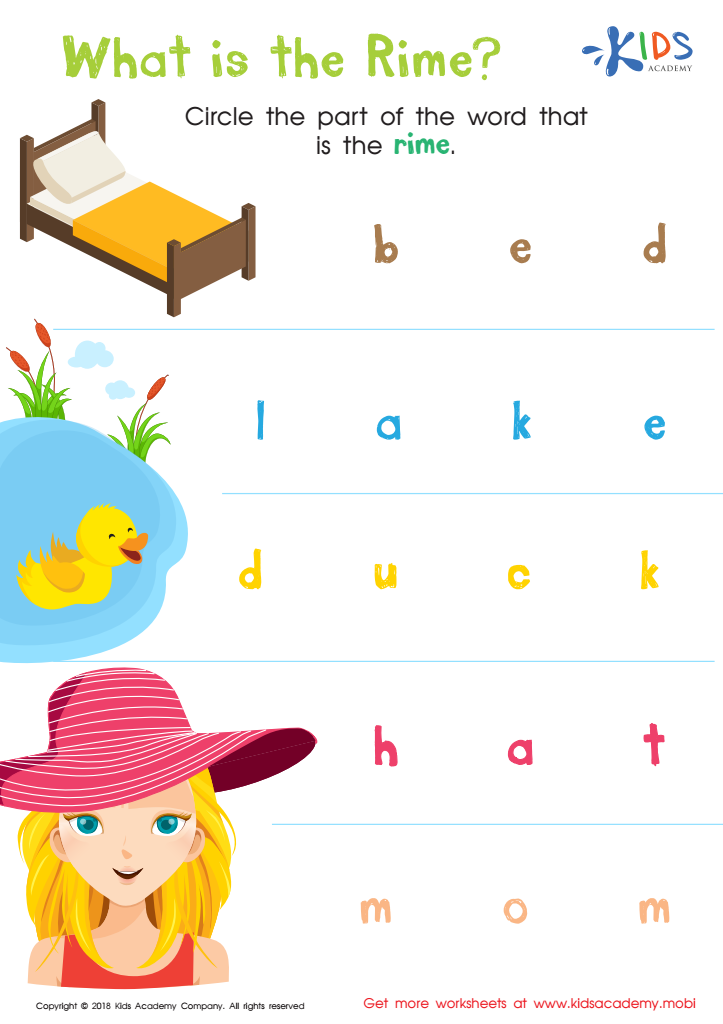
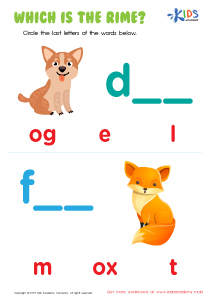
What Is the Rime? Worksheet
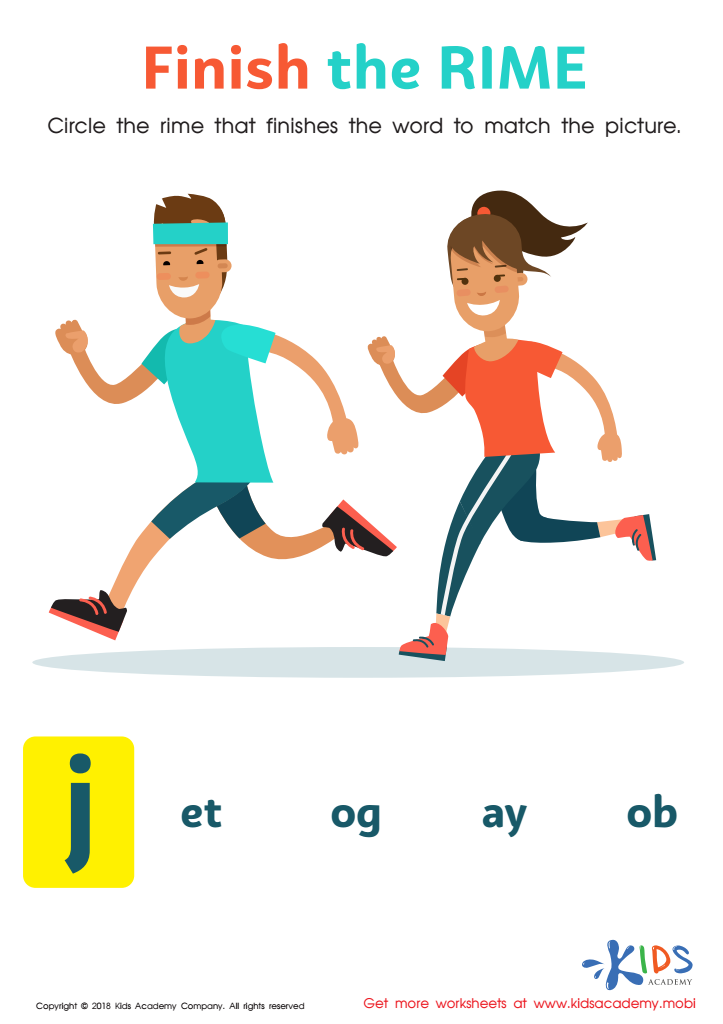
Finish the Rime Worksheet




Phonics recognition is fundamental in early childhood education because it lays the foundation for successful reading and writing skills. At its core, phonics involves the relationship between sounds and their corresponding letters or groups of letters. For kindergarten and early elementary students, mastering these skills is crucial for several reasons.
Firstly, phonics instruction helps children decode new words, allowing them to read independently and with confidence. This early ability to read promotes a love for reading, which is associated with better academic performance and expanded vocabulary. When students grasp phonics early, they also become better spellers because they understand the building blocks of words.
Furthermore, phonics recognition supports overall language development, enhancing speaking and comprehension abilities. Young learners with strong phonics skills can hear distinct sounds and better articulate words, fostering greater communication skills.
Equally important, focusing on phonics in the early years can mitigate future reading difficulties and reduce the likelihood of learning gaps. Early interventions make it easier to address specific needs and provide targeted support, contributing to a more equitable learning environment.
In essence, parents and teachers should care deeply about phonics recognition because it is a pivotal early literacy skill that sets the stage for lifelong learning, critical thinking, and academic success.