Rhyming skills development Kindergarten Alphabet Worksheets
3 filtered results
-
From - To
Enhance your child's rhyming skills with our engaging Kindergarten Alphabet Worksheets! Designed for young learners, these worksheets feature fun activities that promote phonemic awareness through rhymes and rhythm. Children will practice recognizing and producing rhyming words, boosting their vocabulary and language skills. Our interactive exercises make learning enjoyable, encouraging creativity and confidence in early literacy. Ideal for home or classroom use, these worksheets are perfect for reinforcing foundational skills in a playful way. Join us on the journey to develop your child's love for language and rhymes while laying a strong foundation for future reading success! Explore our resources today!
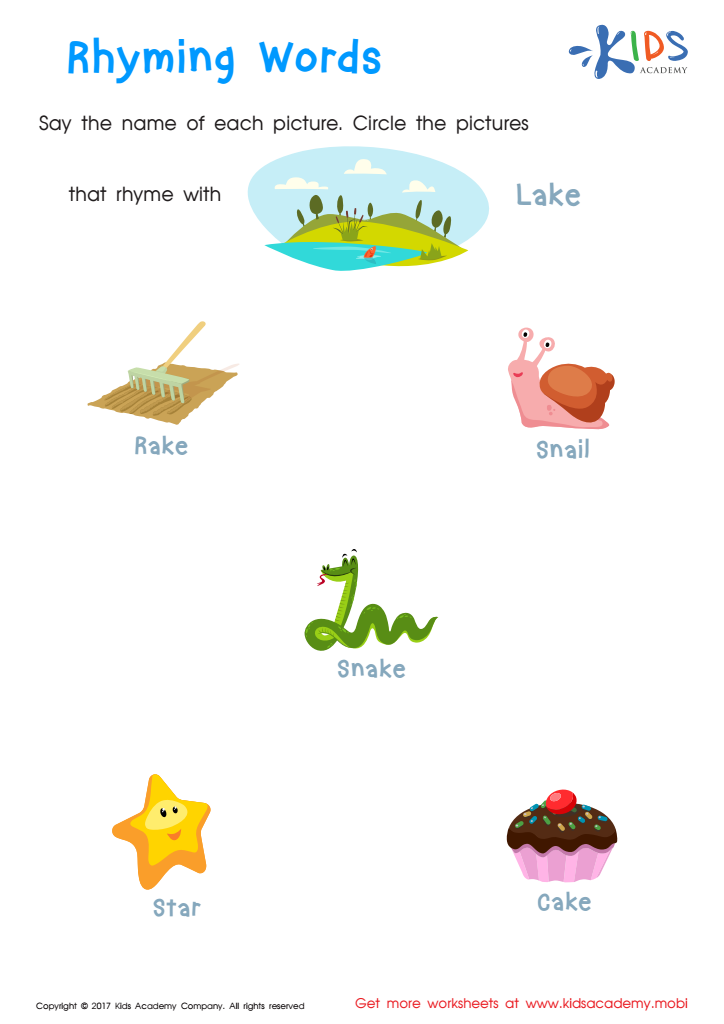
Rhyming Words Rhyming Worksheet
 Assign to My Students
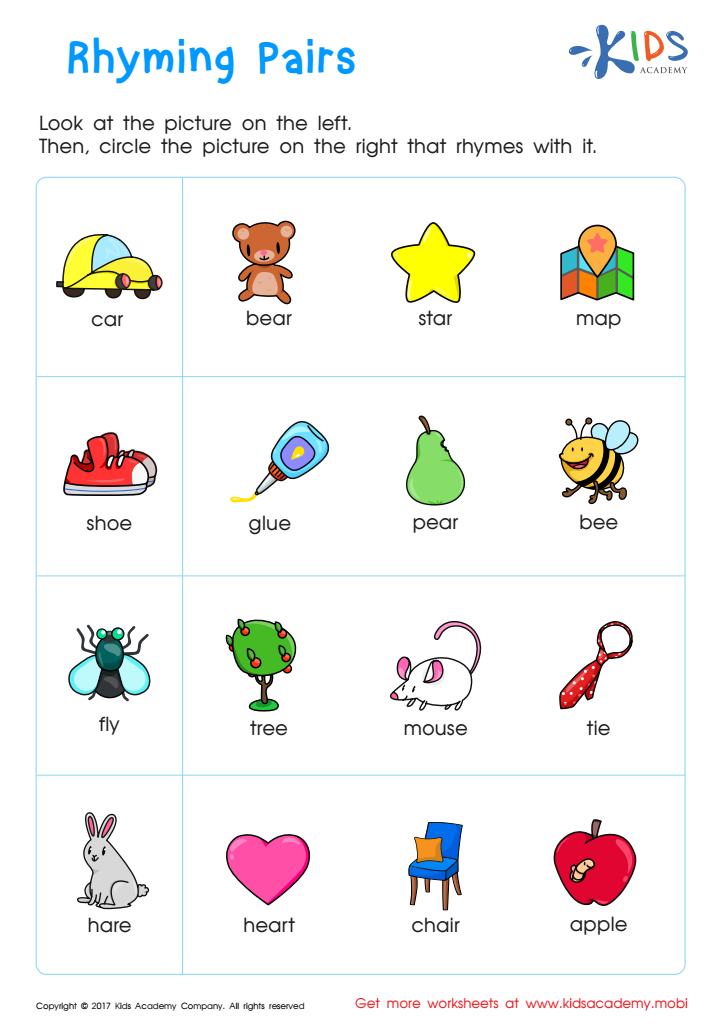
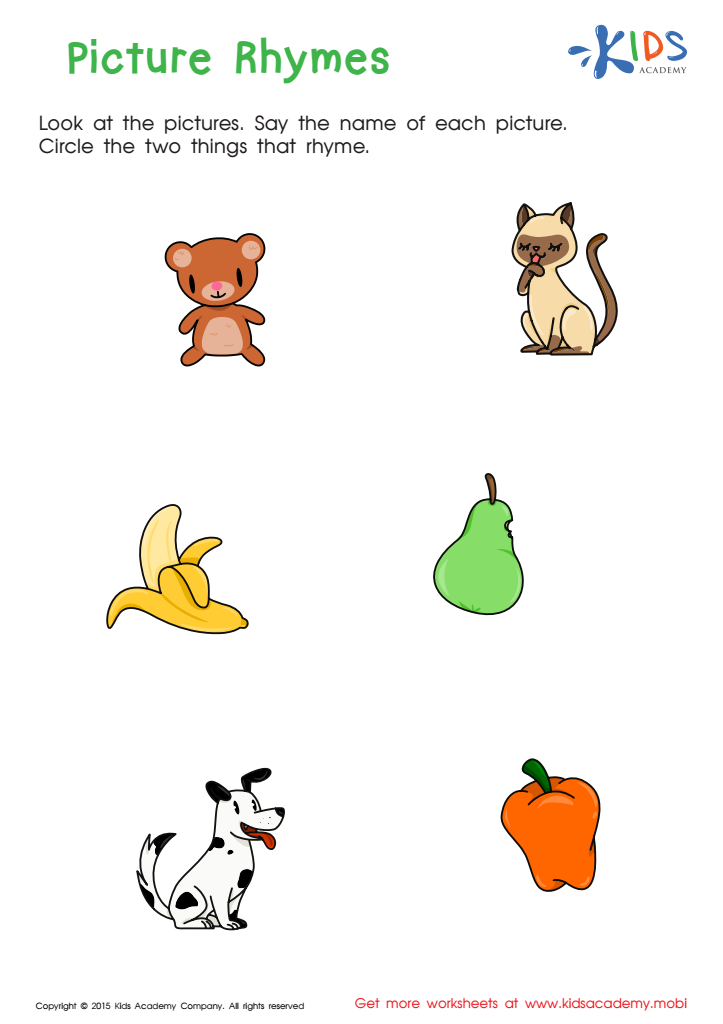
First Words: Picture Rhymes Worksheet








Rhyming skills development in kindergarten is crucial for young children's overall literacy and language development. When parents and teachers prioritize rhyming, they lay the foundation for phonemic awareness, which is essential for reading. Recognizing and producing rhyming words helps children understand the sounds within words, fostering their ability to decode and spell.
Moreover, rhyming activities enhance vocabulary acquisition and comprehension. These playful exercises introduce children to new words in context, making language learning engaging and effective. When children engage with rhymes, they also develop listening skills and improve their auditory discrimination, vital for distinguishing between similar sounds in spoken language.
Additionally, rhyming encourages creativity and imagination. Through songs, poetry, and games, children express themselves and develop a love for language that can inspire a lifelong interest in reading. Furthermore, rhymes often convey cultural and social themes, helping children understand the world around them.
Finally, early rhyming skills correlate with later academic success. By ensuring that children recognize and create rhymes, parents and teachers nurture essential cognitive and linguistic abilities that contribute to their future educational journey. Thus, prioritizing rhyming skills is an investment in children's literacy and overall cognitive development.