Uppercase identification Kindergarten Alphabet Worksheets
5 filtered results
-
From - To
Unlock your child's potential with our Uppercase Identification Kindergarten Alphabet Worksheets! Designed specifically for young learners, these engaging resources help reinforce uppercase letter recognition in a fun and interactive way. Each worksheet is filled with vibrant visuals and exciting activities that make learning enjoyable. Your child will enhance their alphabet skills through tracing, matching, and identifying uppercase letters, laying a strong foundation for future reading and writing success. Perfect for classroom use or at-home practice, our worksheets provide a comprehensive approach to literacy development. Start their alphabet journey today and watch their confidence soar as they master the uppercase letters!
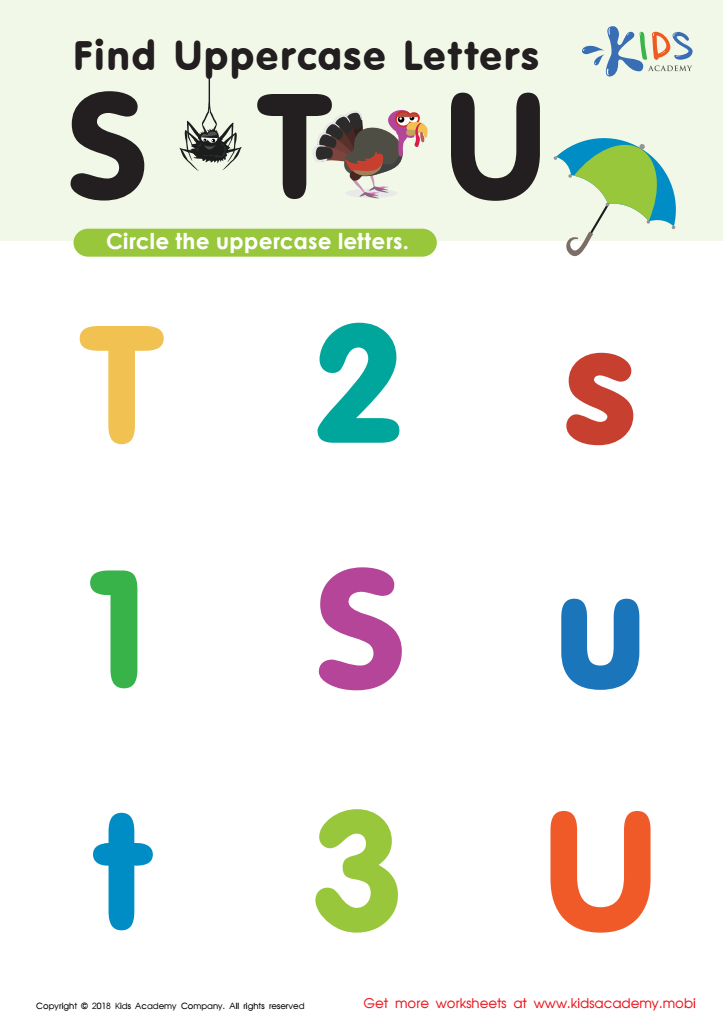
Find Uppercase Letters Worksheet
 Assign to My Students
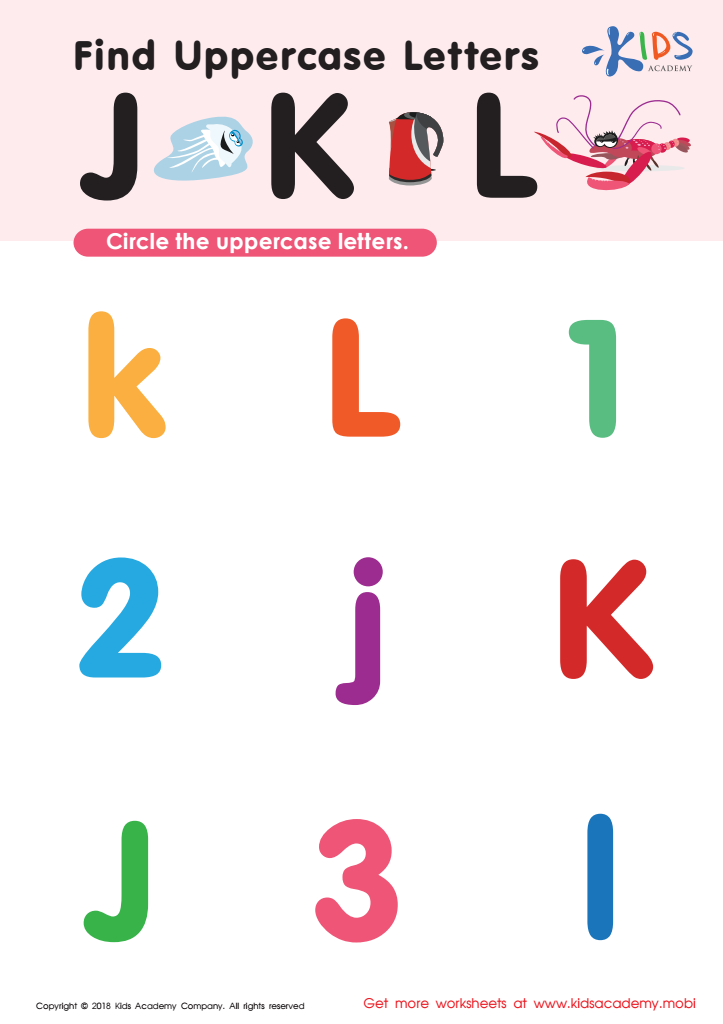
Find Uppercase Letters J, K, and L Worksheet
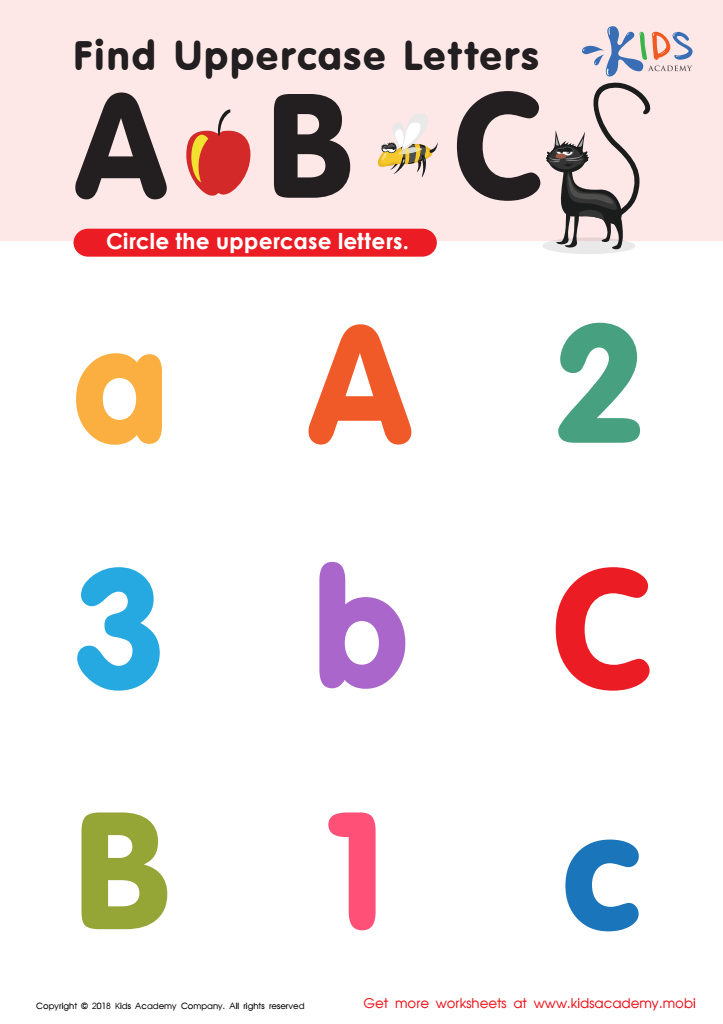
Find Uppercase Letters A, B, and C Worksheet
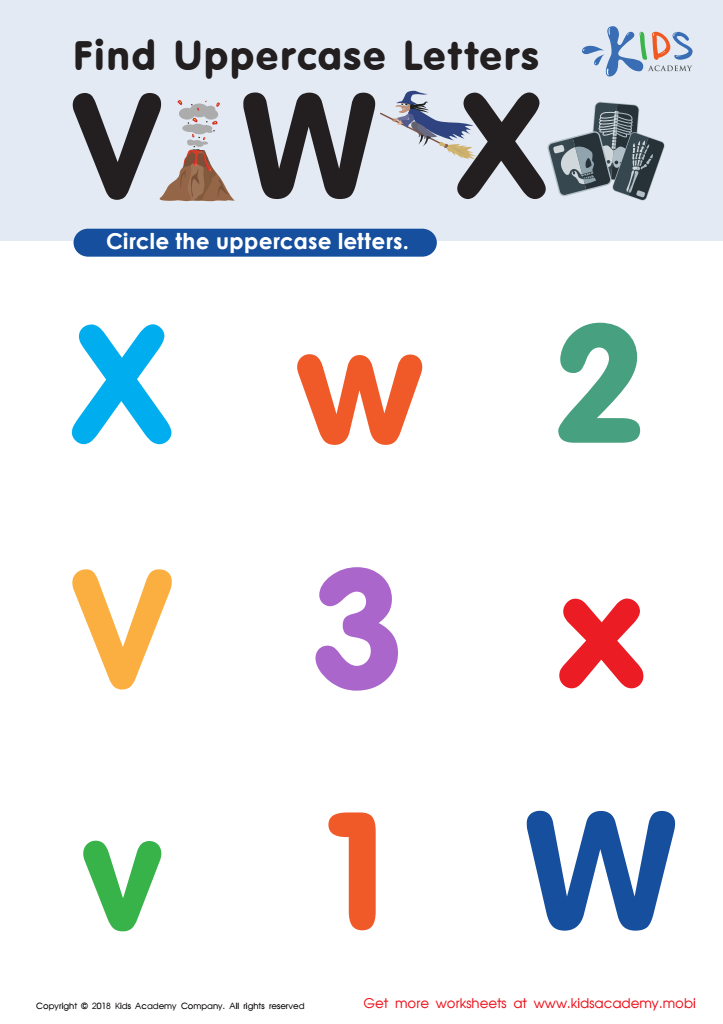
Find Uppercase Letters V, W, X Worksheet
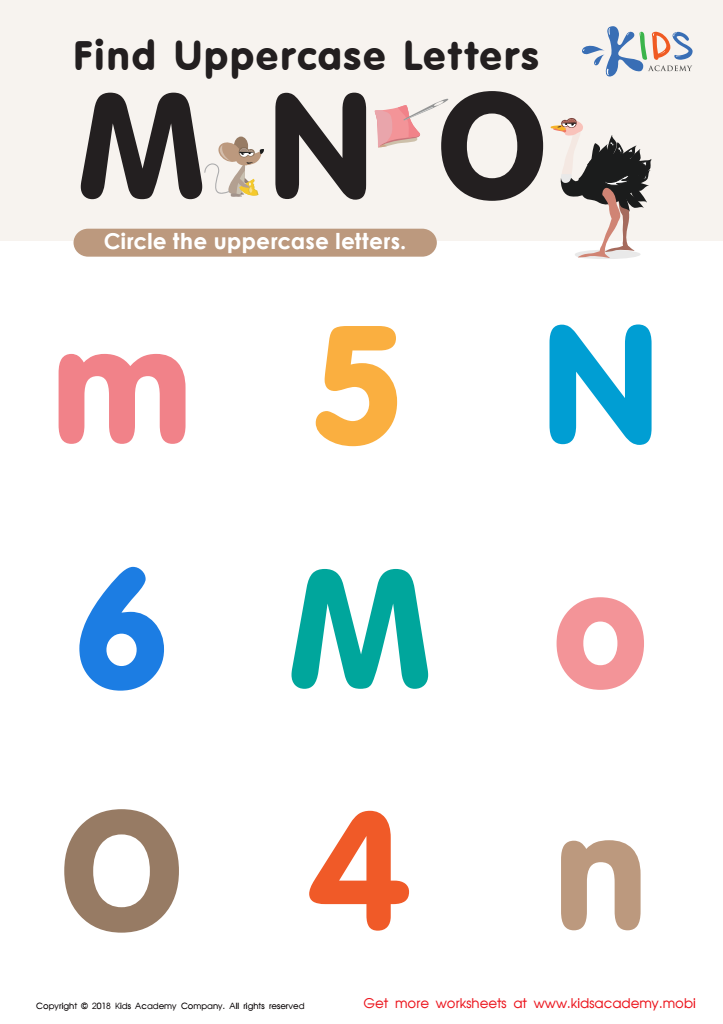
Find Uppercase Letters M, N, and O Worksheet








Uppercase letter identification is a fundamental skill in kindergarten that sets the foundation for students' future literacy and communication abilities. Parents and teachers should prioritize this aspect of learning for several reasons.
Firstly, recognizing uppercase letters is essential for early reading and writing development. Children encounter uppercase letters in books, signs, and everyday text, making it vital for them to differentiate between upper and lowercase letters. Mastering uppercase letters helps enhance their confidence as they learn to read simple texts.
Secondly, uppercase letters are often the first letters that young children learn to recognize and write, being visually distinct and more prominent in print. A solid grasp of these letters aids in name recognition, as children often see their names starting with an uppercase letter.
Additionally, mastering uppercase letter identification aids in phonemic awareness. Many phonics programs start with uppercase letters for this reason, allowing children to focus on sounds without being overwhelmed by the differences in letter shapes.
Ultimately, understanding uppercase letters fosters a foundational literacy skill set and motivates children to engage with reading and writing. Therefore, both parents and teachers should actively support and encourage this critical literacy milestone in kindergarten.