Spelling practice Kindergarten Missing Vowels Worksheets
4 filtered results
Difficulty Level
Grade
Age
-
From - To
Subject
Activity
Standards
Nurture your kindergartener's spelling skills with our Spelling Practice Kindergarten Missing Vowels Worksheets. These engaging worksheets are designed to improve early literacy by helping young learners identify and fill in missing vowels. Through fun and interactive exercises, children enhance their understanding of letter sounds, word formation, and phonics. Perfect for both classroom and at-home practice, these worksheets support early reading development and build strong foundational language skills. Visit Kids Academy to explore this valuable resource and make vowel mastery an enjoyable learning experience for your little one!
Favorites
With answer key
Interactive
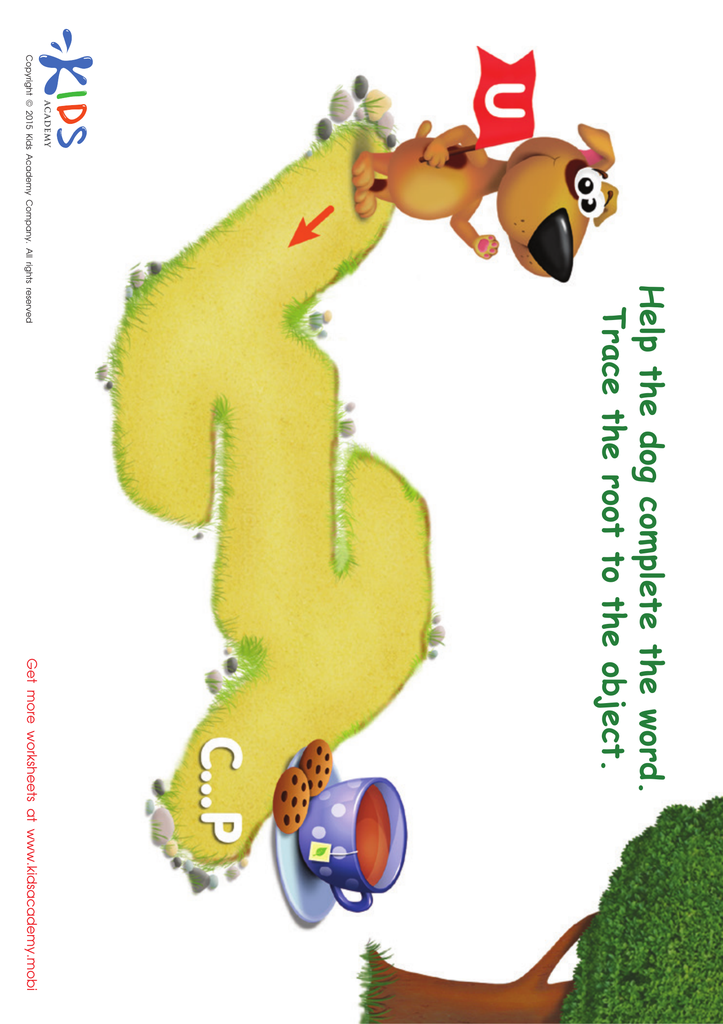
Short Vowel Sound U Worksheet Worksheet
Help your early reader join the adorable dog on his way to the cup of tea with cookies. This traceable worksheet reinforces the short -u sound and strengthens fine motor skills. Kids don't realize they are practicing reading skills while having fun!
Short Vowel Sound U Worksheet Worksheet
Worksheet
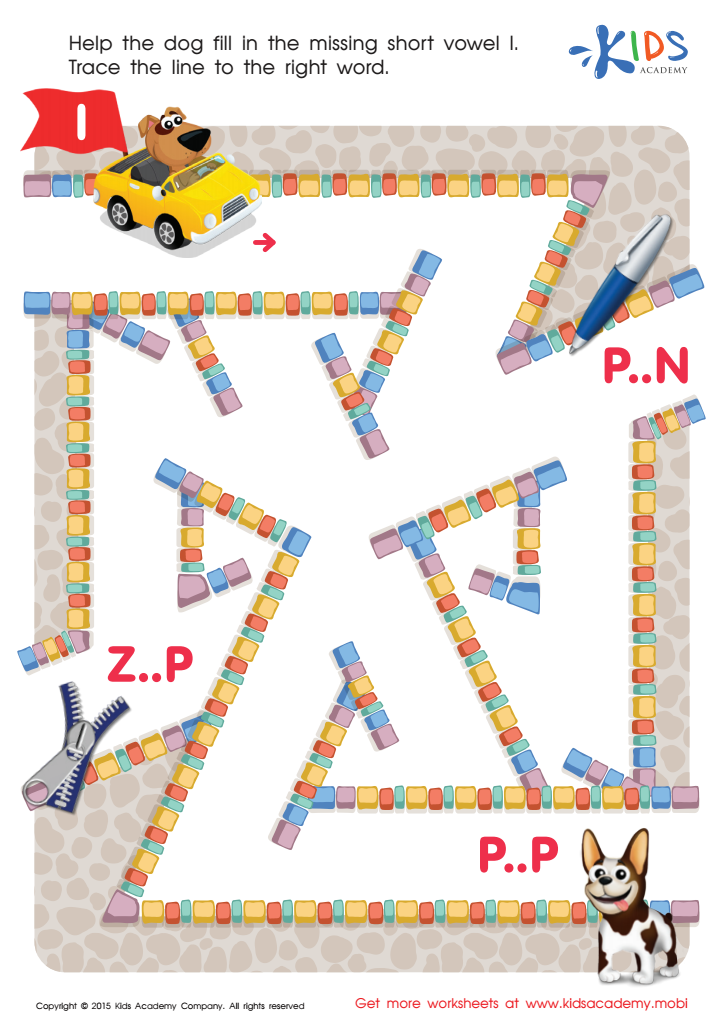
Short Vowel Sound I Worksheet
This free printable phonics worksheet will get your kid prepped for reading! It's a maze to help the dog complete the word “zip” with the missing letter I. Have your kid say the word aloud to learn the I sound. It's a great way to practice reading, writing and spelling skills. Check out here for more phonics worksheets!
 Assign to My Students
Short Vowel Sound I Worksheet
Worksheet
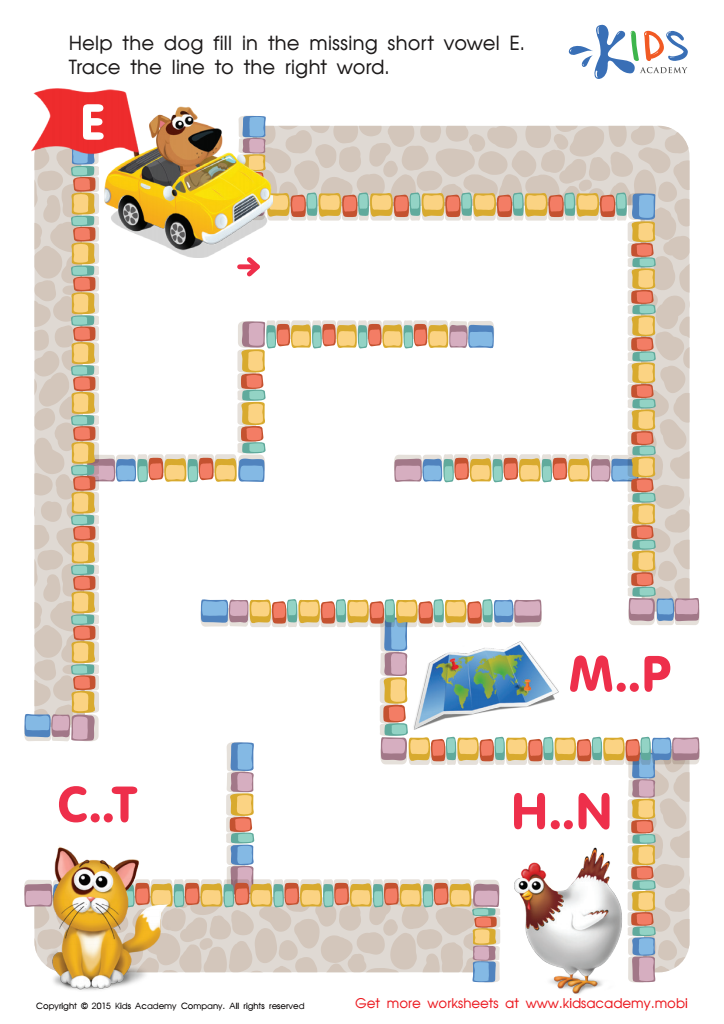
Short Vowel Sound E Worksheet
This free printable phonics worksheet helps kids learn the short vowel sound E. Kids need to help the dog complete the word “hen” by finding their way through a maze. It teaches kids to see the connection between letters and sounds and also strengthens their writing and spelling skills. Fun and educational, this phonics worksheet is great for kids. Want more? Check out here.
Short Vowel Sound E Worksheet
Worksheet
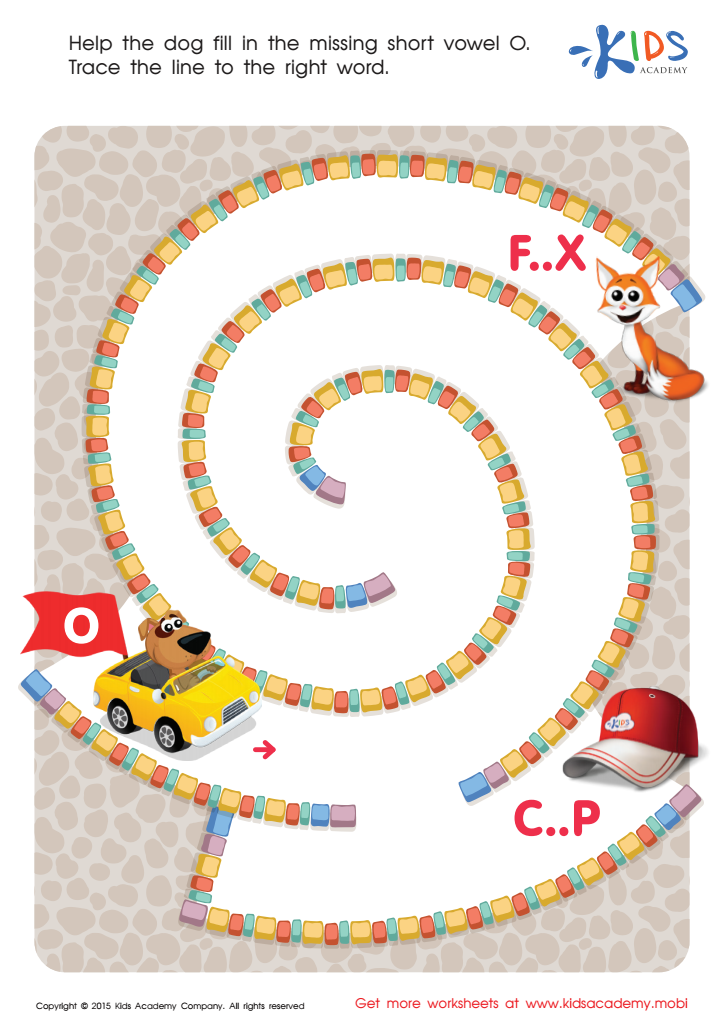
Short Vowel Sound O Worksheet
Help your child learn the short vowel sound O with this fun and free printable phonics worksheet! They'll need to complete the maze to help the dog finish the word "fox" with the missing letter O. Engage their fine motor muscles while they color or trace the maze with crayon or pencil. This educational activity is sure to bring a smile to your little learner's face! For more phonics worksheets, check here.
Short Vowel Sound O Worksheet
Worksheet
Join Kids Academy for Free
Who is primarily going to use this learning content?


Spelling practice, especially with missing vowels, is crucial for kindergarteners as it lays the foundation for reading fluency, writing skills, and overall literacy. At this developmental stage, children are learning to recognize letters, understand sounds, and how these combine to form words. Focusing on missing vowels helps students identify and understand the importance of vowels in word formation, enhancing their phonemic awareness. This practice also aids in vocabulary expansion as children must engage with different words to correctly fill in the vowels.
From a cognitive perspective, this exercise boosts problem-solving skills and critical thinking by challenging kids to figure out which vowels complete words correctly. Additionally, engaging in these activities supports memory retention and recall by encouraging repetition and active engagement with the material.
For parents and teachers, incorporating this practice can significantly improve a child’s ability to decode unfamiliar words, enhancing their initial reading experiences positively. It keeps learning fun and interactive, which is essential at this age. Teachers can better assess each child's understanding and provide the necessary support or enrichment. Involving parents fosters a collaborative effort in the child’s education, reinforcing classroom learning with at-home practice, ultimately ensuring a well-rounded approach to early literacy education.