Animal recognition Kindergarten Addition & Subtraction Worksheets
6 filtered results
-
From - To
Discover the perfect blend of fun and education with our "Animal Recognition Kindergarten Addition & Subtraction Worksheets." Specially designed for young learners, these engaging worksheets combine early math skills with delightful animal themes. Each activity aids in teaching addition and subtraction while reinforcing animal recognition, ensuring a holistic learning experience. Ideal for kindergartners, these thoughtfully crafted worksheets help develop foundational math abilities and enhance memory and visual skills through playful interaction. Equip your little ones with the tools they need for academic success and a love for learning. Start your child’s educational journey on the right foot today!
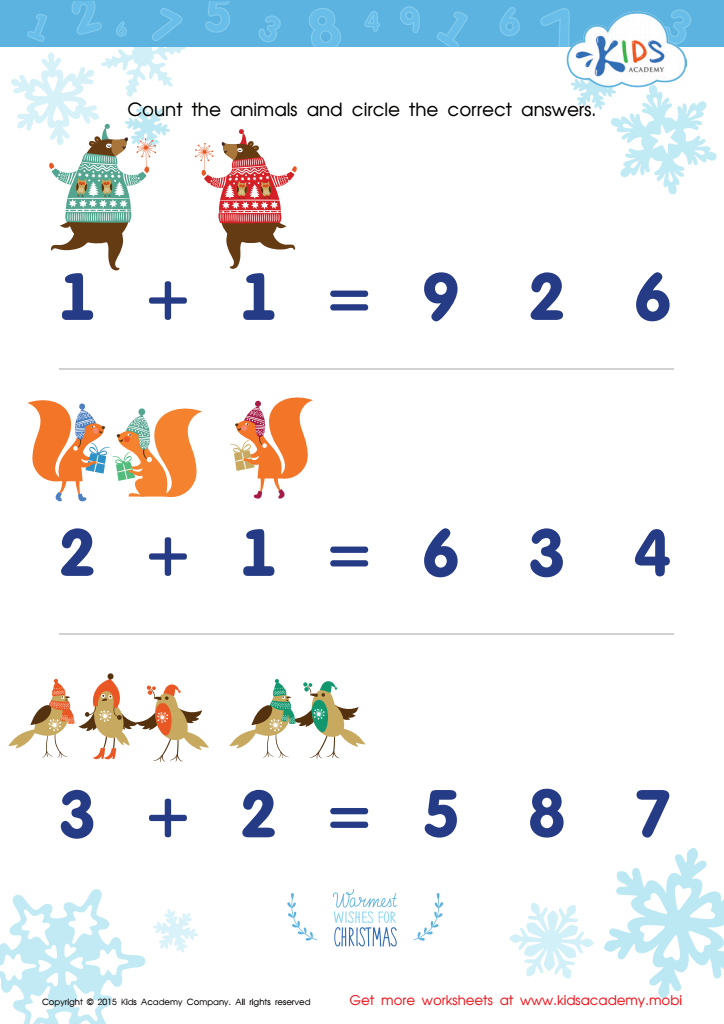
Count Funny Animals Worksheet
 Assign to My Students
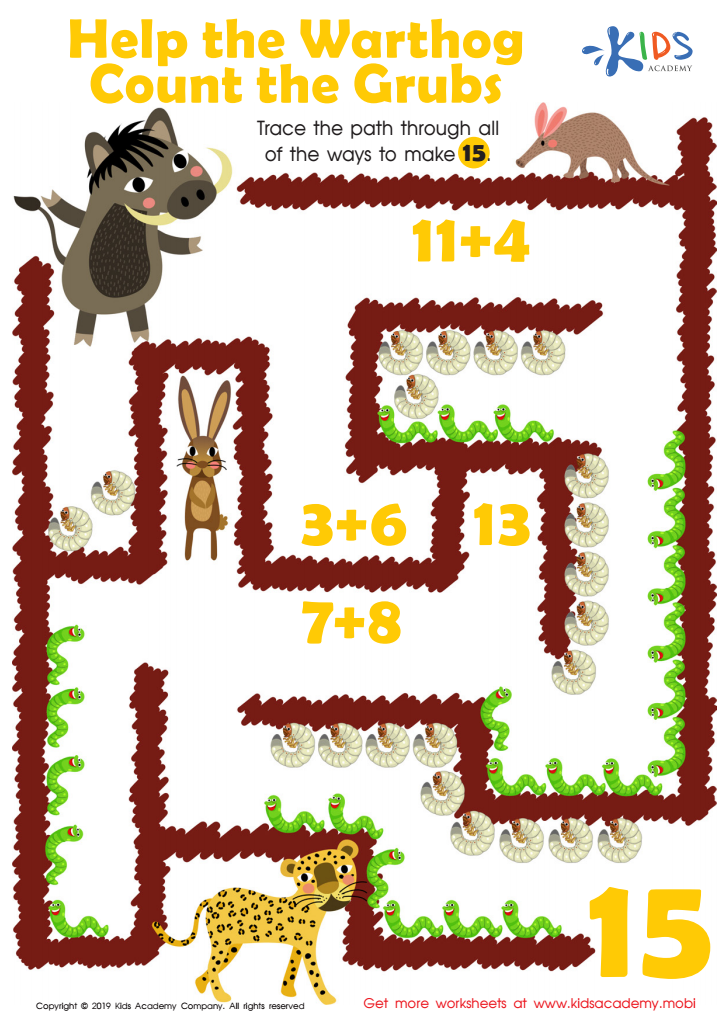
Help the Warthog Count the Grubs Worksheet
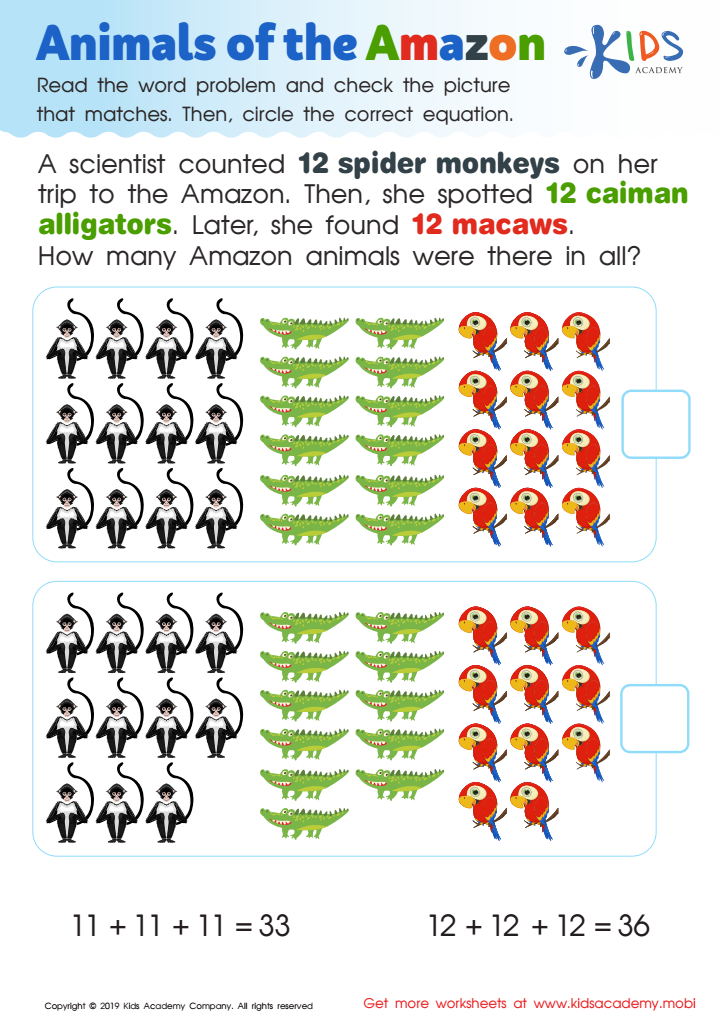
Animals of Amazon Worksheet
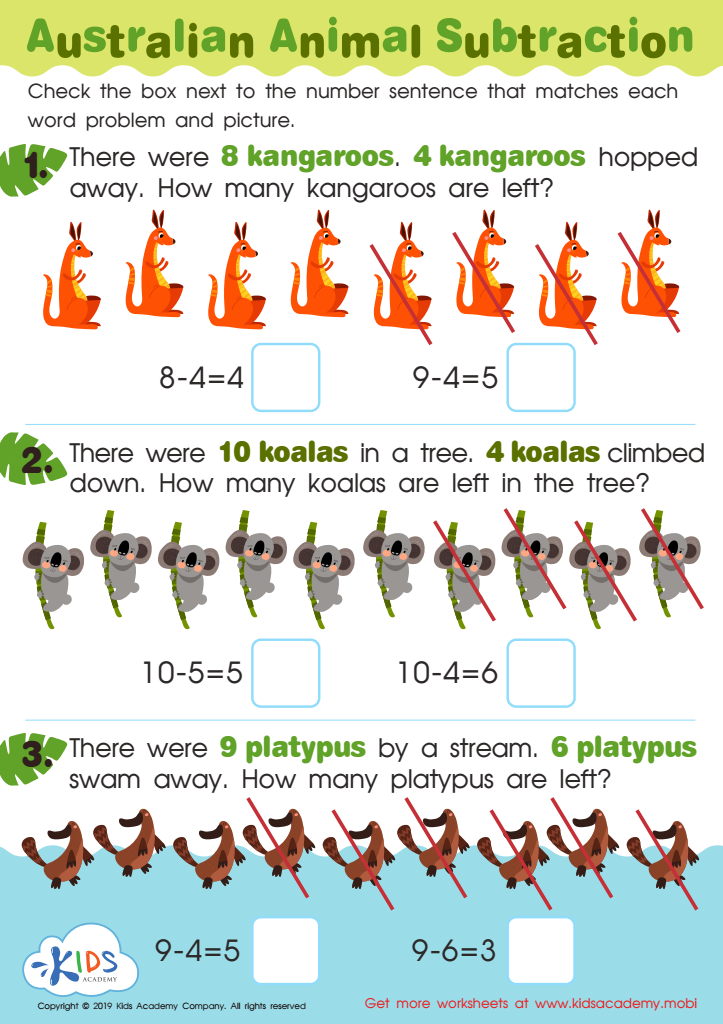
Australian Animal Subtraction Worksheet
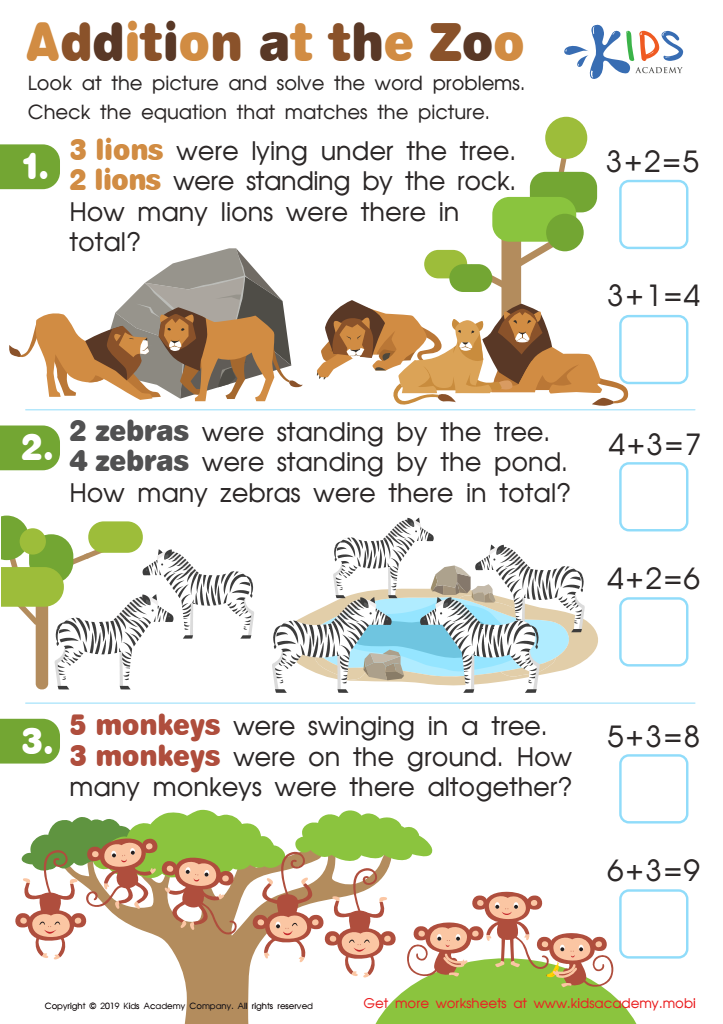
Addition at the Zoo Worksheet
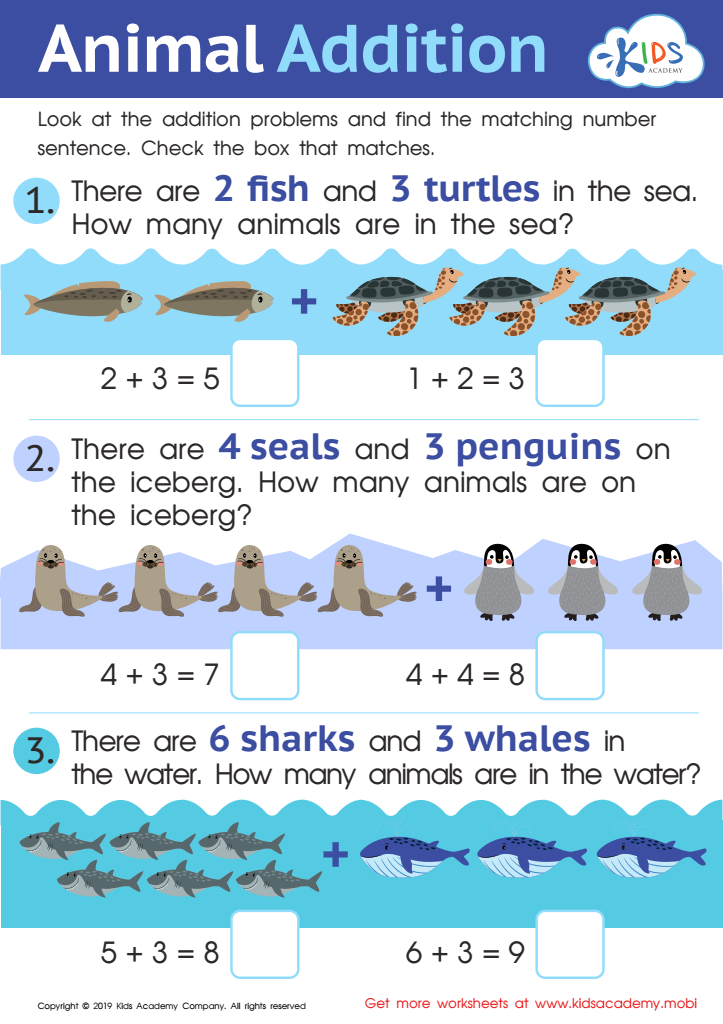
Animal Addition Worksheet








Parents and teachers should care about animal recognition and kindergarten-level addition and subtraction because these foundational activities foster both cognitive and emotional development in young children. Recognizing animals helps children build their vocabulary and understanding of the natural world, which can spark curiosity and a lifelong love for learning. Animals often captivate children's interest, making the learning process engaging and enjoyable.
Introducing addition and subtraction at a kindergarten level equips children with basic math skills early on, setting the stage for more complex mathematical concepts later. Mastering these skills boosts children's confidence and lays the groundwork for problem-solving abilities, critical thinking, and logical reasoning.
Combining these activities—such as counting animals, adding their numbers, or subtracting them—encourages an integrated learning experience. This multidisciplinary approach can also foster social and emotional skills. For instance, discussing different animals and their habitats can promote empathy and awareness of environmental conservation.
Parents and teachers play a crucial role in providing a supportive learning environment. Caring about these activities ensures children receive a comprehensive education that balances cognitive skills, such as math ability, with imaginative and experiential learning, guided by their natural interests and abilities.








