Mathematical reasoning Kindergarten Addition & Subtraction Worksheets
11 filtered results
-
From - To
Discover our engaging Mathematical Reasoning Kindergarten Addition & Subtraction Worksheets designed to nurture your child's critical thinking skills. These captivating, colorful activities help young learners grasp fundamental math concepts through fun and interactive exercises. Each worksheet encourages kids to think logically as they solve addition and subtraction problems, laying the foundation for future mathematical success. Perfect for classroom use or homeschooling, these resources are designed to make early math enjoyable and accessible. Help your child build strong reasoning abilities today with our expertly crafted worksheets from Kids Academy – where learning becomes an adventure!
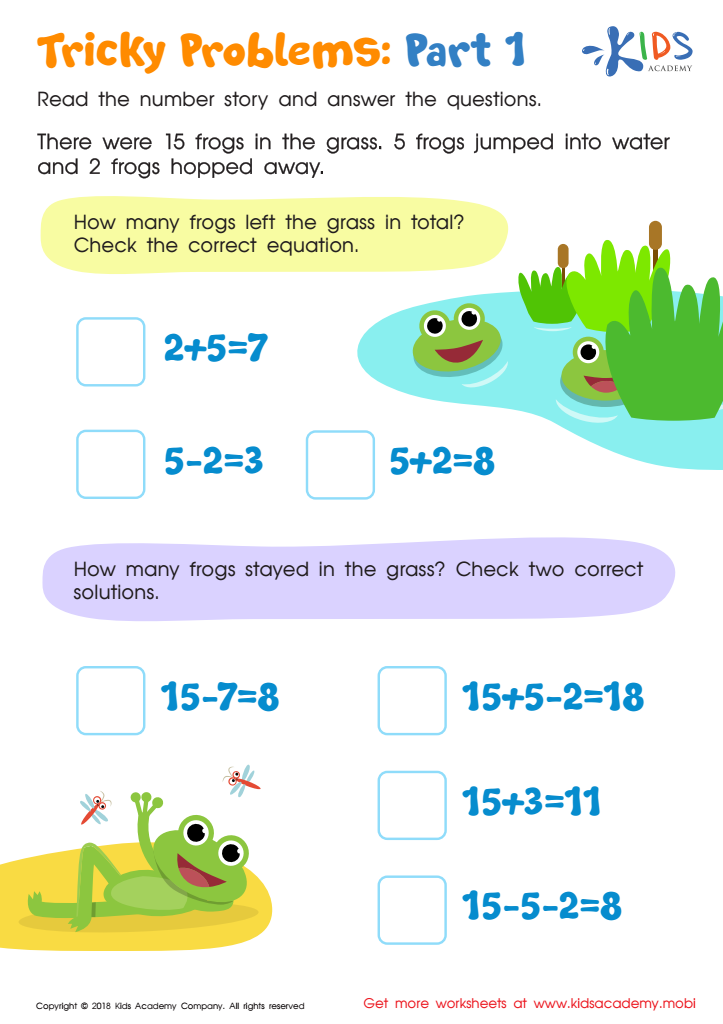
Tricky Problems Worksheet: Part 1
 Assign to My Students
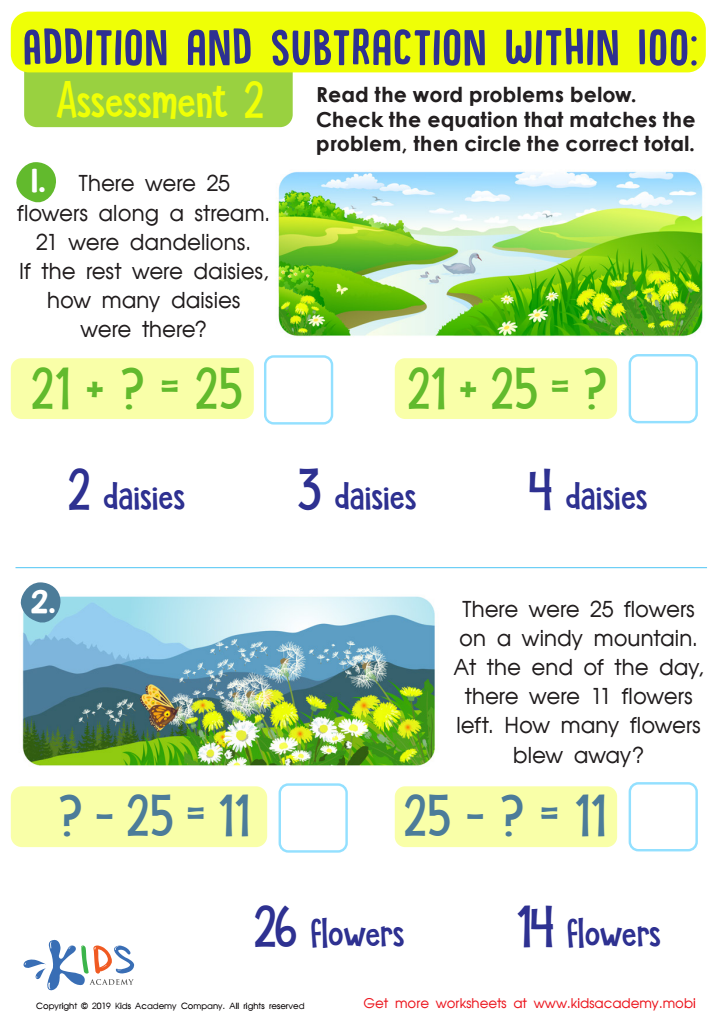
Assessment 2 Math Worksheet
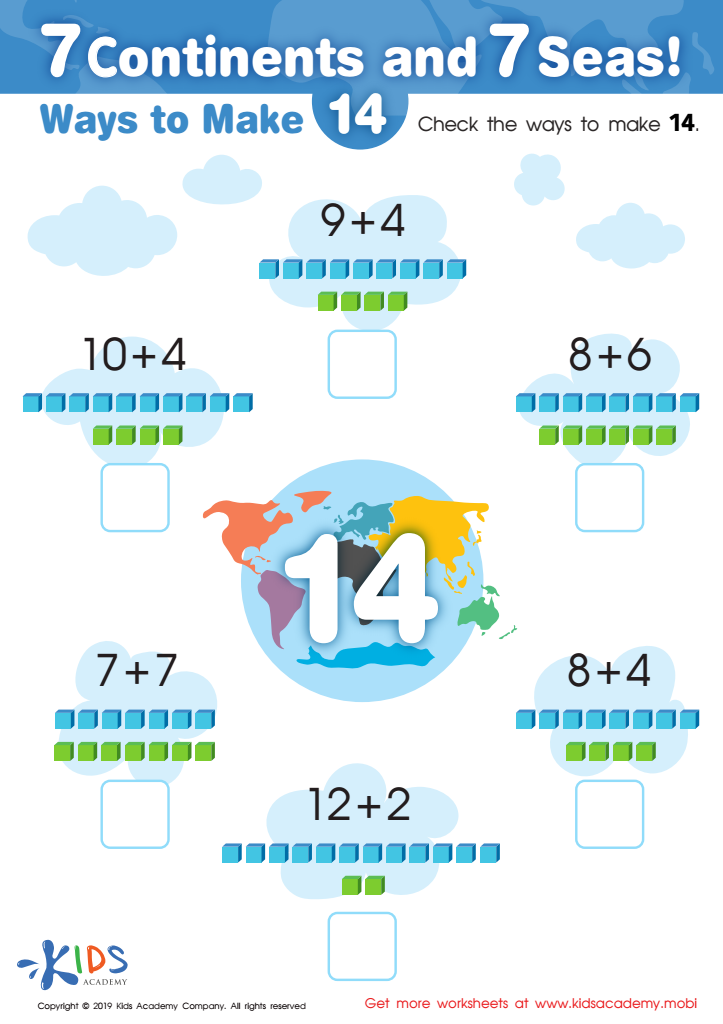
7 Continents and 7 Seas Worksheet
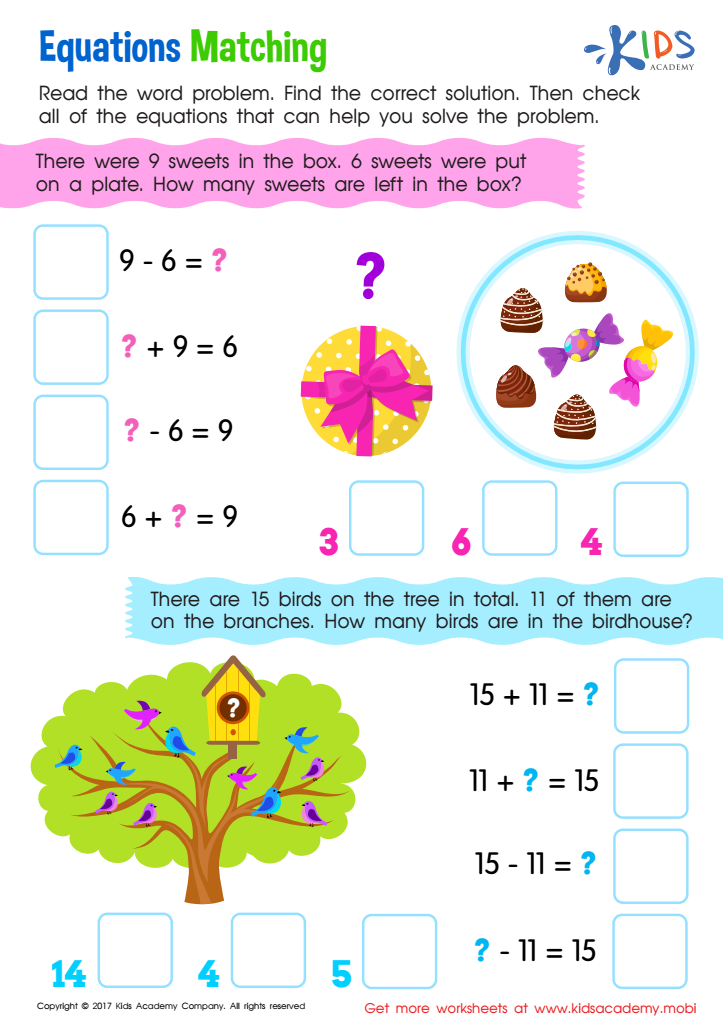
Equations Matching Word Problems Worksheet
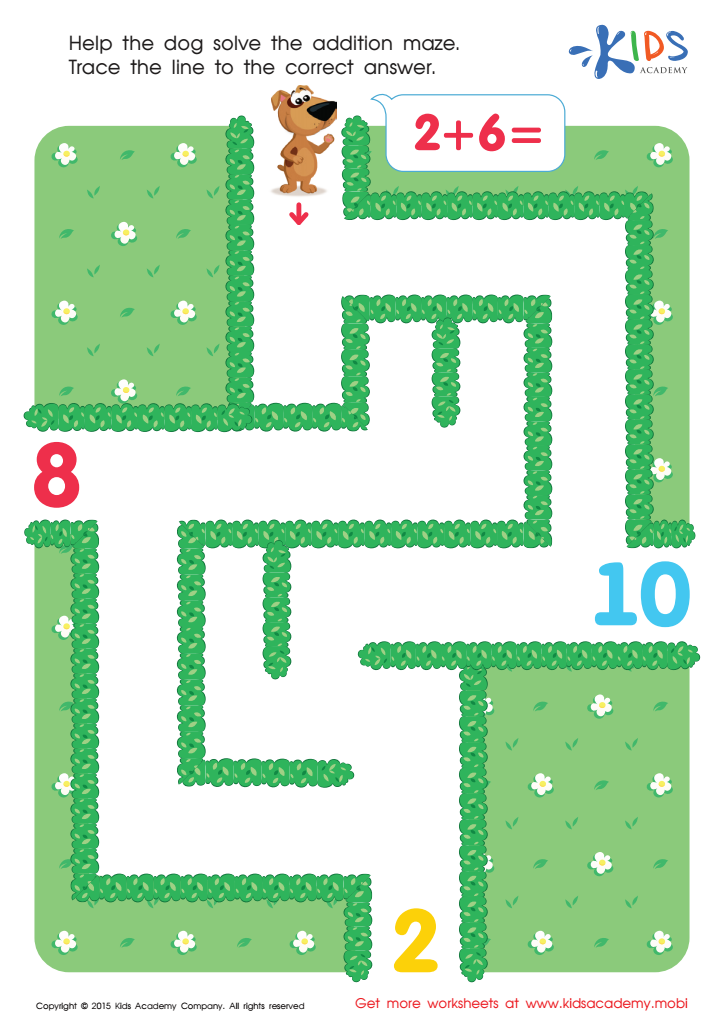
Two Plus Six Addition Worksheet
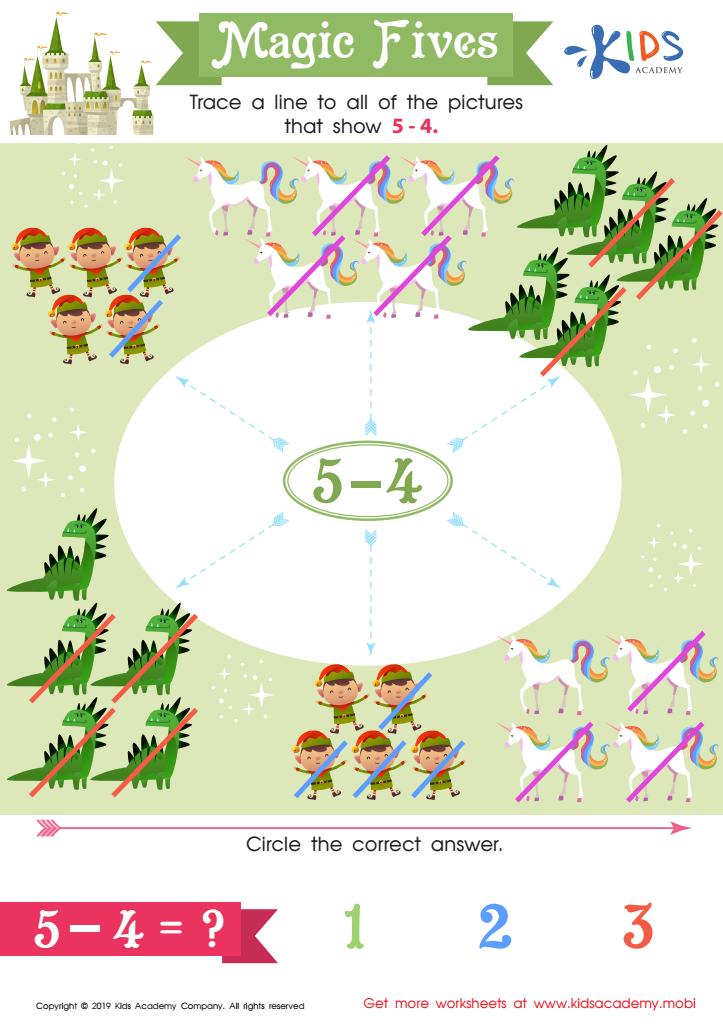
Magic Fives Worksheet
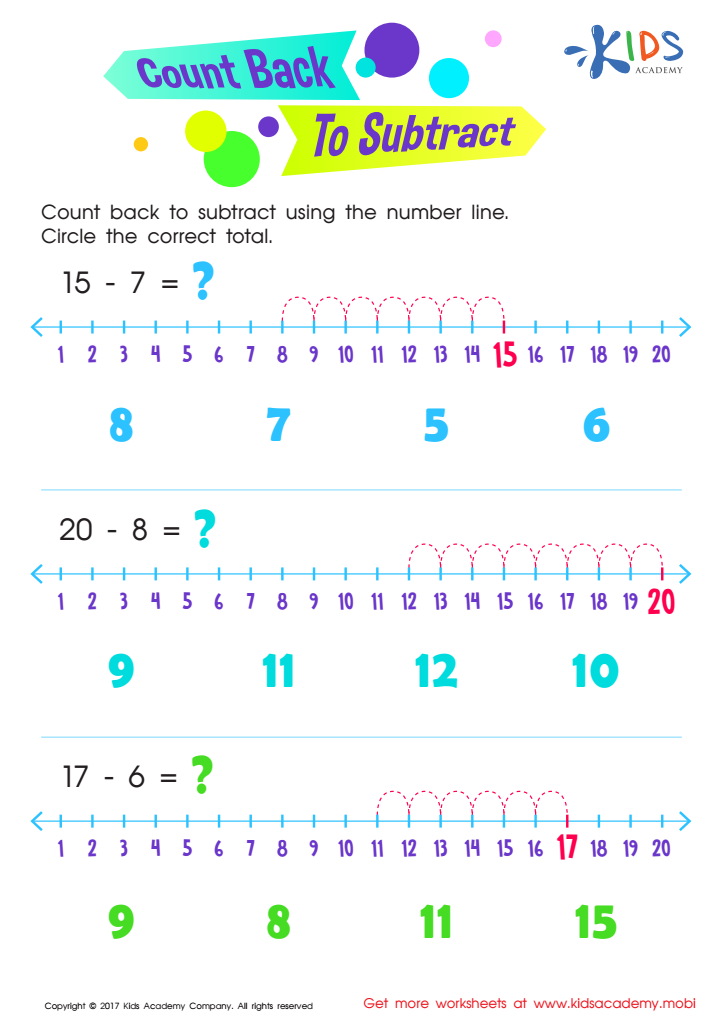
Count Back to Subtract Substraction Worksheet
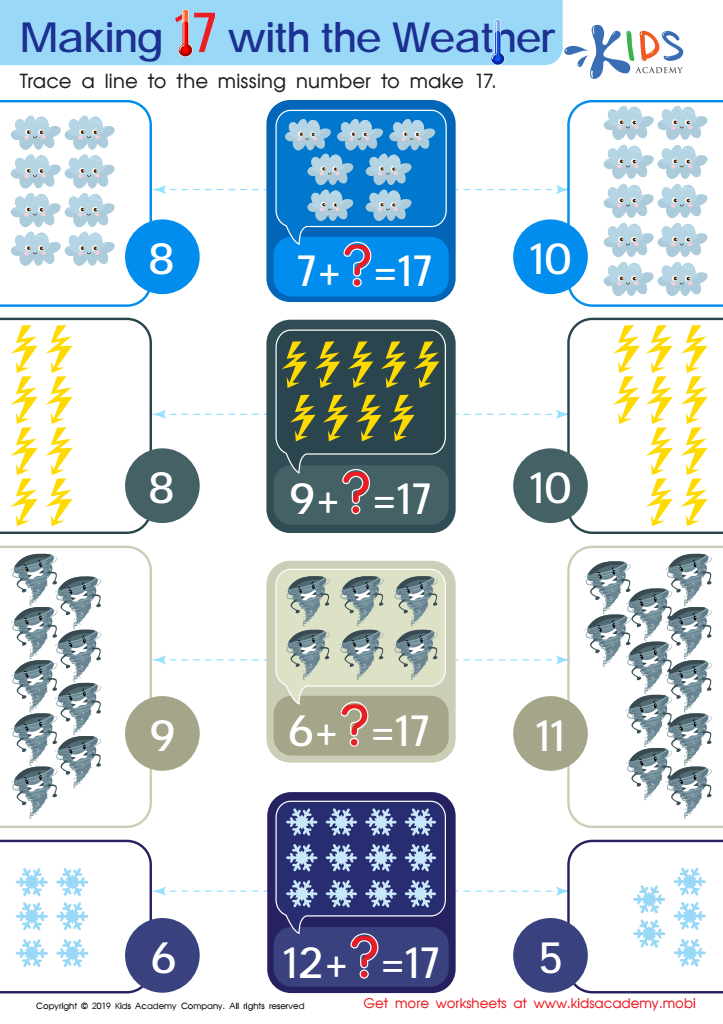
Making 17 with the Weather Worksheet
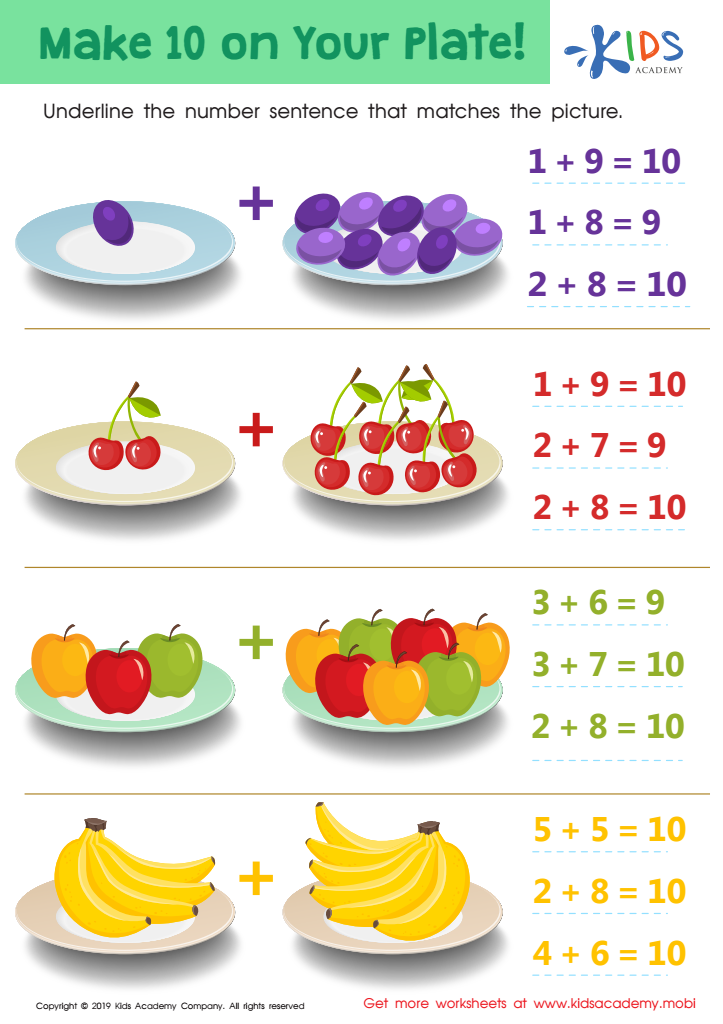
Make 10 on Your Plate! Worksheet
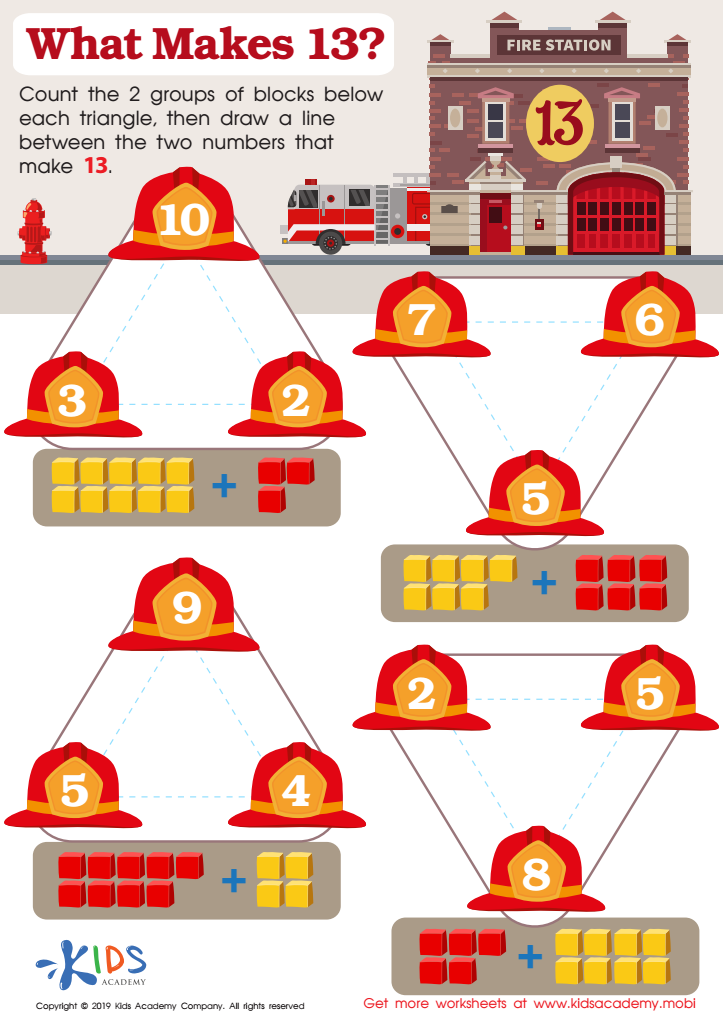
What Makes 13 Worksheet
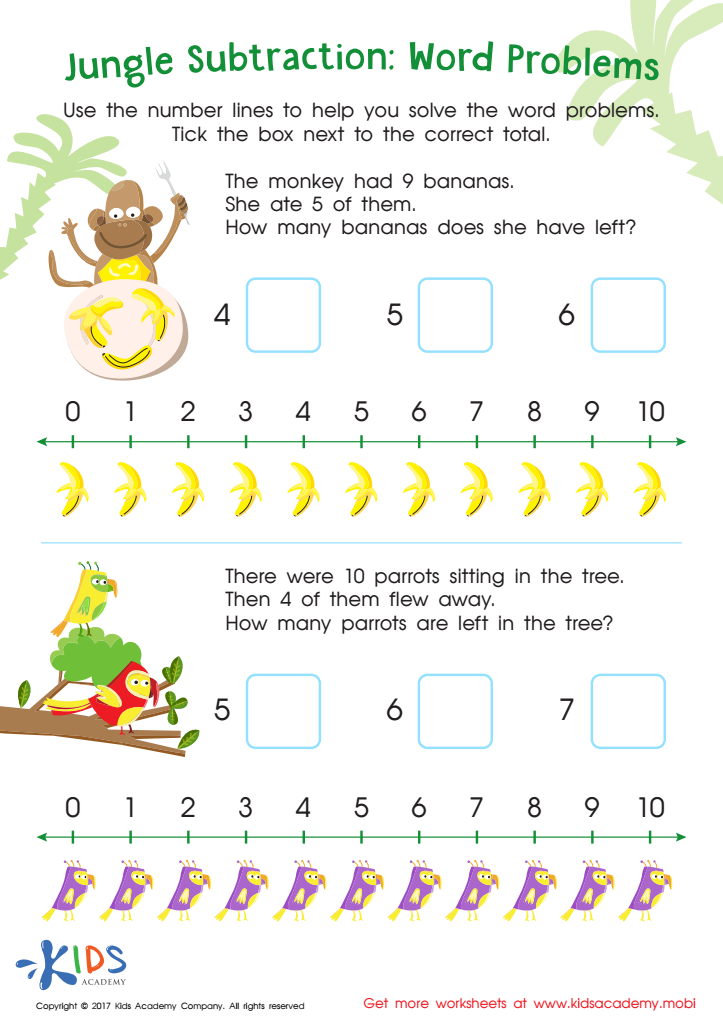
Jungle Subtraction Word Problems Substraction Worksheet








Mathematical reasoning in Kindergarten, particularly in addition and subtraction, lays a crucial foundation for a child's overall cognitive development and academic success. At an early age, engaging children with basic math concepts fosters critical thinking and problem-solving skills. Understanding addition and subtraction not only equips kids with necessary numeric competencies but also enhances their ability to make logical connections and understand patterns.
Parents and teachers should care about this because early math proficiency is strongly linked to future academic achievement. Children who grasp these concepts early are more confident and may find later mathematical learning more accessible and enjoyable. Furthermore, math activities enhance other cognitive abilities, such as memory, attention, and the capacity to perform multi-step tasks.
Incorporating playful and hands-on approaches to addition and subtraction makes learning enjoyable and contextually relevant, thus encouraging a positive attitude towards mathematics from the outset. This positive disposition aids in preventing math anxiety, a common barrier to learning in later school years.
Moreover, mathematical reasoning in kindergarten can promote other essential life skills, including perseverance, attention to detail, and the ability to follow complex instructions. Given these reasons, investing time and resources in developing a child's competency in simple math operations becomes a building block for lifelong learning and success.








