
Financial literacy Kindergarten Money Worksheets
4 filtered results
Difficulty Level
Grade
Age
-
From - To
Subject
Activity
Standards
Introducing our engaging "Financial Literacy Kindergarten Money Worksheets," designed to help young learners grasp essential money concepts in a fun and interactive way! These worksheets introduce children to recognizing coins, counting money, and understanding basic financial principles. Tailored specifically for kindergarten-aged students, our printable resources encourage hands-on learning through engaging activities and playful exercises. From sorting coins to practicing simple transactions, these worksheets lay a strong foundation for financial literacy. Empower your child with the skills they need to confidently handle money as they explore the exciting world of finance, all while enjoying their learning experience. Start their financial journey today!
Favorites
With answer key
Interactive
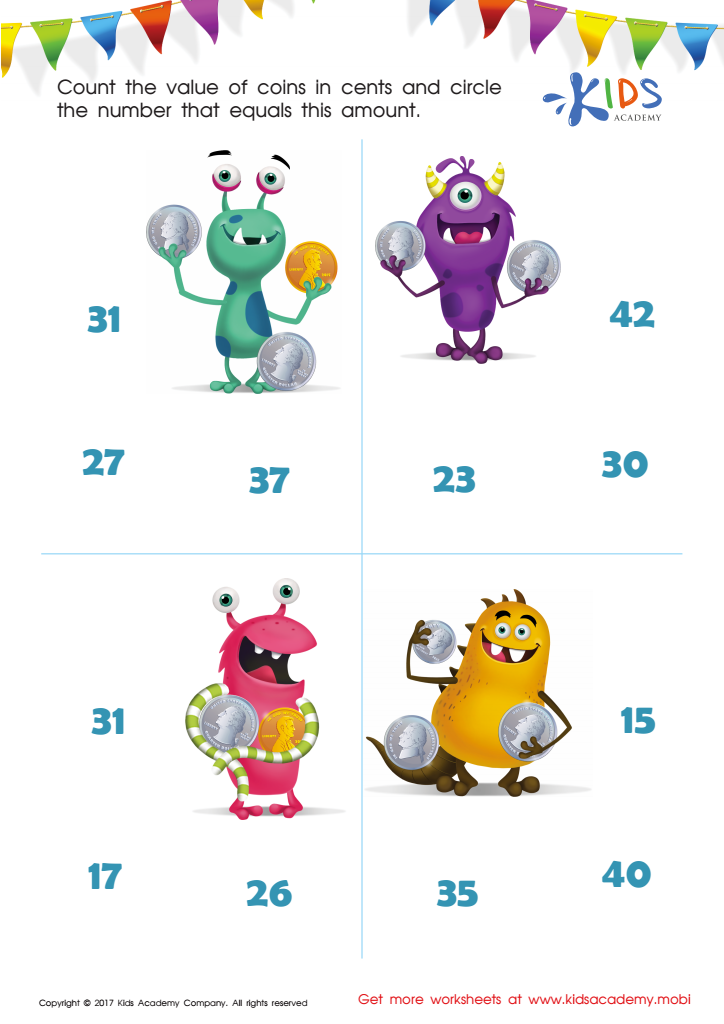
How Many Coins Money Worksheet
Have fun while counting coins: look at the monsters and count the coins in their hands. Challenge your little learners to count and write down the number of coins each one has. Enjoy the time together!
 Assign to My Students
How Many Coins Money Worksheet
Worksheet
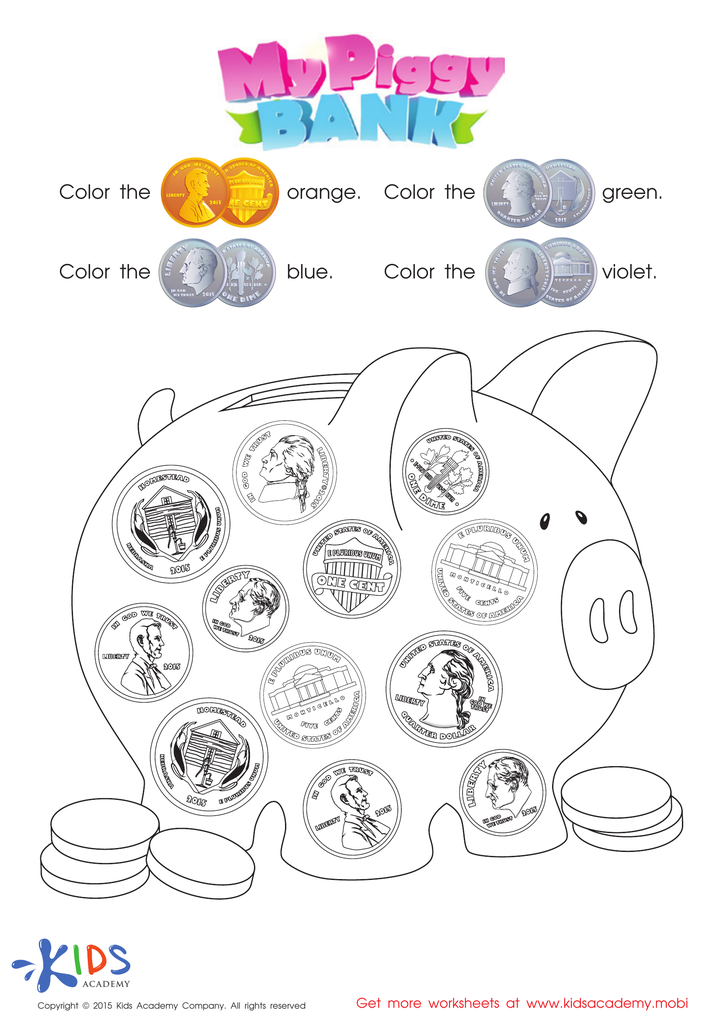
Recognizing Money Money Worksheet
Help the piggy bank by coloring its coins with Kids Academy's free money worksheets! Learn the different coins and their values with your kids. Printable worksheets are available to continue the lesson. Let's learn and have fun!
Recognizing Money Money Worksheet
Worksheet
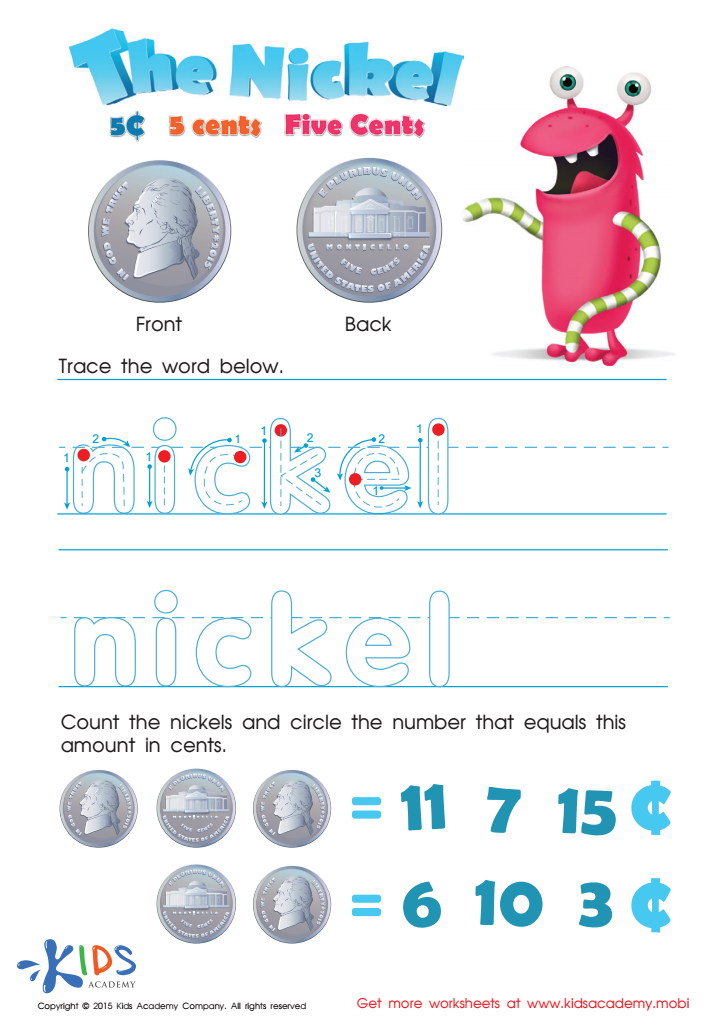
Five Cents or the Nickel Money Worksheet
Counting money games help kids make learning money fun and easy. Next up: the 5 cent coin, or nickel. Look at both sides and remember them. Then, trace the word "nickel" to help you remember. Finally, count the nickels and work out amounts in cents. Let's do this! Kids Academy helps make money learning easy and fun!
Five Cents or the Nickel Money Worksheet
Worksheet
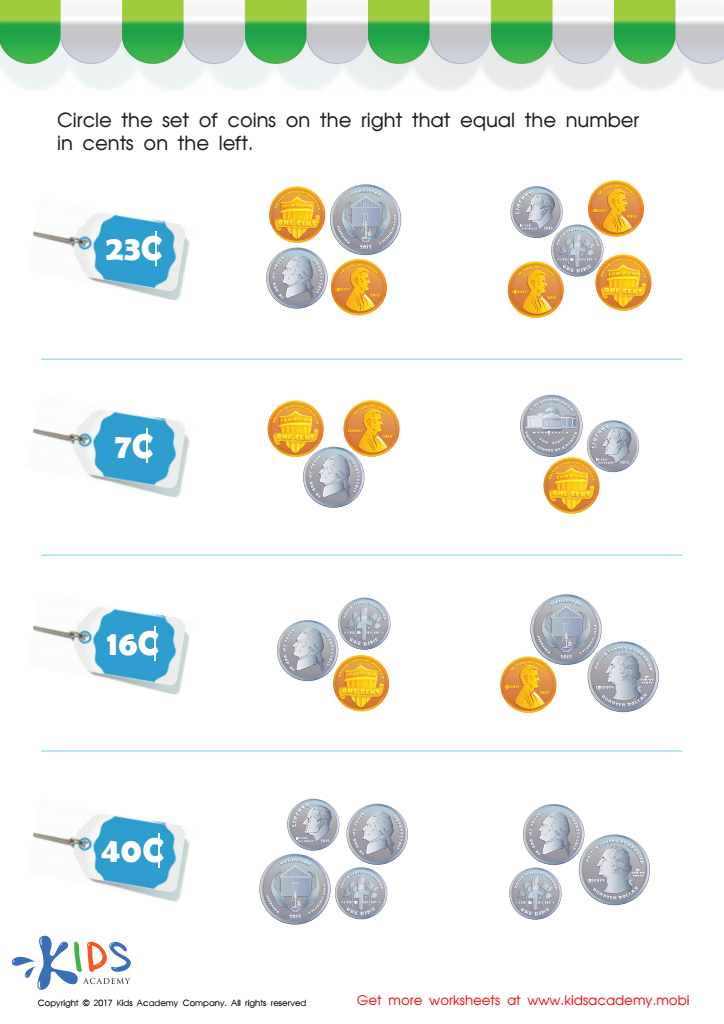
Picking the Coins You Need Money Worksheet
Let's learn to count money with Parents and Kids Academy! Investigate a real shop together: buy a globe, pencils, books, and a school bag using coins. Then, circle the coins you'll need. Visit our website for more free and fun money games for kids!
Picking the Coins You Need Money Worksheet
Worksheet
Join Kids Academy for Free
Who is primarily going to use this learning content?








Financial literacy is essential even at the kindergarten level, as it lays the foundational skills necessary for healthy money management later in life. Parents and teachers should care about introducing basic financial concepts to young learners for several reasons.
Firstly, early education in money matters fosters a positive mindset towards financial responsibility. Teaching children the difference between needs and wants helps them make informed choices, such as saving for a toy versus spending impulsively. Moreover, simple activities like counting coins can enhance their math skills, promoting numeracy in a fun and relatable context.
Secondly, financial literacy encourages good habits. By integrating lessons about budgeting, saving, and sharing, children can understand the importance of planning and appreciating what they have from a young age. These lessons can also cultivate values such as generosity when discussing sharing with others.
Lastly, encourage open discussions about money. When parents and teachers model communication around financial topics, it demystifies money and makes it a normal part of their learning experience. Ultimately, nurturing financial literacy in kindergarten prepares children for future financial success, empowering them to make thoughtful financial decisions throughout their lives. Such early exposure can also ease adult pressures linked to financial management.








