Money recognition Kindergarten Money Worksheets
5 filtered results
-
From - To
Introducing our Money Recognition Kindergarten Worksheets, an essential resource from Kids Academy designed to make mastering money fun and intuitive for young learners! These engaging worksheets help children identify coins and bills, understand their values, and enhance their numeracy skills. Each activity is thoughtfully crafted to encourage hands-on learning and real-world application, giving kids a solid foundation in financial literacy. Perfect for classroom settings or at-home practice, these printable worksheets support early math development while boosting confidence in money management. Equip your kindergarteners with the skills they need for a bright financial future with our expertly designed worksheets!
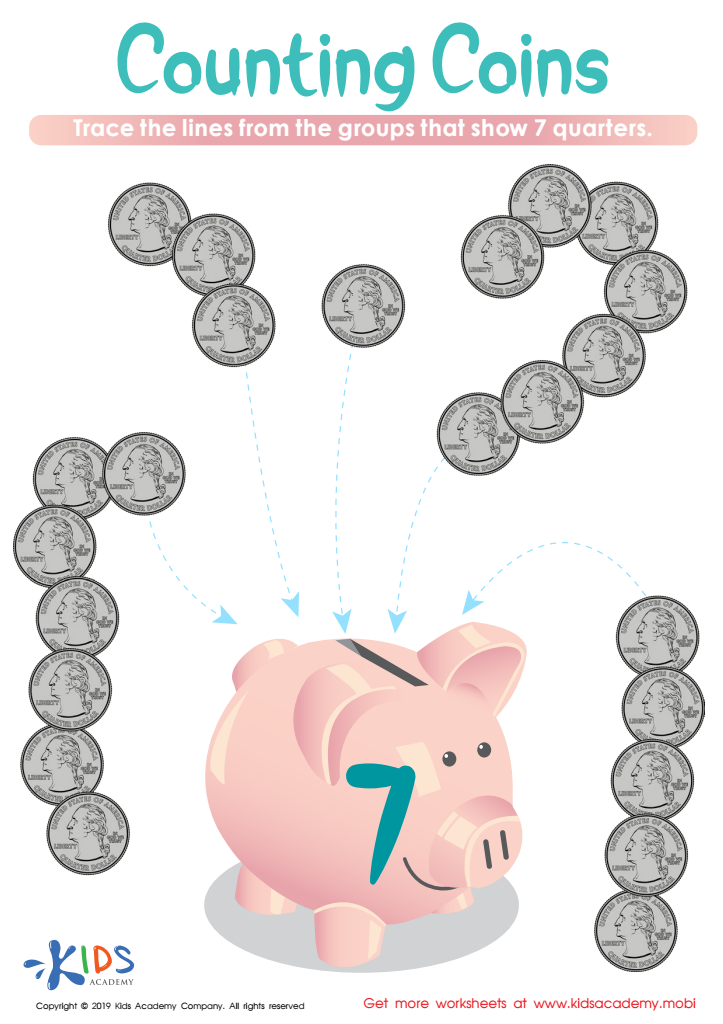
Counting Coins Worksheet
 Assign to My Students
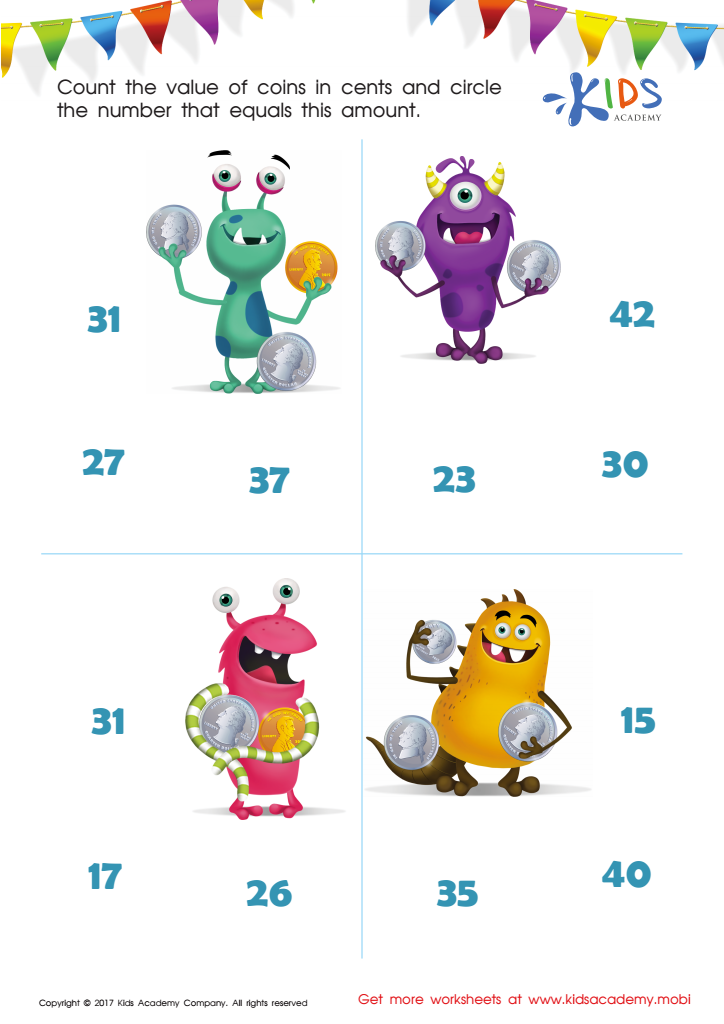
How Many Coins Money Worksheet
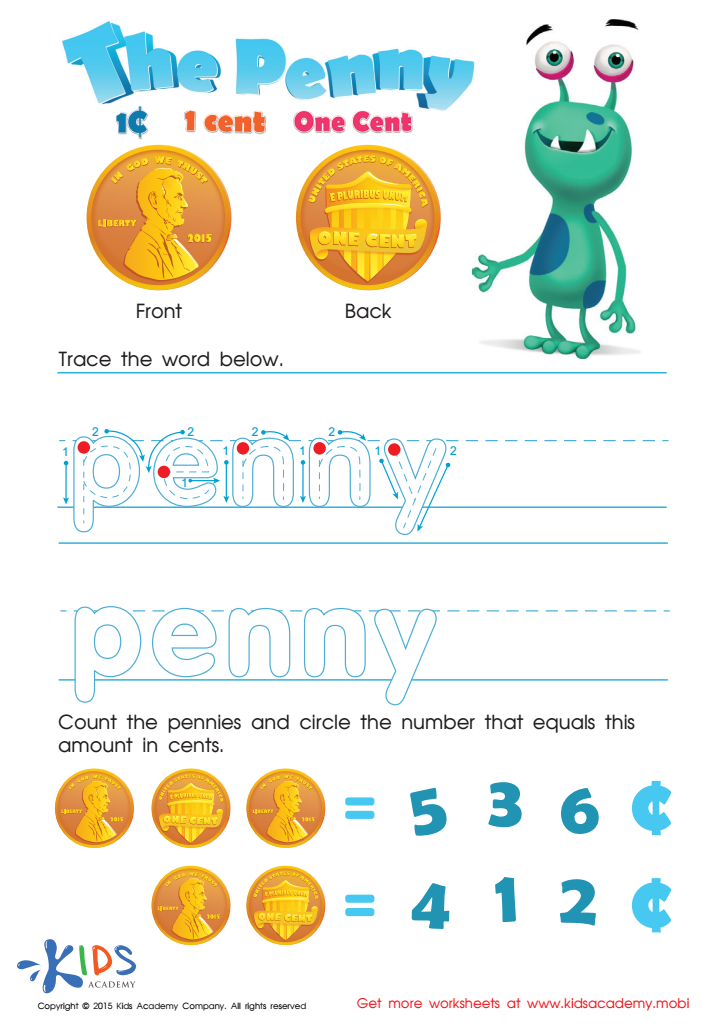
One Cent or the Penny Money Worksheet
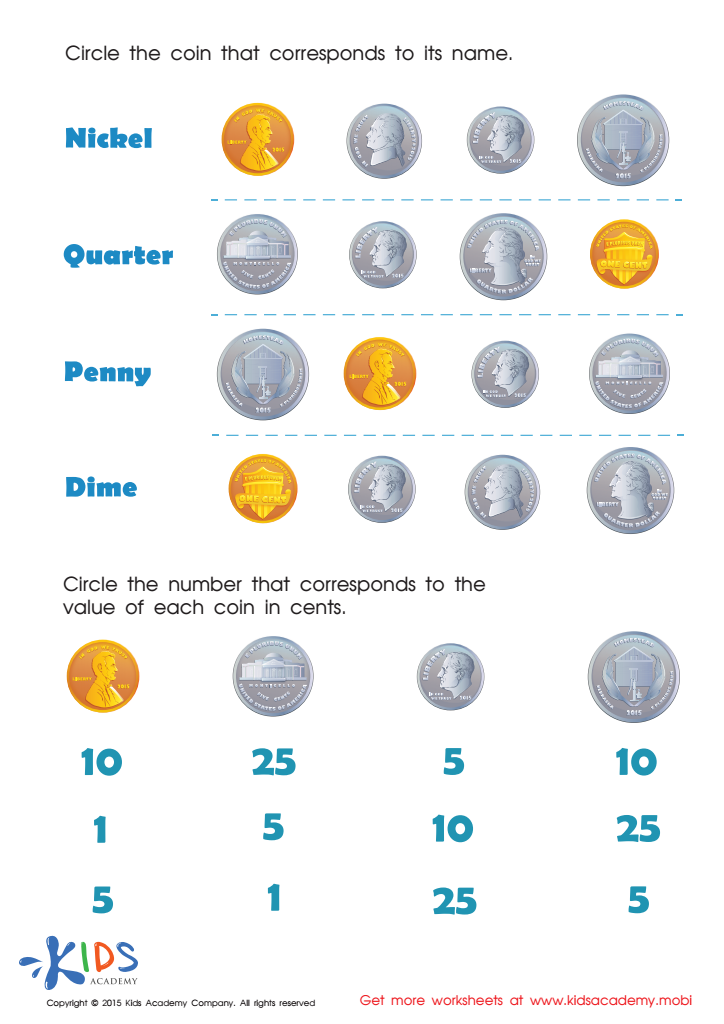
Coin Names and Values Money Worksheet
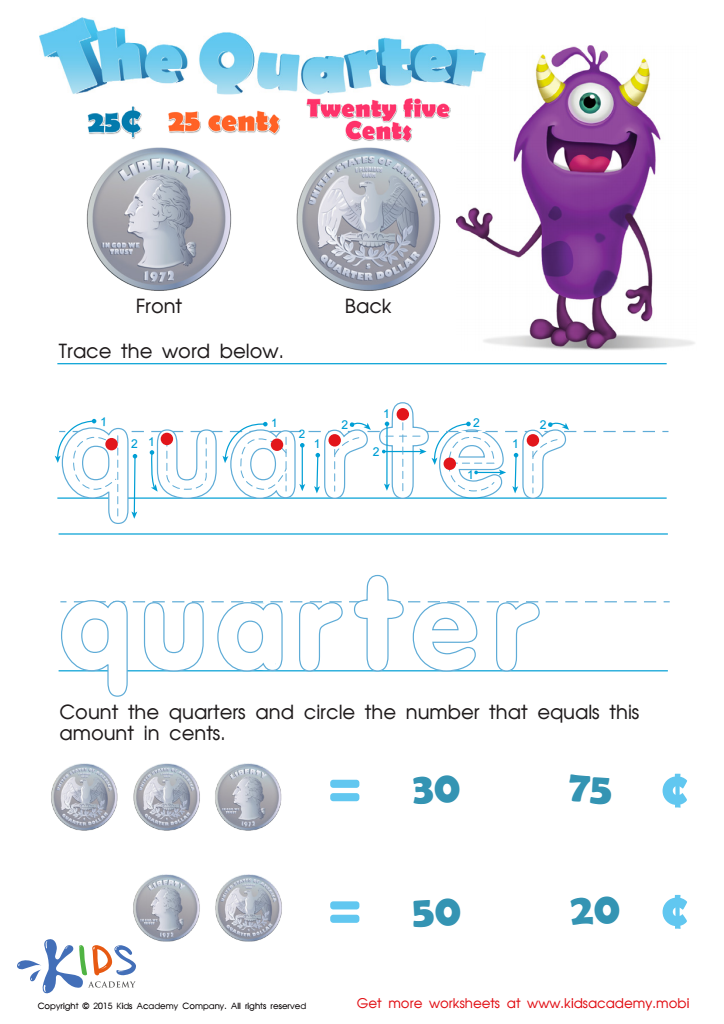
Twenty Five Cents or the Quarter Money Worksheet








Parents and teachers play an essential role in early childhood education, and recognizing the importance of money recognition in kindergarten is vital to children’s future financial literacy. Introducing young children to money concepts lays the foundation for essential life skills, including arithmetic, value awareness, and decision-making abilities.
At this crucial developmental stage, kids are naturally curious and eager to learn. Teaching them to recognize different coins and bills, understand their values, and grasp the basics of spending and saving provides practical math application, enhancing overall numerical understanding. This interactive learning also builds cognitive skills, as children begin to differentiate between various shapes, sizes, and values of money.
Moreover, early exposure helps shape positive financial habits. When children understand that money is used to purchase goods and that it needs to be earned or allocated wisely, they are more likely to make informed choices in the future. This early financial education empowers children with confidence to ask questions and manage allowances or gifts consciously, promoting responsible behavior.
Incorporating money recognition in kindergarten not only supports academic growth but also develops lifelong skills. Parents and teachers acting as guides and role models in this learning process bridge the gap between theoretical knowledge and practical, everyday use, fostering a greater sense of independence and financial responsibility.








