Basic Arithmetic Kindergarten Numbers Worksheets
5 filtered results
-
From - To
Welcome to our "Basic Arithmetic Kindergarten Numbers Worksheets" page! Here, you'll find an engaging collection of worksheets designed to introduce young learners to fundamental arithmetic concepts. Our fun and colorful resources focus on number recognition, counting, addition, and subtraction, helping children build a solid foundation in math. Each worksheet promotes interactive learning, encouraging students to practice essential skills through enjoyable activities. Ideal for home or classroom use, these worksheets support early math education and foster confidence in young minds. Discover the joy of learning with our easy-to-use printable resources, and watch your child's math skills flourish!
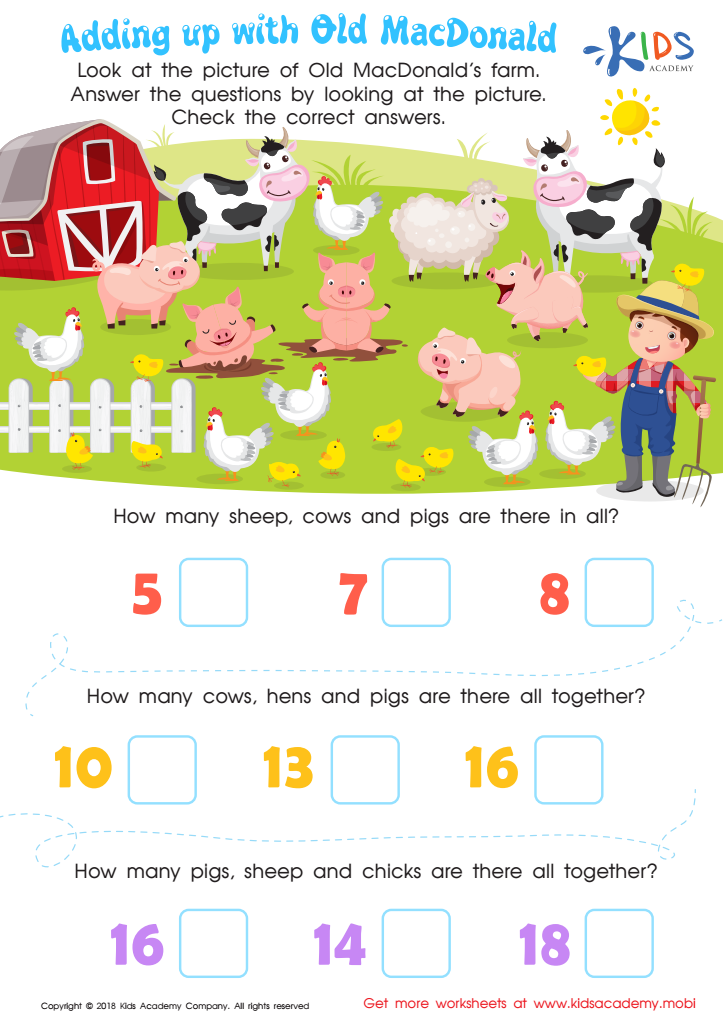
Adding Up with Old MacDonald Worksheet
 Assign to My Students
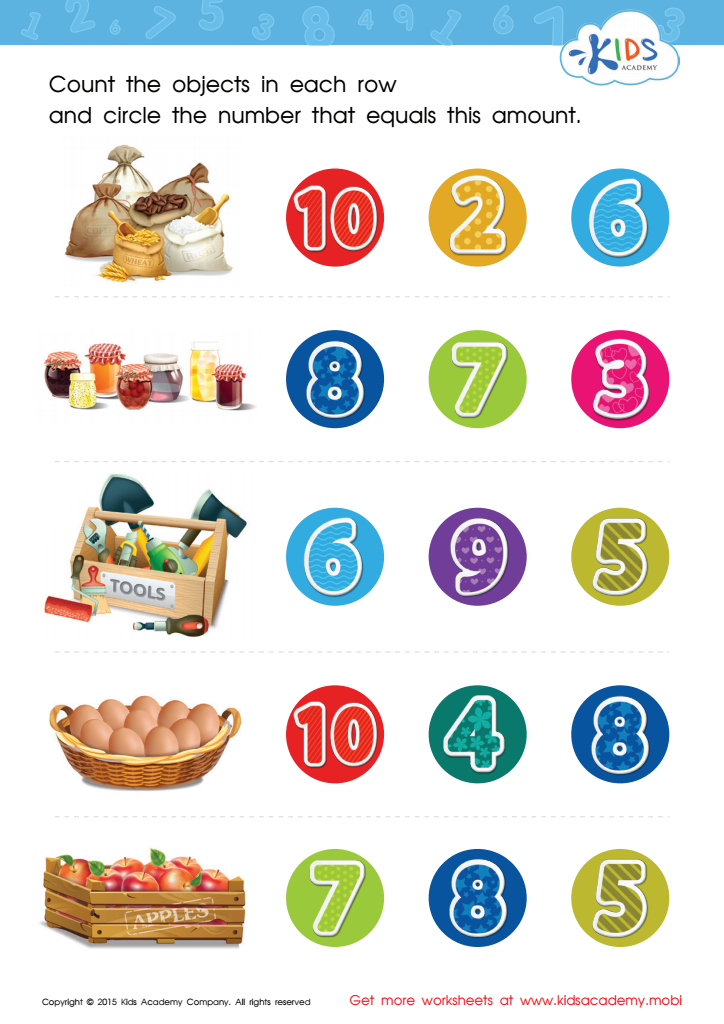
Count and Match 6 – 10 Math Worksheet
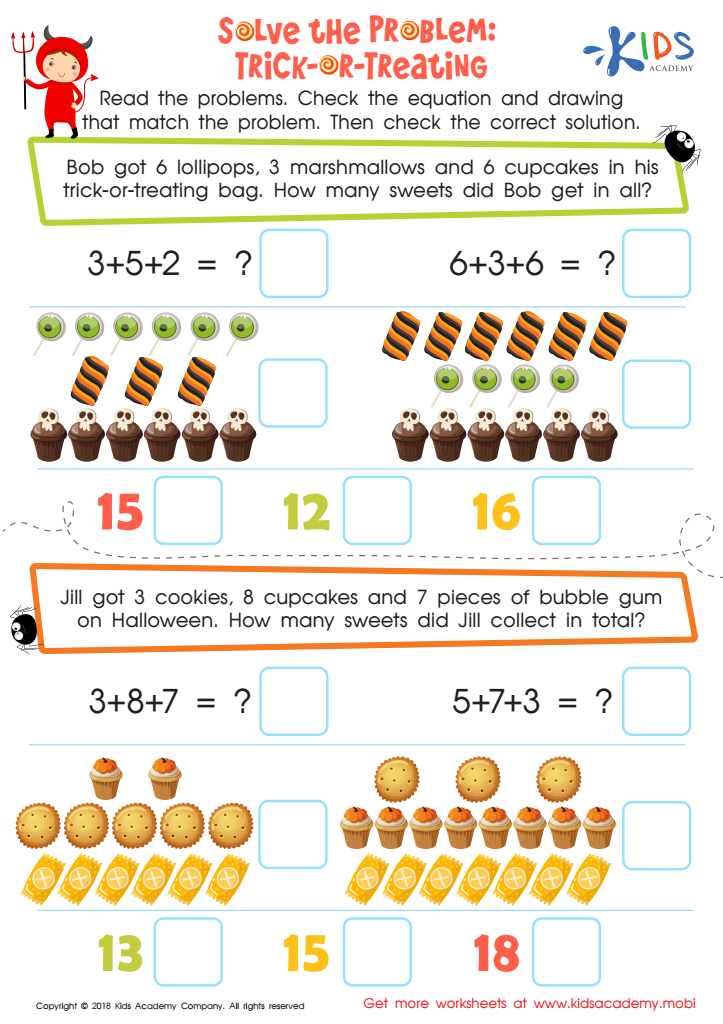
Solve the Problem: Trick–or–treating Worksheet
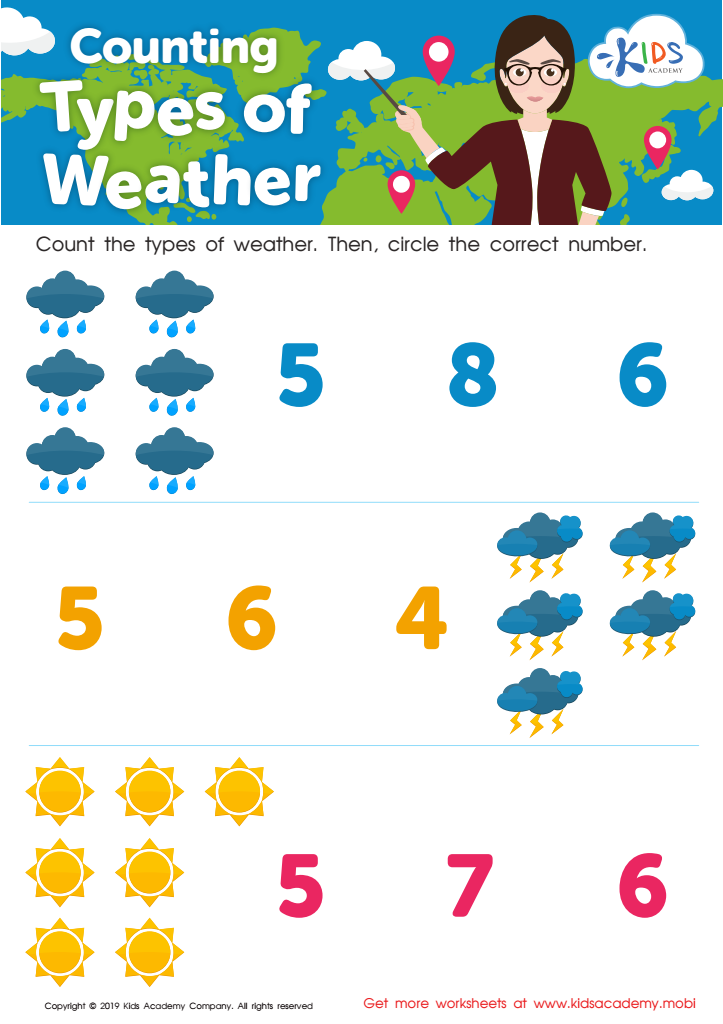
Counting Types of Weather Worksheet
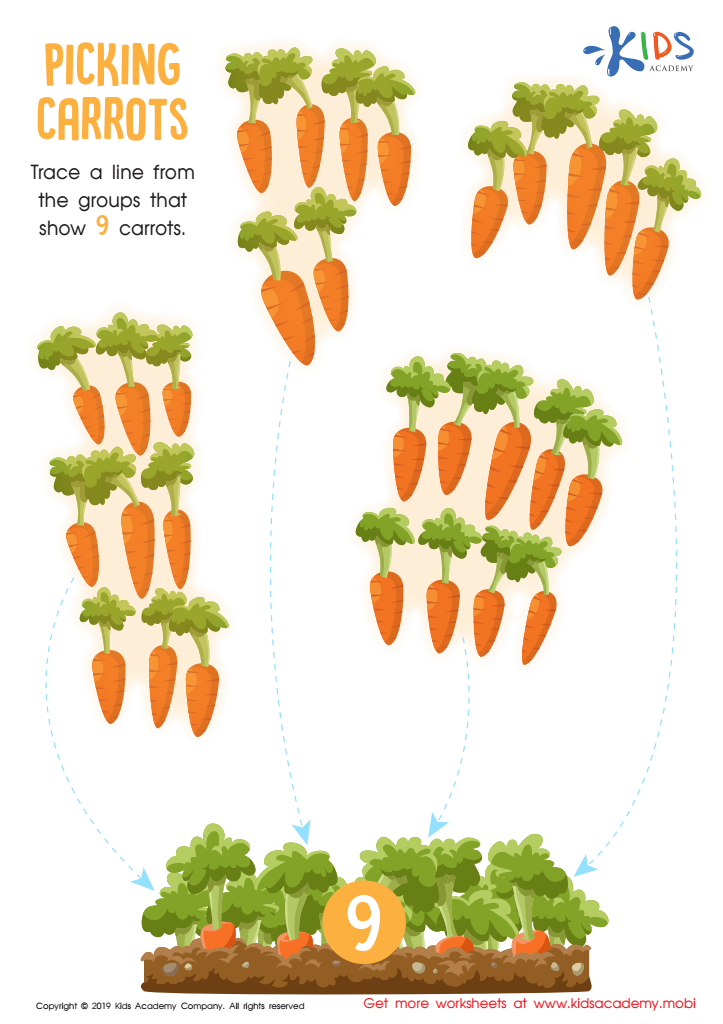
Picking Carrots Worksheet








Parents and teachers should care about basic arithmetic in kindergarten because it serves as the foundation for essential mathematical skills that children will use throughout their education and daily lives. Early exposure to concepts such as counting, addition, and subtraction fosters numerical literacy and cognitive development. When children grasp these basic arithmetic concepts, they gain confidence in their ability to tackle more complex math problems later on.
Learning numbers and simple arithmetic also helps young children develop critical thinking and problem-solving skills. It nurtures their ability to analyze scenarios, recognize patterns, and make connections between numbers and real-world situations. Engaging with math-related activities enhances fine motor skills, promotes social interaction through group activities, and encourages a sense of achievement as they progress.
Furthermore, a strong foundation in basic arithmetic can positively affect a child's attitude toward mathematics, emphasizing that it is an enjoyable and approachable subject rather than a difficult one. This early enthusiasm sets the tone for their future academic endeavors. Overall, parents and teachers play a crucial role in creating a supportive and stimulating environment that encourages mathematical exploration, ensuring that children are well-prepared for future learning and everyday life challenges.








