
Pattern recognition Kindergarten Numbers Worksheets
4 filtered results
Difficulty Level
Grade
Age
-
From - To
Subject
Activity
Standards
Discover our engaging Pattern Recognition Kindergarten Numbers Worksheets, designed to help young learners enhance their mathematical skills through fun and interactive activities. These worksheets provide a variety of exercises that encourage children to identify, create, and extend patterns using numbers. By solving these tasks, students will develop critical thinking and problem-solving abilities, laying a strong foundation for future math success. Our user-friendly format caters to the developmental needs of preschoolers and kindergarteners, making learning enjoyable. Join us in nurturing your child's cognitive growth and preparing them for academic achievements with our comprehensive pattern recognition resources!
Favorites
With answer key
Interactive
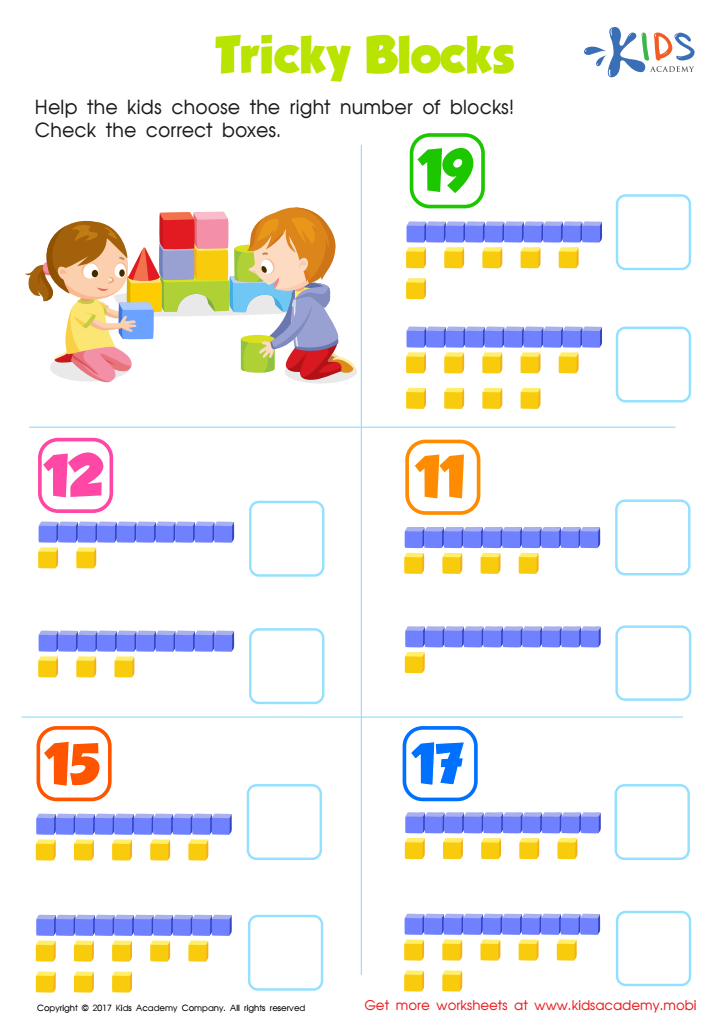
Tricky Blocks Worksheet
Help your child count with this printable worksheet. You'll be able to explain the technicalities of each answer as you work together to count the boxes and choose the correct number in the spaces provided. This will help your child better understand the concept and will go faster than if they do it alone.
 Assign to My Students
Tricky Blocks Worksheet
Worksheet
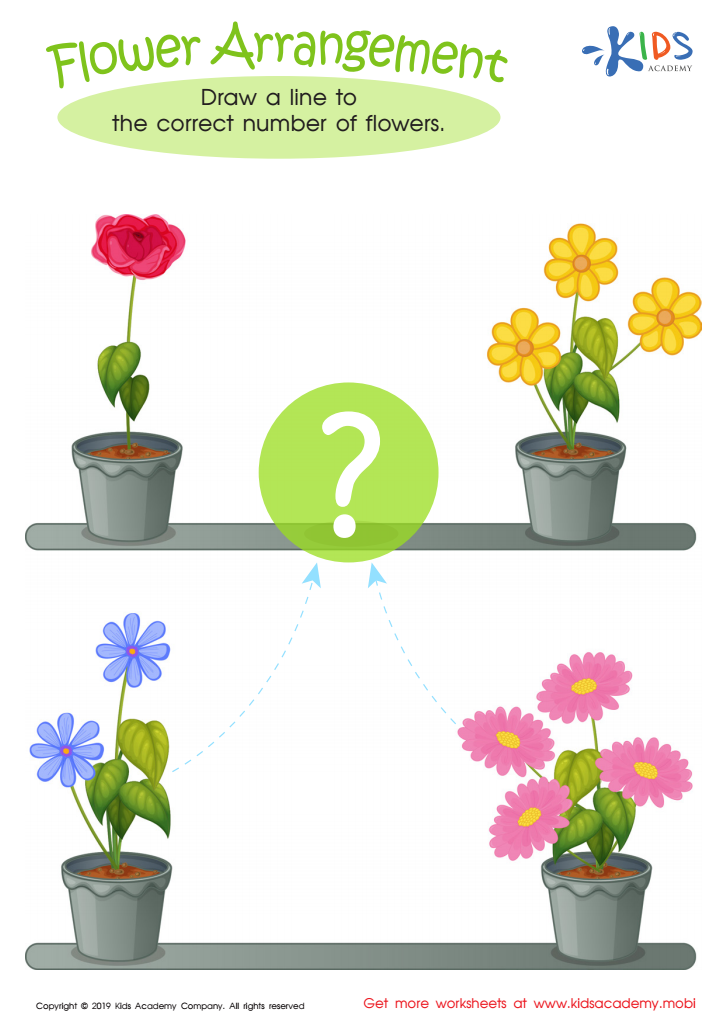
Flower Arrangement Worksheet
Your math whizzes can use flower power to showcase their counting skills with this bright PDF! One-to-one representation in pictures helps children build number sense, which leads to better math and computation efficiencies. This PDF features traceable lines for kids to draw to the correct number of flowers, all while practicing their counting with pretty pictures.
Flower Arrangement Worksheet
Worksheet
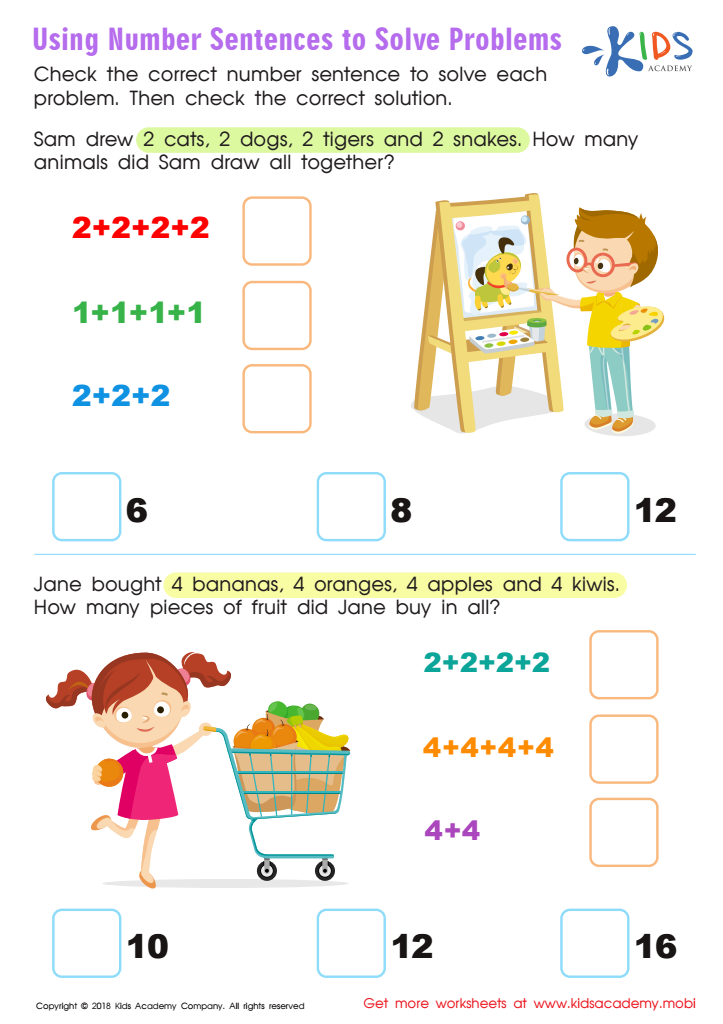
Using Number Sentences to Solve Problems Worksheet
Solving math problems requires an efficient strategy. Picture representation can help young mathematicians with basic addition problems, especially when it involves repeated addends. As they gain confidence, they'll be able to apply their number sentence solving abilities to more complex equations.
Using Number Sentences to Solve Problems Worksheet
Worksheet
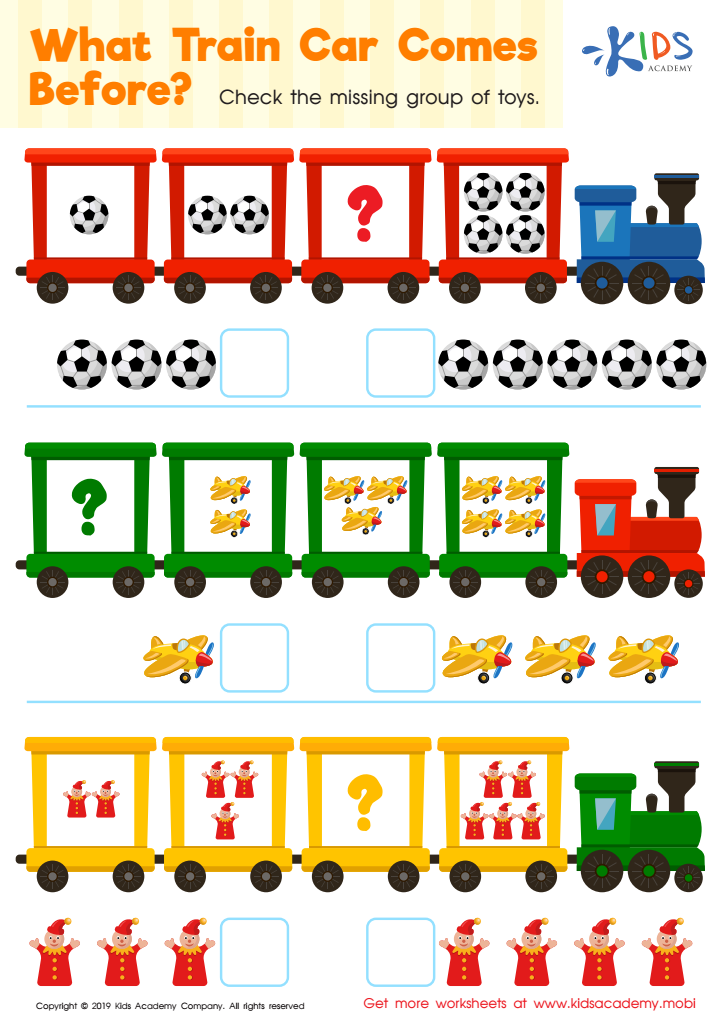
What Train Car Comes Before? Worksheet
Download this worksheet with your kids and have them identify the colorful objects pictured. Count the toys in the three trains together, then check the missing group of toys from the options provided. Have fun! (80 words)
What Train Car Comes Before? Worksheet
Worksheet
Join Kids Academy for Free
Who is primarily going to use this learning content?








Pattern recognition in kindergarten numbers is a foundational skill that significantly impacts a child's mathematical development and overall cognitive abilities. When children learn to identify and understand patterns, they enhance their critical thinking and problem-solving skills. Recognizing sequences, such as odd/even numbers or simple addition patterns, lays the groundwork for more complex mathematical concepts as they progress in their education.
For parents and teachers, fostering an environment that encourages pattern recognition is essential for several reasons. First, it promotes logical reasoning, which is vital not only in math but across various subjects. Additionally, children who are proficient in pattern recognition often exhibit increased confidence in their abilities, reducing math anxiety and fostering a positive attitude towards learning.
Integrating activities that involve patterns—such as counting objects in sequences, using pegs to create arrangements, or identifying patterns in nature—engages young learners and makes math enjoyable. This hands-on approach helps solidify these concepts in a child’s mind, supporting their academic growth.
In summary, parents and teachers should prioritize pattern recognition in kindergarten numbers as it fosters essential skills, builds confidence, and sets the stage for success in future learning endeavors.








