Financial literacy Kindergarten Math Worksheets
4 filtered results
-
From - To
Explore our engaging Financial Literacy Kindergarten Math Worksheets designed to introduce young learners to essential money concepts! These colorful, interactive worksheets help children grasp fundamental financial skills, including counting, comparing, and understanding the value of money. Through fun activities such as identifying coins, simple budgeting tasks, and shopping scenarios, students will develop a strong foundation in financial literacy while reinforcing their math abilities. Perfect for home and classroom use, our worksheets encourage hands-on learning and critical thinking. Start your child’s journey towards financial understanding today with our user-friendly printables that foster a sense of responsibility and confidence in managing money.
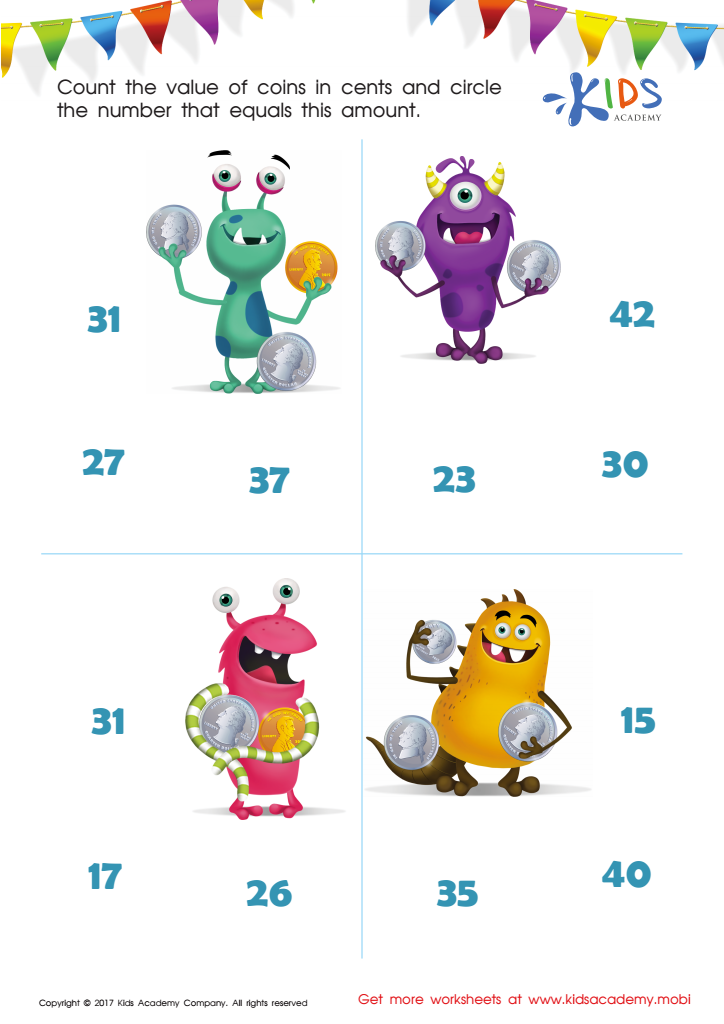
How Many Coins Money Worksheet
 Assign to My Students
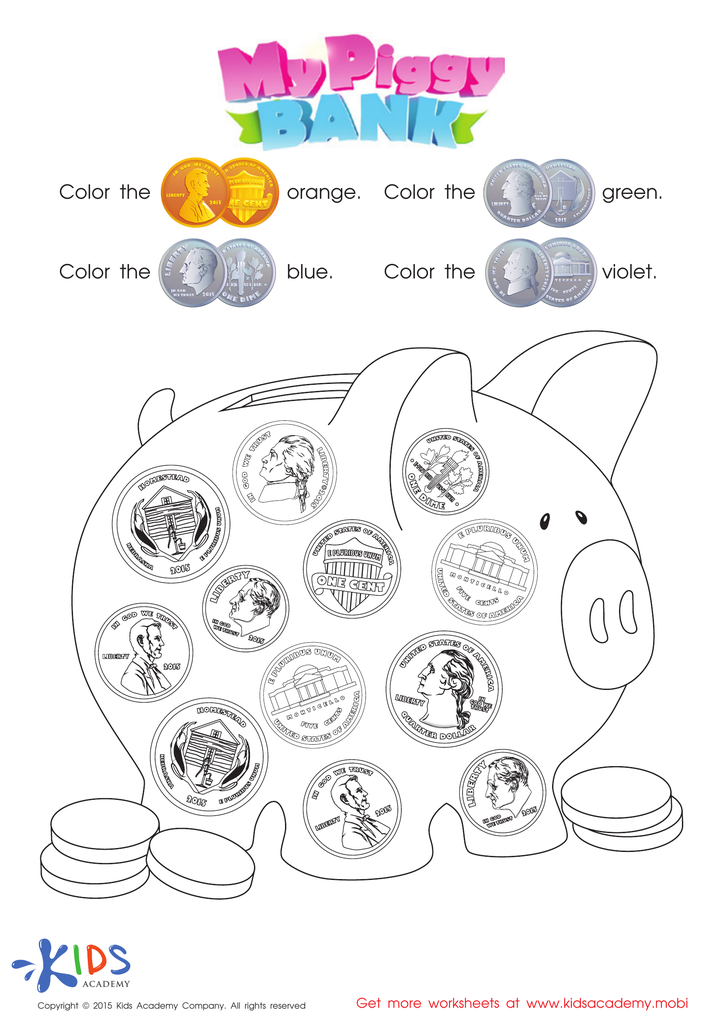
Recognizing Money Money Worksheet
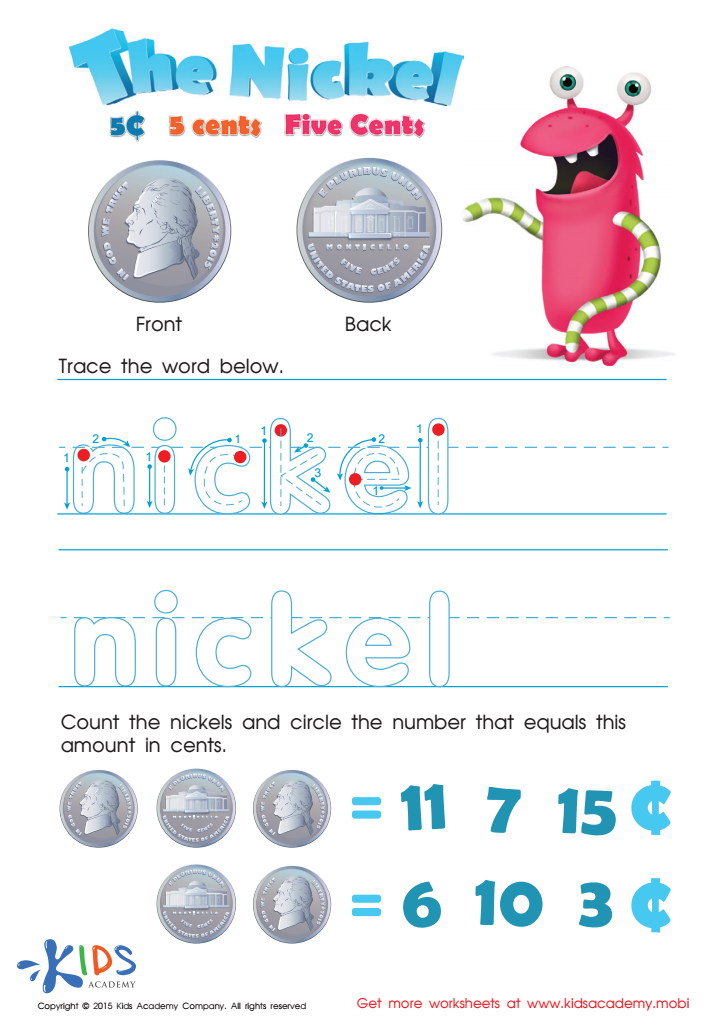
Five Cents or the Nickel Money Worksheet
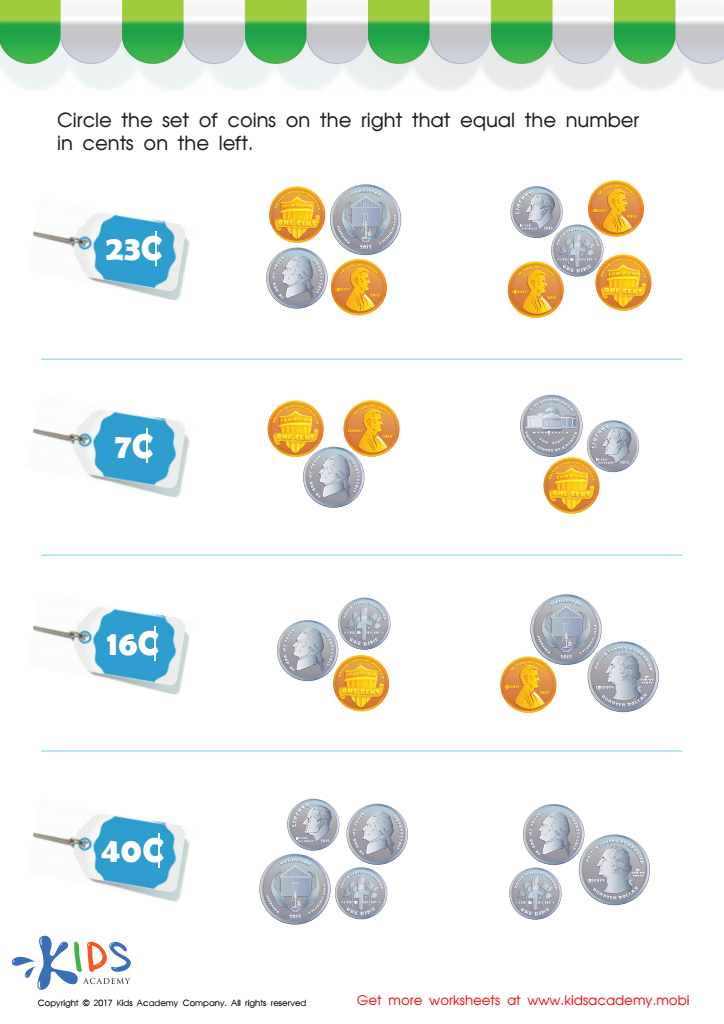
Picking the Coins You Need Money Worksheet








Financial literacy in Kindergarten Math is crucial for several reasons. First, teaching young children about basic financial concepts lays the groundwork for responsible money management as they grow older. Introducing concepts like counting coins or understanding the value of money helps children develop essential math skills while reinforcing real-world applications.
Second, financial literacy fosters critical thinking and problem-solving skills. When children engage in activities related to budgeting or simple transactions, they learn to analyze scenarios, weigh choices, and understand consequences—skills that are valuable beyond math.
Additionally, instilling a foundational understanding of money empowers children to make informed decisions in the future. As they transition through grades and eventually into adulthood, children who grasp fundamental concepts like saving, spending, and sharing are better equipped to navigate financial challenges, such as managing allowances or understanding the value of persistence in saving for a goal.
Moreover, parents and teachers serve as role models, and when they prioritize financial literacy, it sends a powerful message about the importance of responsible financial behavior. By emphasizing financial literacy in the early grades, we can cultivate a culture of informed, confident individuals who are prepared to face complex financial realities with competence and care.








