
Multiplication practice Kindergarten Math Worksheets
8 filtered results
Difficulty Level
Grade
Age
-
From - To
Subject
Activity
Standards
Boost your child's mathematical skills with our Multiplication Practice Kindergarten Math Worksheets. Tailored specifically for young learners, these engaging worksheets are designed to introduce basic multiplication concepts in a fun and accessible way. From colorful visuals to interactive tasks, our worksheets help children build a strong foundation in math through hands-on learning. Perfect for classroom use or at-home practice, these worksheets reinforce key skills, enhance number sense, and boost confidence. Download our printable materials today and watch your kindergartener flourish in their early math journey! Enhance learning with Kids Academy - where education meets fun.
Favorites
With answer key
Interactive
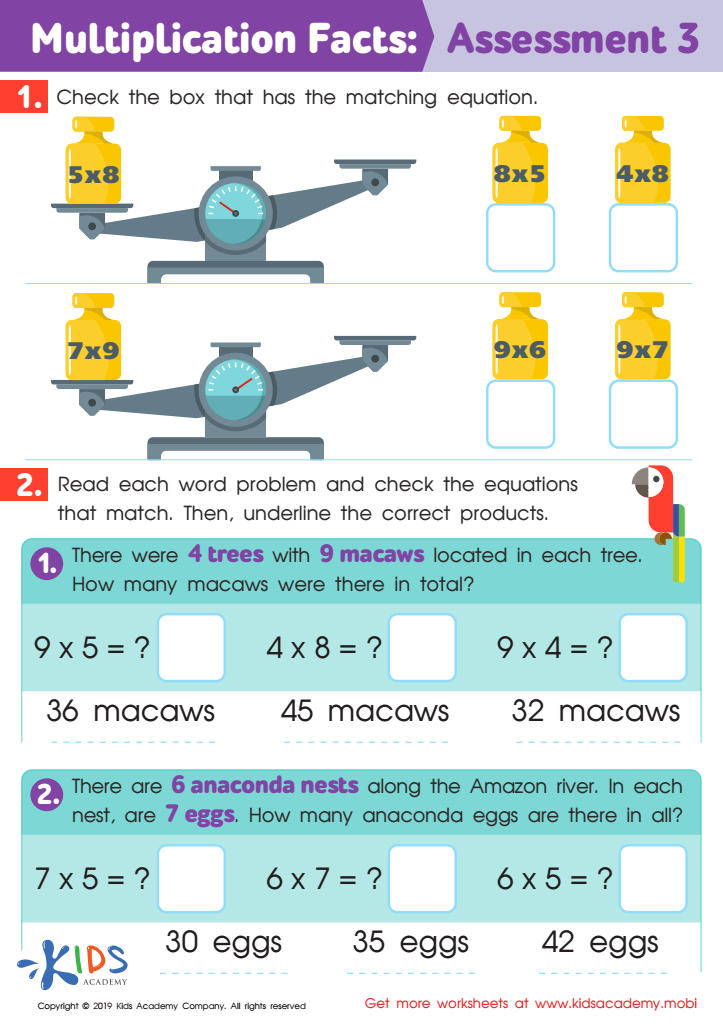
Multiplication Facts: Assessment 3 Worksheet
Test your kid's maths skills with this easy to use worksheet! Help them check the box that matches the equation in the first part, then read each word problem and underline the right answers to the second part. Assess your child's muliplication knowledge and find out where they need extra help.
 Assign to My Students
Multiplication Facts: Assessment 3 Worksheet
Worksheet
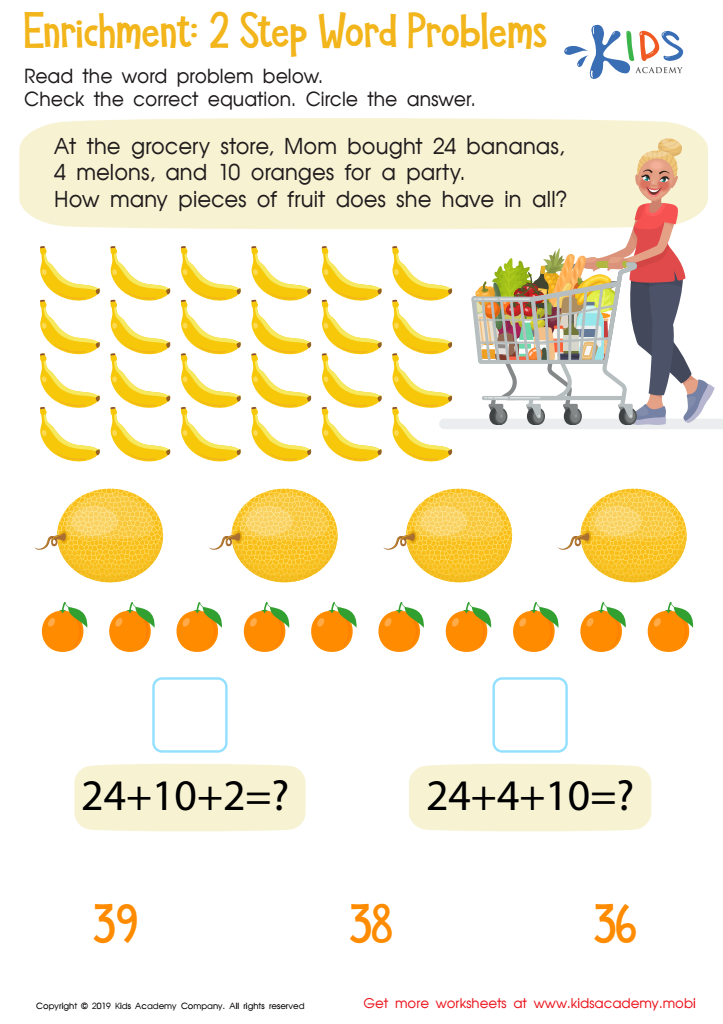
Enrichment -2 Step Word Problems Worksheet
Help your students learn math easier and faster with this colorful worksheet. Read the word problem and then guide them in checking the correct equation and finding the answer. Your students will benefit from the extra help, as they work through new concepts each day.
Enrichment -2 Step Word Problems Worksheet
Worksheet
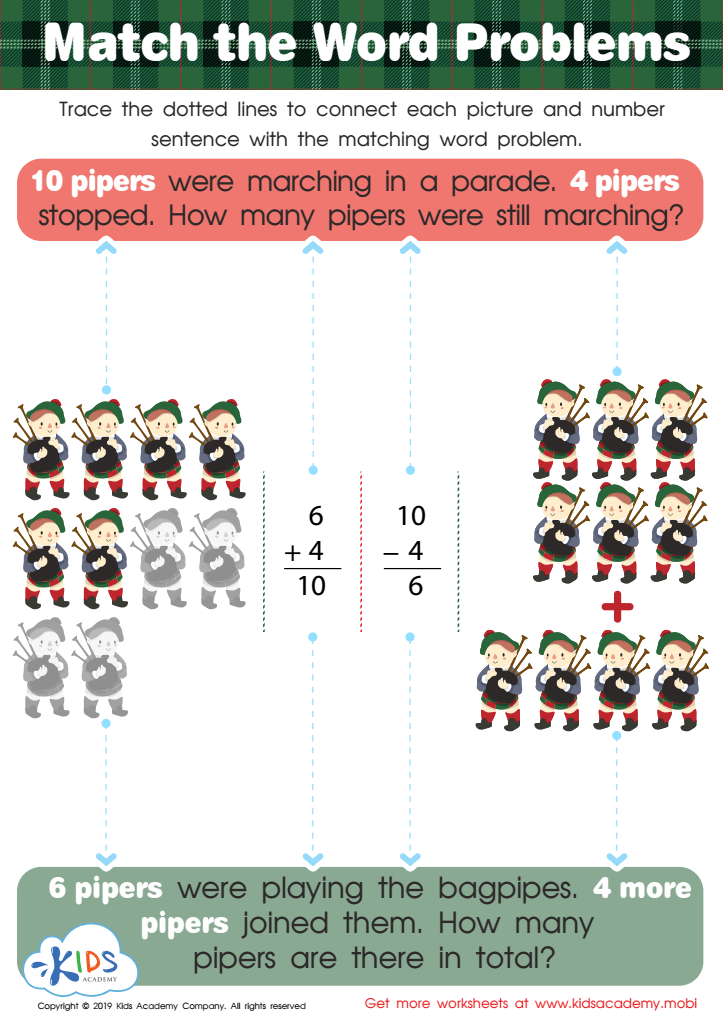
Match the Word Problems Worksheet
Read this word problem to your kids: Help them understand how it can be translated into a number problem. Trace the dotted lines to see how each picture and number sentence match the problem. With this worksheet, you can show your kids how easy it is to transform a word problem into a number problem.
Match the Word Problems Worksheet
Worksheet
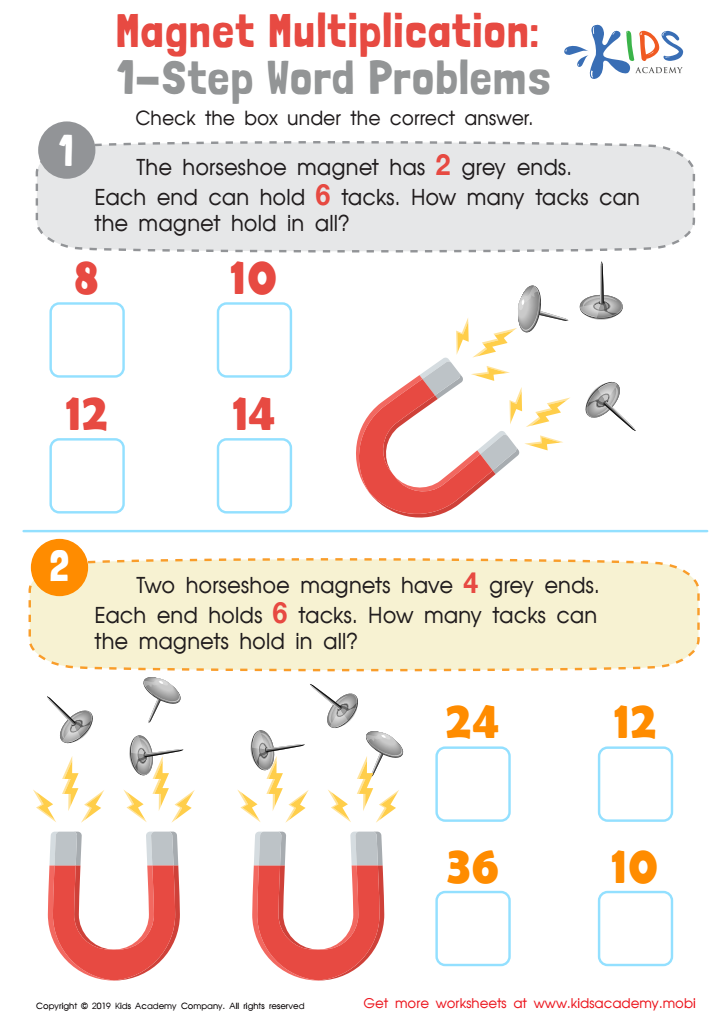
Magnet Multiplication: 1-Step Word Problems Worksheet
Refresh your students' knowledge about magnets with a simple math worksheet. Download the PDF with two word problems, along with pictures to help. Read the problems to the class, and help them identify the correct answer by checking the box. This activity will help them harness their science knowledge and practice their math skills.
Magnet Multiplication: 1-Step Word Problems Worksheet
Worksheet
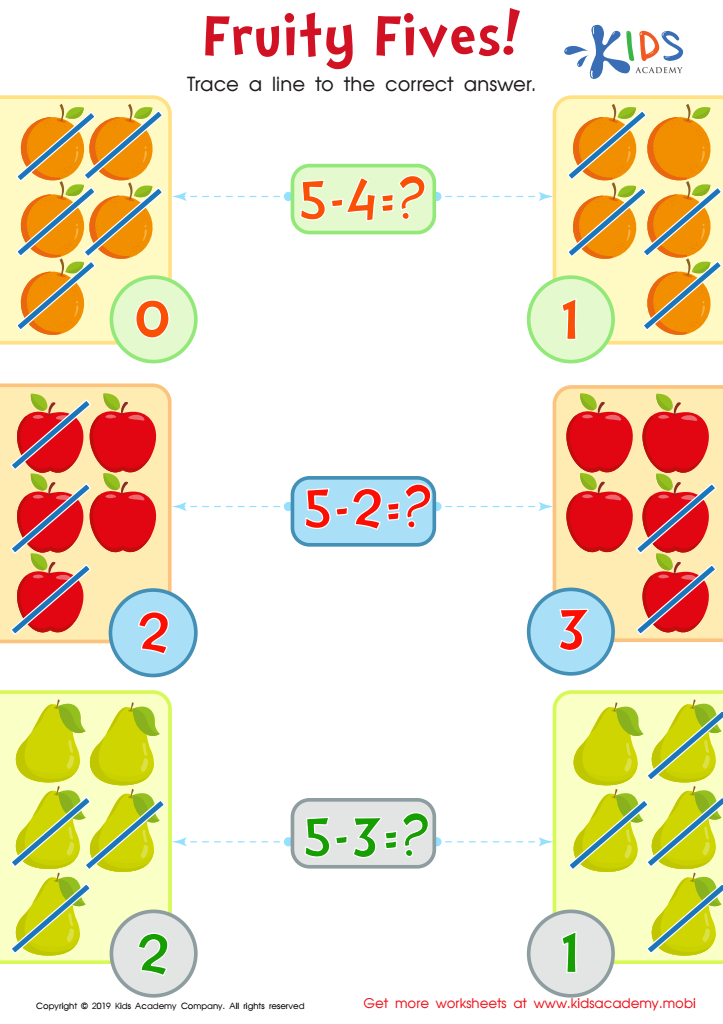
Fruity Fives! Worksheet
This tracing sheet has three equations for your kids to solve. Make learning fun with colorful objects and text! They may need help, so be prepared to assist them. Help them solve the equations and trace a line to the correct answer.
Fruity Fives! Worksheet
Worksheet
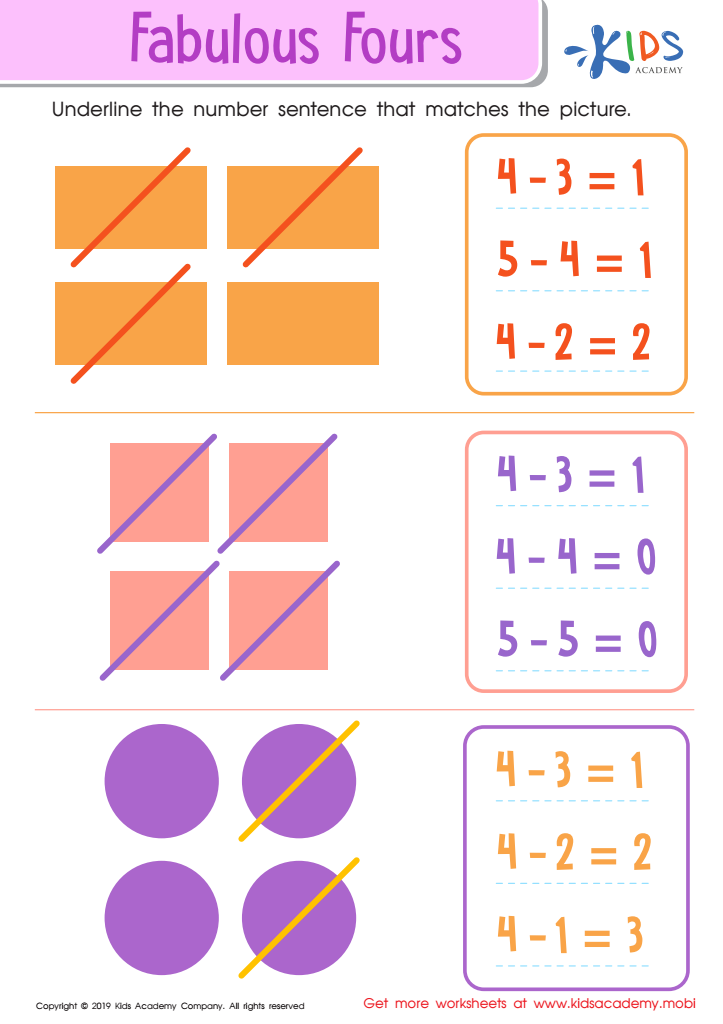
Fabulous Fours Worksheet
Mastering basic math like addition and subtraction is essential for your kids. Use fun exercises and tests to evaluate their understanding of equations. Challenge them with this worksheet - have them count the objects in each picture, then trace a line to the pictures which show the equation 3-2.
Fabulous Fours Worksheet
Worksheet
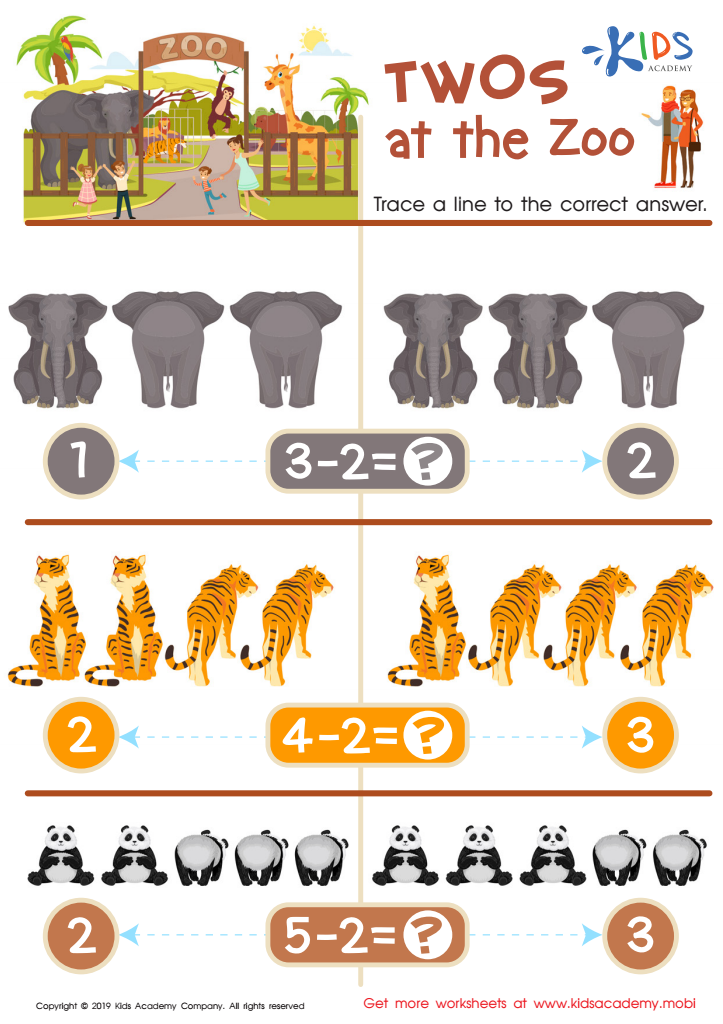
Twos at the Zoo Worksheet
At the zoo, your kids can have fun with animals. Ask them to name their favorite ones and identify them in the printout. Count animals in each group together, then help your kids solve the equations and trace a line to the answer. It's an enjoyable way to combine learning and exploration!
Twos at the Zoo Worksheet
Worksheet
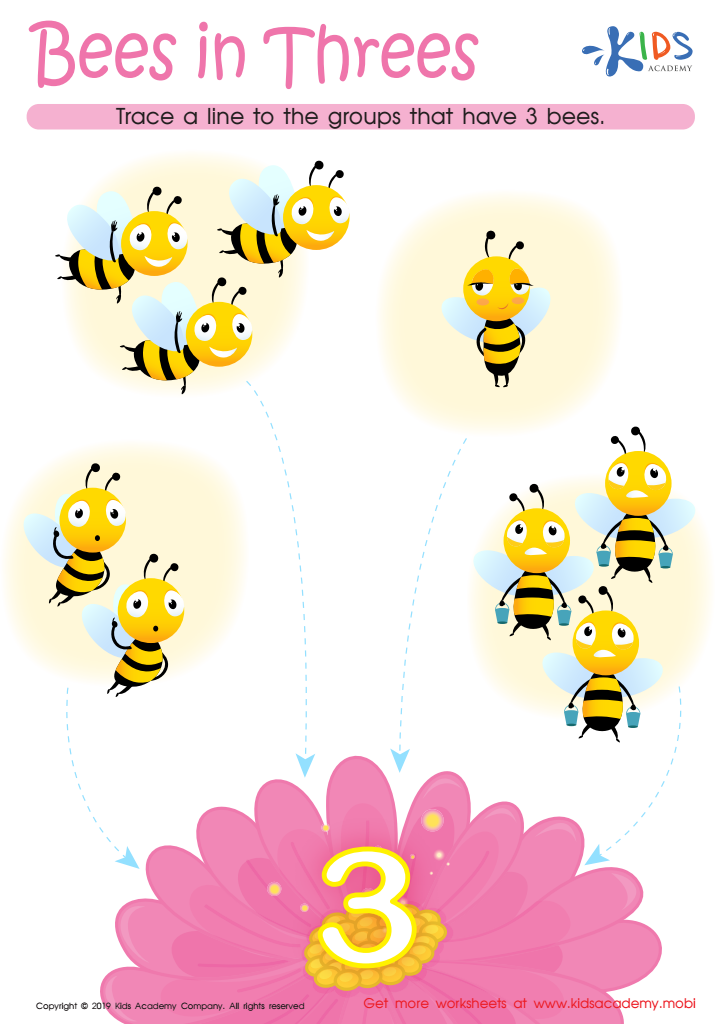
Bees in Threes Worksheet
Kids love learning numbers, especially 1, 2, 3! Counting bees with this fun worksheet? It's the bee's knees! They'll practice number recognition and counting skills while connecting groups of three to the number three. It's a great way to make math fun at home or school!
Bees in Threes Worksheet
Worksheet
Join Kids Academy for Free
Who is primarily going to use this learning content?








Parents and teachers should deeply value multiplication practice in Kindergarten math because it lays the foundational building blocks for lifelong mathematical understanding. While kindergarten curricula traditionally focus on basic concepts like counting and addition, introducing multiplication as repeated addition engages young minds and sets the stage for more complex arithmetic. This early exposure bolsters number sense, which is critical for understanding more sophisticated topics like division, fractions, and algebra later on.
Mastering multiplication facts early can greatly enhance a child's confidence. Children who develop these skills at a young age find it easier to tackle math problems faster and more accurately, fostering a positive attitude toward math. This fluency allows them to allocate cognitive resources to more advanced mathematical problem-solving, reducing math anxiety and fostering a love of learning.
For teachers, incorporating multiplication early creates a rich, integrative curriculum that aligns with advanced educational standards. For parents, supporting this learning at home ensures consistency and reinforces school-taught concepts. Both educators and parents play pivotal roles in early education and serve as the architecture for a child's academic future. Proficiency in multiplication subsequently benefits real-world skills, like logical thinking and problem-solving, necessary for everyday tasks and future academic ventures.








