Basic measurement concepts Kindergarten Measurement Worksheets
5 filtered results
-
From - To
Explore our engaging Basic Measurement Concepts worksheets, designed specifically for kindergarten students! These worksheets introduce young learners to the fundamentals of measurement through fun and interactive activities. Kids will develop essential skills as they measure lengths, compare sizes, and understand basic units. Each worksheet is crafted to enhance concept retention while promoting intuitive learning. With colorful illustrations and age-appropriate challenges, our resources create an exciting math experience for little ones. Perfect for classroom use or home practice, these measurement worksheets are an excellent way to foster a love for math in early learners. Start measuring up with us today!
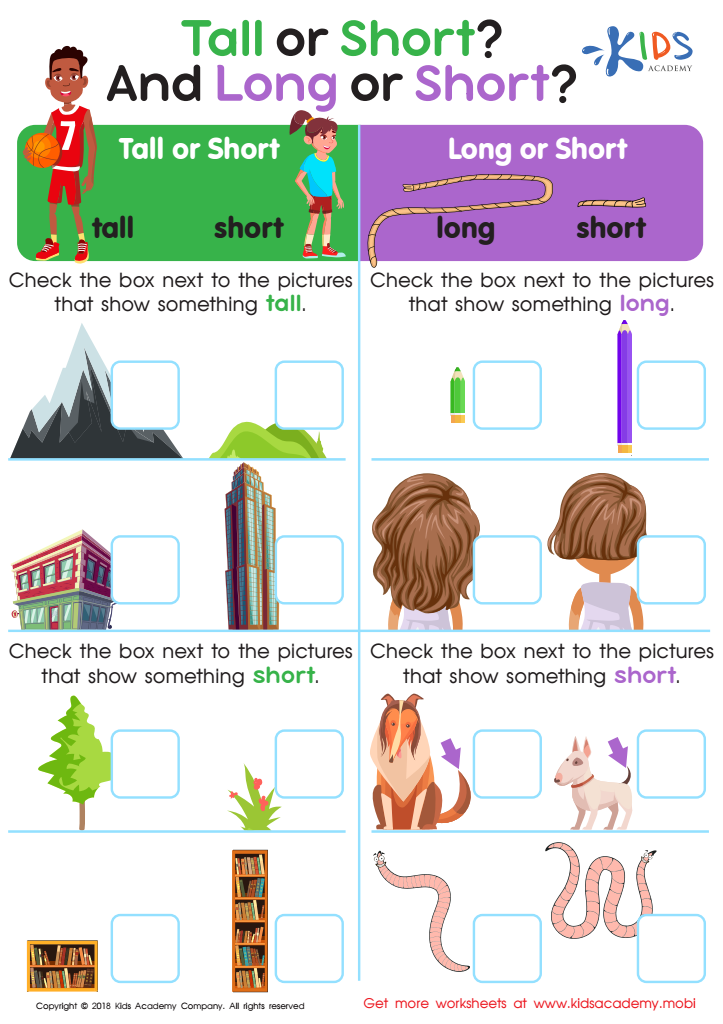
Tall or Short and Long or Short? Worksheet
 Assign to My Students
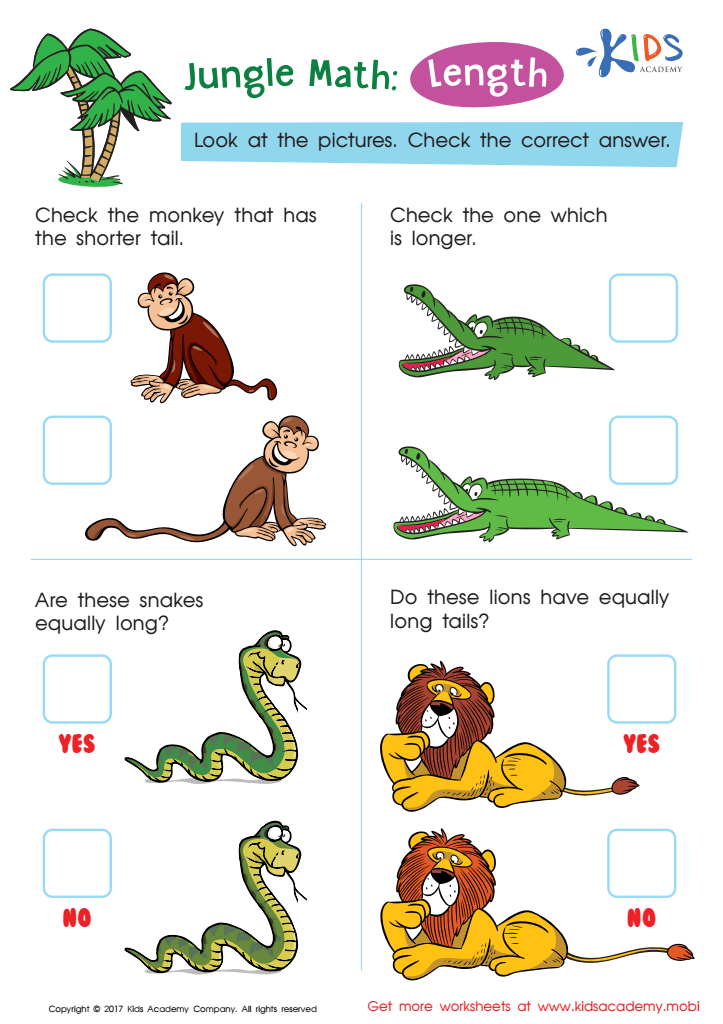
Which One Is Longer - Length Worksheet
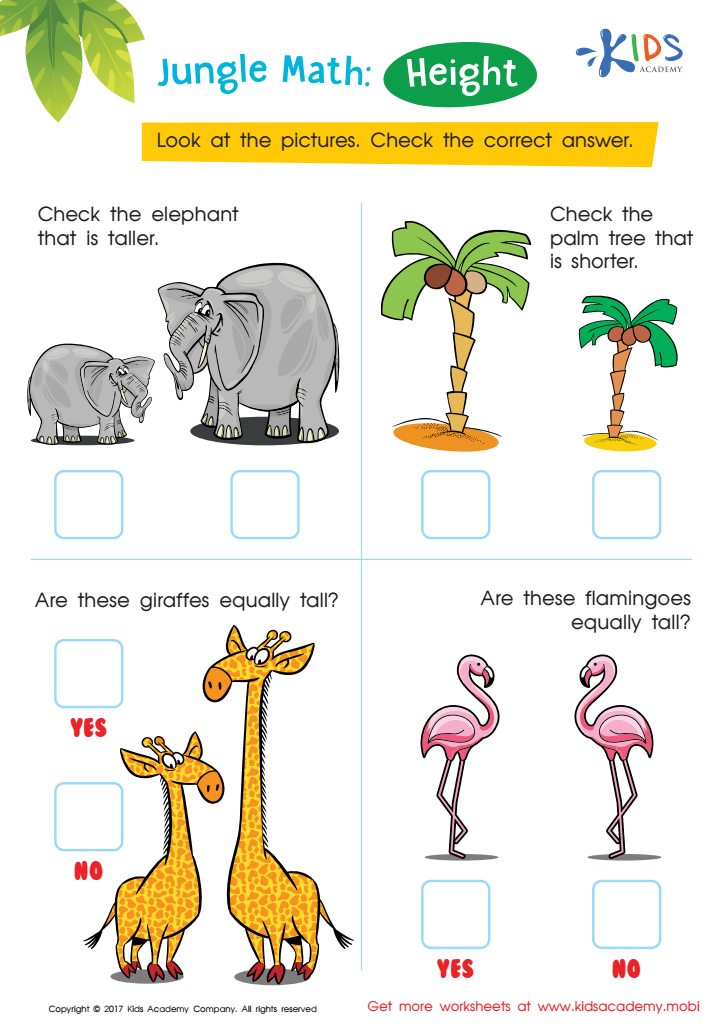
Which Is Taller Worksheet
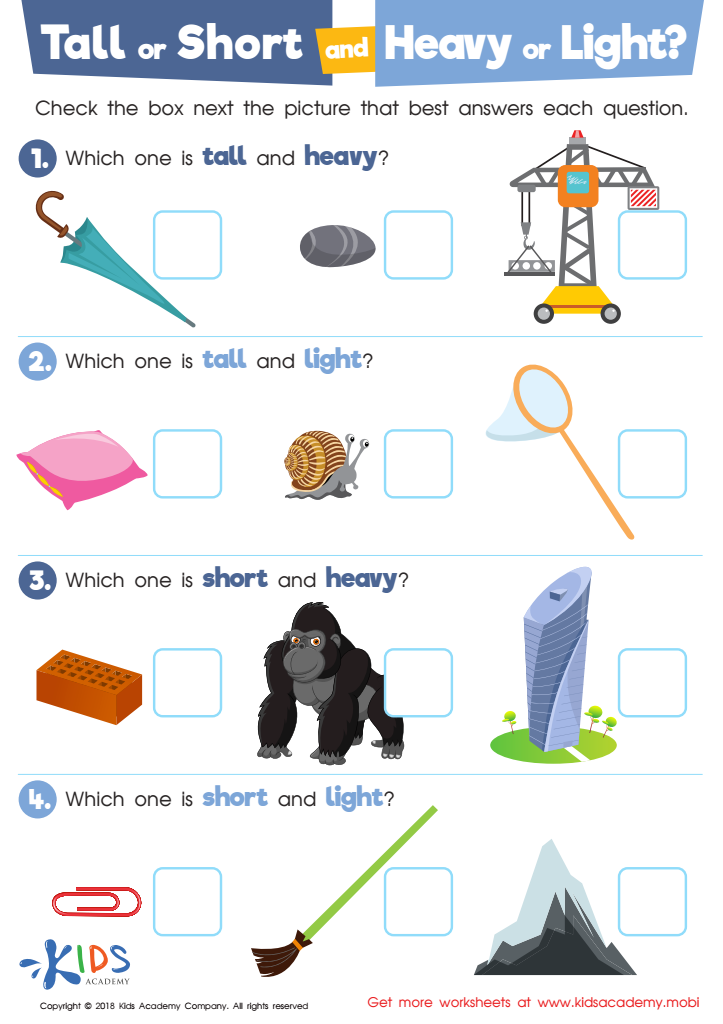
Tall or Short and Heavy or Light? Worksheet
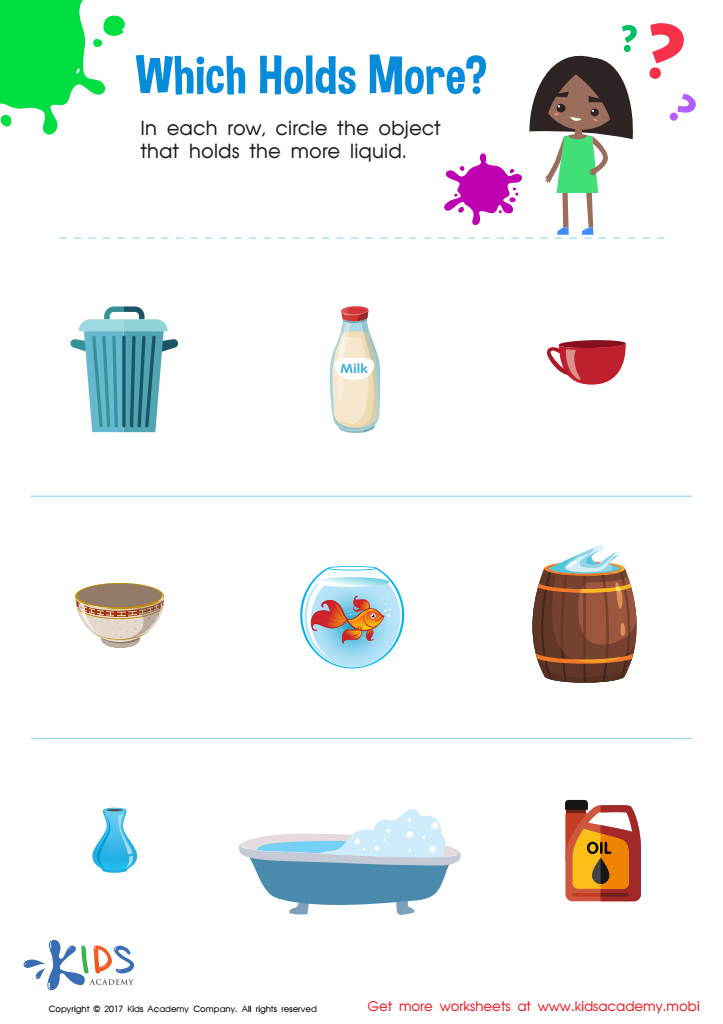
Which Holds More: Capacity Worksheet







Basic measurement concepts are crucial in Kindergarten as they lay the foundation for essential math skills that children will build upon in their education. Understanding measurement helps young learners develop spatial awareness, problem-solving abilities, and critical thinking skills. When children learn to compare lengths, weights, and volumes, they begin to recognize patterns and relationships in their environments.
Additionally, measurement activities foster sensory experiences and encourage exploration. For instance, when children measure the height of blocks or the capacity of containers, they engage with hands-on learning, enhancing their retention and understanding. This not only makes math fun but also integrates lessons with other subjects, such as science and art.
Parents and teachers should care about these concepts as they contribute to children’s overall cognitive development and early literacy skills. By encouraging young learners to measure and compare, adults support their ability to articulate observations and make predictions, enhancing language development learning. Furthermore, measurement serves as a bridge to real-world applications, preparing children for daily life activities such as cooking, building, or shopping. Ultimately, focusing on basic measurement concepts cultivates a lifelong appreciation for math and science, essential for today’s increasingly quantitative world.








