Comparing lengths Kindergarten Measurement Worksheets
3 filtered results
-
From - To
Enhance your kindergartner's understanding of measurements with our Comparing Lengths Kindergarten Measurement Worksheets! Designed to develop critical thinking and observational skills, these worksheets provide engaging activities where young learners compare the lengths of various objects. By visualizing and determining which items are longer or shorter, children build a strong foundation in essential math concepts. Perfect for classroom or home learning, these printable worksheets are a fun and interactive way to practice comparison in a supportive environment. Help your kindergartner grasp the basics of measurement with our expertly crafted resources and set them up for future math success!
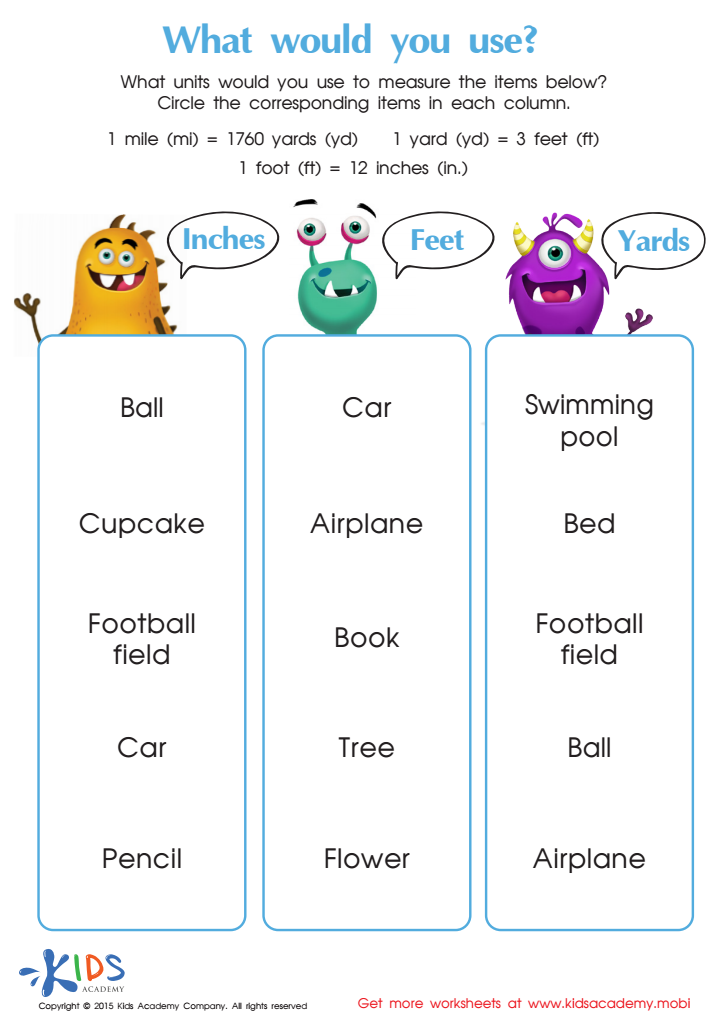
Learning about measuring objects in inches, feet and yards Worksheet
 Assign to My Students
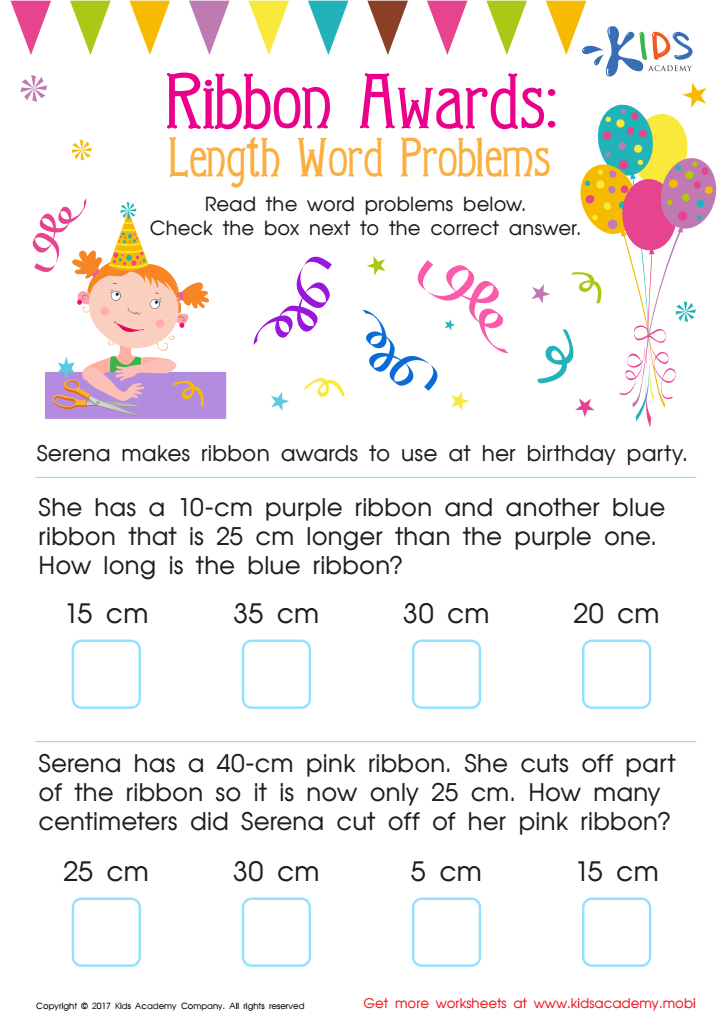
Length Word Problems Worksheet
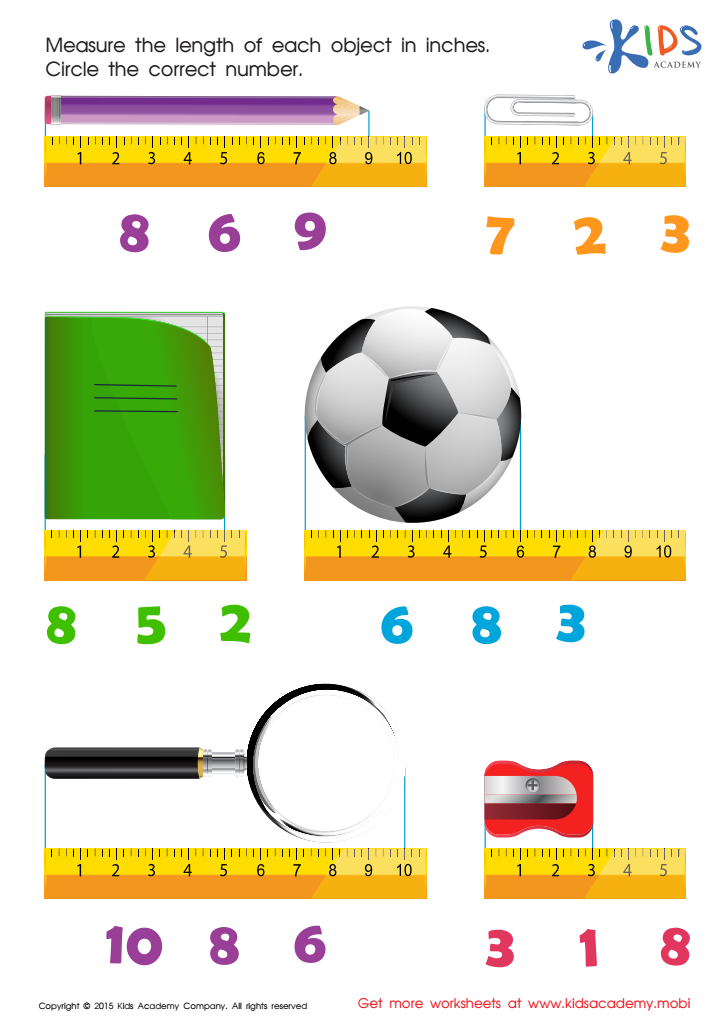
Learning measuring objects in inches Worksheet







Early childhood is a foundational period for cognitive development, and introducing the concept of comparing lengths in kindergarten forms an essential part of this process. Understanding and comparing lengths is one of the primary skills that lay the groundwork for future mathematical learning, including geometry and algebra, which relies heavily on spatial reasoning and measuring skills.
Engaging students in activities that involve comparing lengths encourages the development of their observational skills, vocabulary, and critical thinking. For instance, when children compare the lengths of various objects, they learn to use and understand descriptive terminology such as "longer," "shorter," "taller," and "smaller." These exercises promote language development and precise communication, crucial for all areas of learning.
Moreover, comparing lengths nurtures a child's problem-solving abilities and their understanding of the world around them. It supports their ability to make sense of physical space, laying the groundwork for practical life skills, from following a recipe to carpentry or dressmaking in later years.
Overall, caring about this aspect of measurement fosters a supportive learning environment where children can build confidence and curiosity about mathematics and its real-world applications. It provides a playful yet structured way to cultivate important cognitive skills that will benefit children throughout their educational journey.








