Comparing sizes Kindergarten Measurement Worksheets
6 filtered results
-
From - To
Explore our engaging "Comparing Sizes Kindergarten Measurement Worksheets" designed to introduce young learners to the concept of size differences. These thoughtfully crafted worksheets help children comprehend big and small, taller and shorter, enabling them to develop essential measurement skills through fun, interactive activities. With bright illustrations and age-appropriate practices, kids will enjoy comparing various objects, enhancing their observational and analytical abilities. Perfect for classroom use or at-home learning, our materials encourage children to think critically while enjoying the process of measurement. Download your worksheets today and watch your child gain confidence as they master comparing sizes in a playful way!
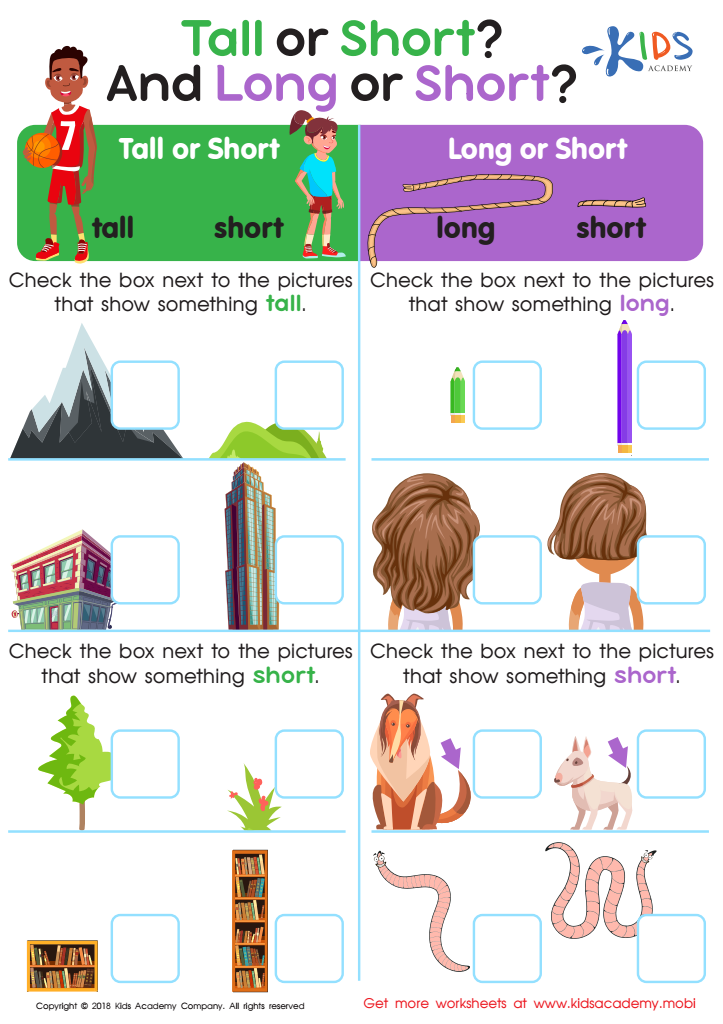
Tall or Short and Long or Short? Worksheet
 Assign to My Students
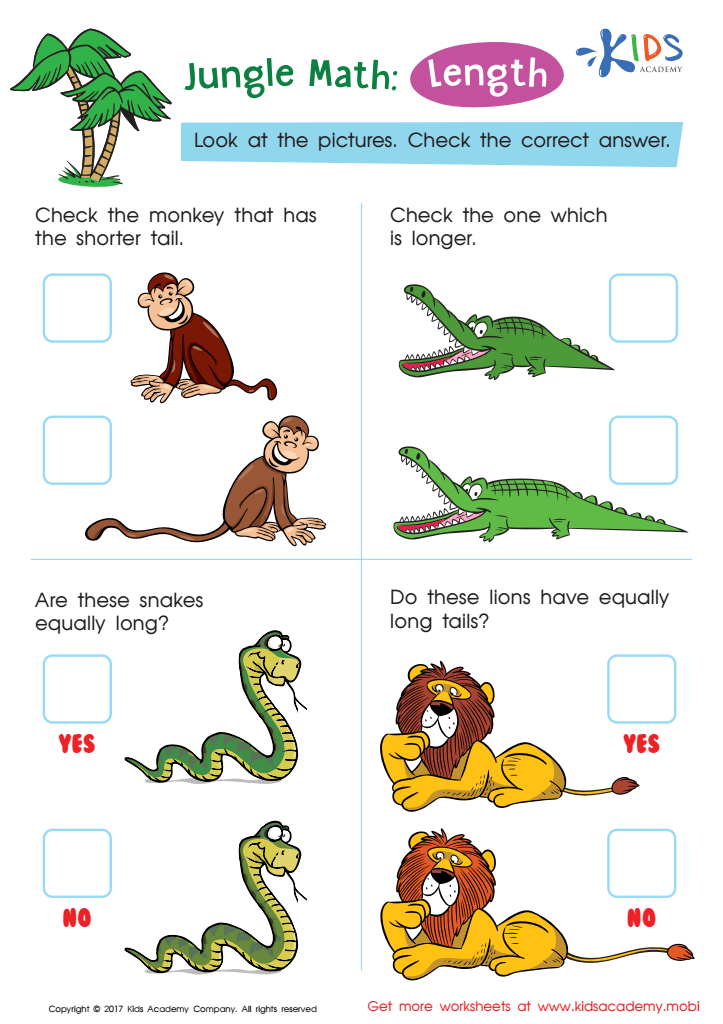
Which One Is Longer - Length Worksheet
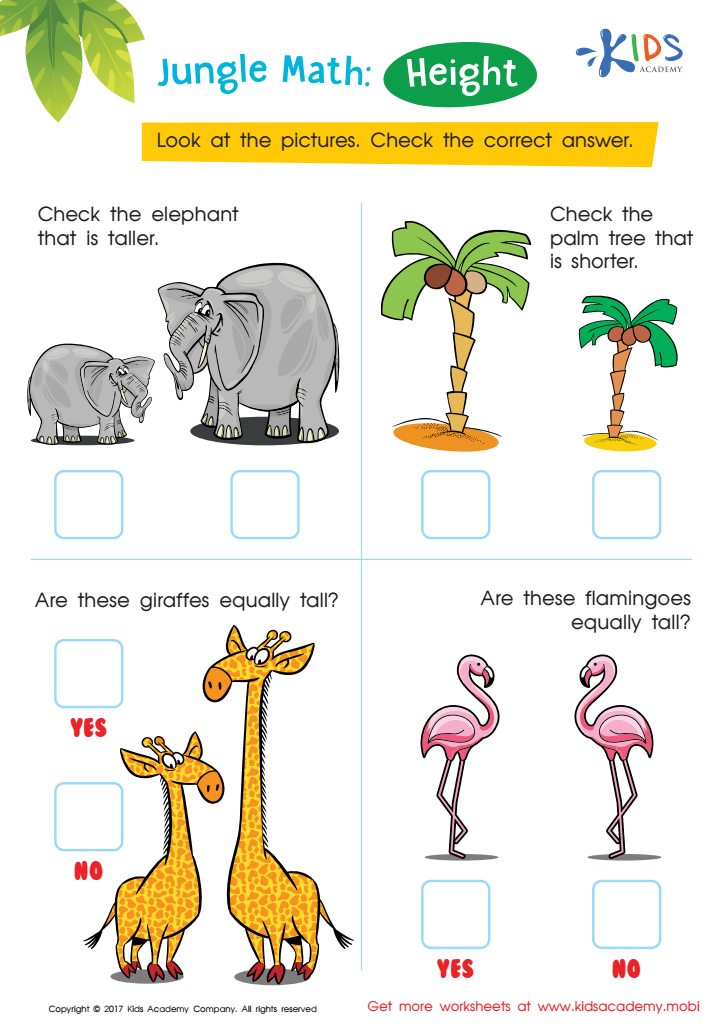
Which Is Taller Worksheet
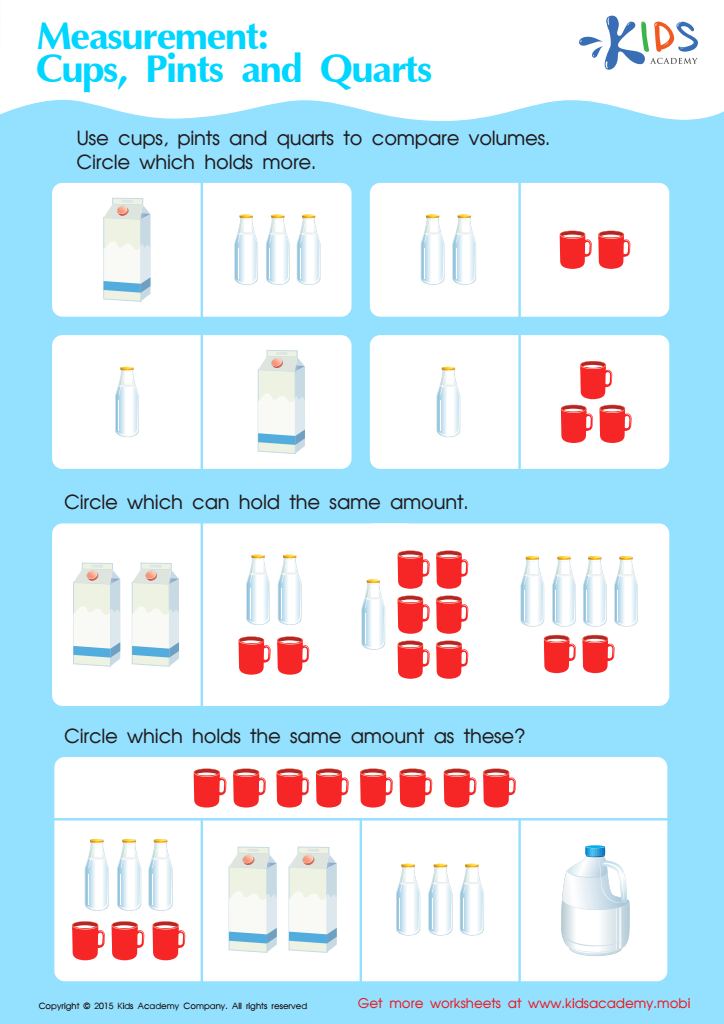
Measurement: Compare Volumes Worksheet
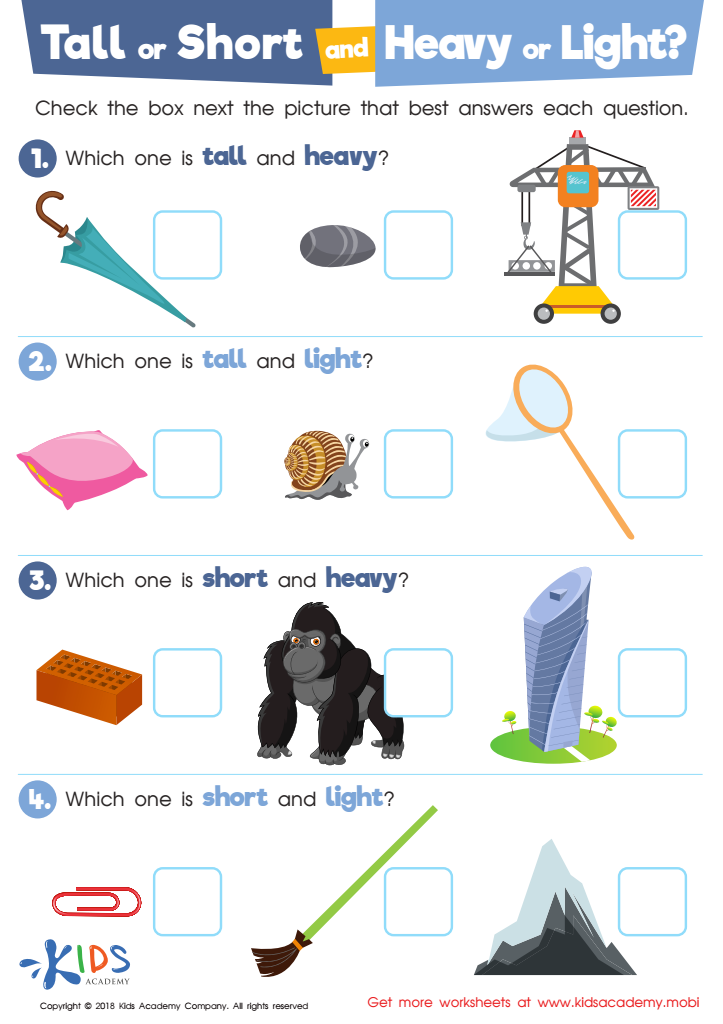
Tall or Short and Heavy or Light? Worksheet
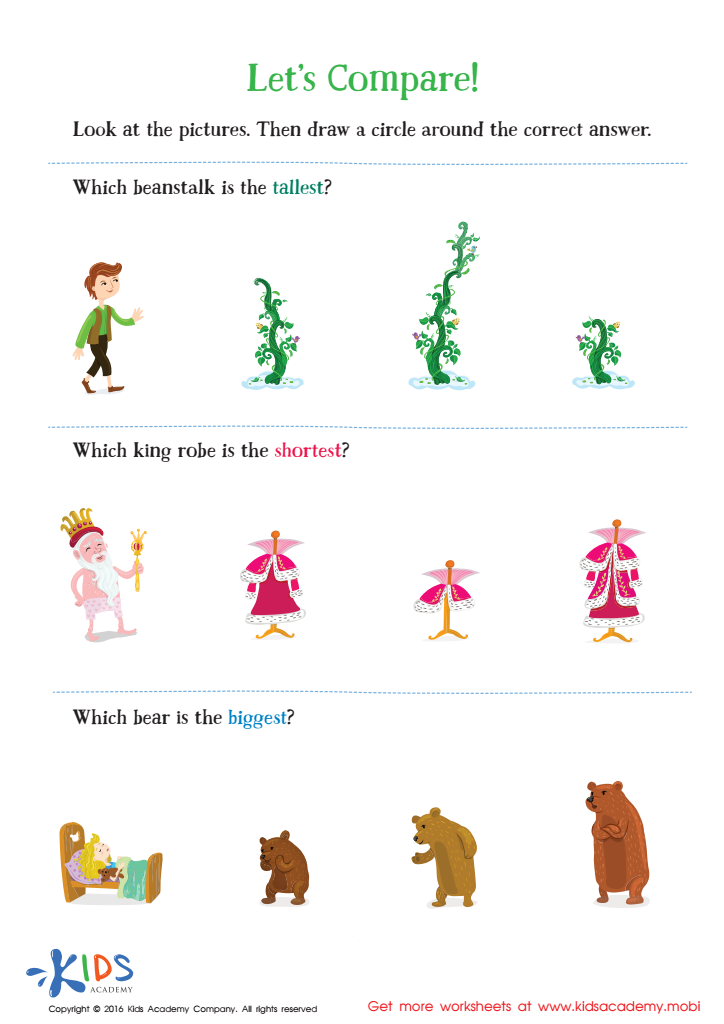
Fairy Tale Worksheet: Let's Compare







Understanding and comparing sizes is an essential skill for kindergarteners, influencing their cognitive, emotional, and social development. First and foremost, measurement concepts help children develop critical thinking and problem-solving skills. By learning how to compare sizes—be it length, weight, or volume—students engage in hands-on activities that foster curiosity and exploration, laying the groundwork for future mathematical understanding.
Furthermore, size comparison introduces vital vocabulary terms, enhancing language development. Children learn words like "big," "small," "taller," and "heavier," which allows them to communicate their observations more effectively.
In addition to cognitive benefits, size comparison activities encourage teamwork and cooperation. When children work together to sort or classify objects based on size, they practice important social skills, including sharing, negotiating, and valuing others' perspectives.
For parents and teachers, emphasizing this foundational concept provides numerous opportunities for enriching learning experiences in everyday life. From simple activities like sorting blocks to measuring ingredients for a recipe, comparing sizes cultivates a hands-on approach to learning. Ultimately, instilling these skills early promotes a lifelong appreciation for math, science, and logical reasoning, paving the way for success in later academic pursuits.








