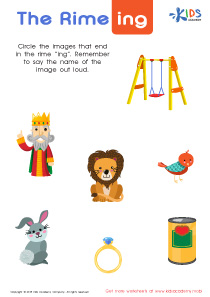
Shape Recognition Kindergarten Reading Worksheets
3 filtered results
Difficulty Level
Grade
Age
-
From - To
Subject
Activity
Standards
Introduce your little learners to the world of shapes with our Shape Recognition Kindergarten Reading Worksheets! Tailored for early childhood education, these engaging worksheets foster both reading and cognitive skills by combining fun activities with essential shape recognition practice. Through vibrant graphics and interactive exercises, children will learn to identify and name basic shapes while developing their pre-reading abilities. From circles and squares to triangles and rectangles, our worksheets make learning fun and effective. Perfect for classroom or home use, these resources are designed to support teachers and parents in guiding young minds on their educational journey. Start exploring today!
Favorites
With answer key
Interactive
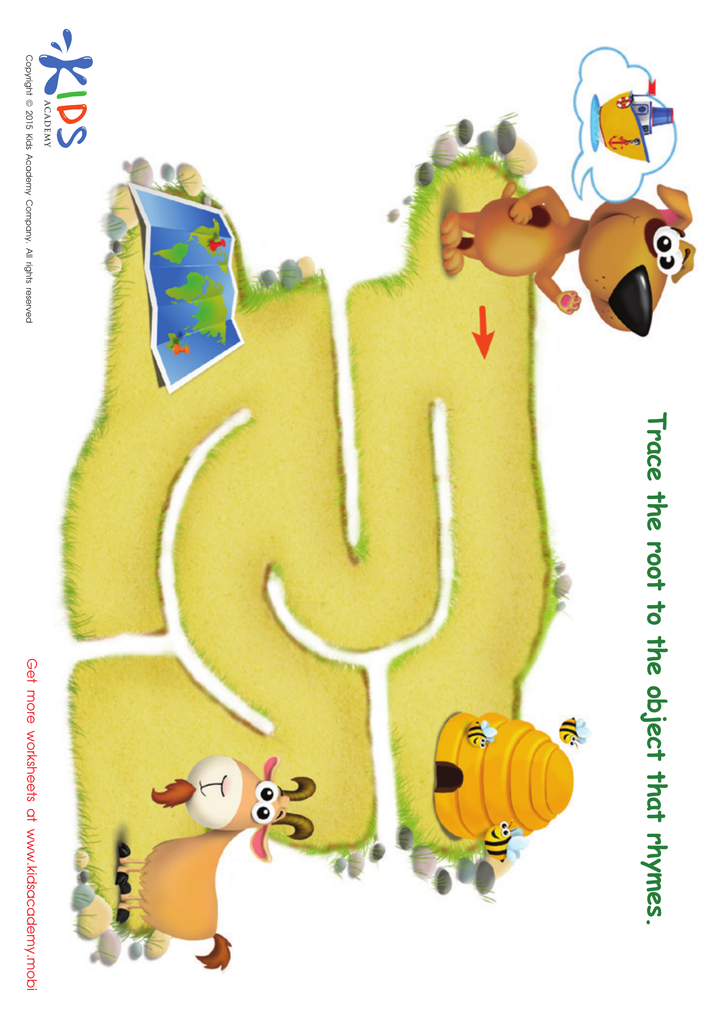
Boat Rhyming Words Worksheet
Help your preschooler complete the maze and rhyme with their favorite pooch! Draw a line from the dog to the matching item - is it a hive, a map or a goat? This fun activity lets them name the root words of pictures, and listen for rhymes to help them with phonics and reading.
Boat Rhyming Words Worksheet
Worksheet
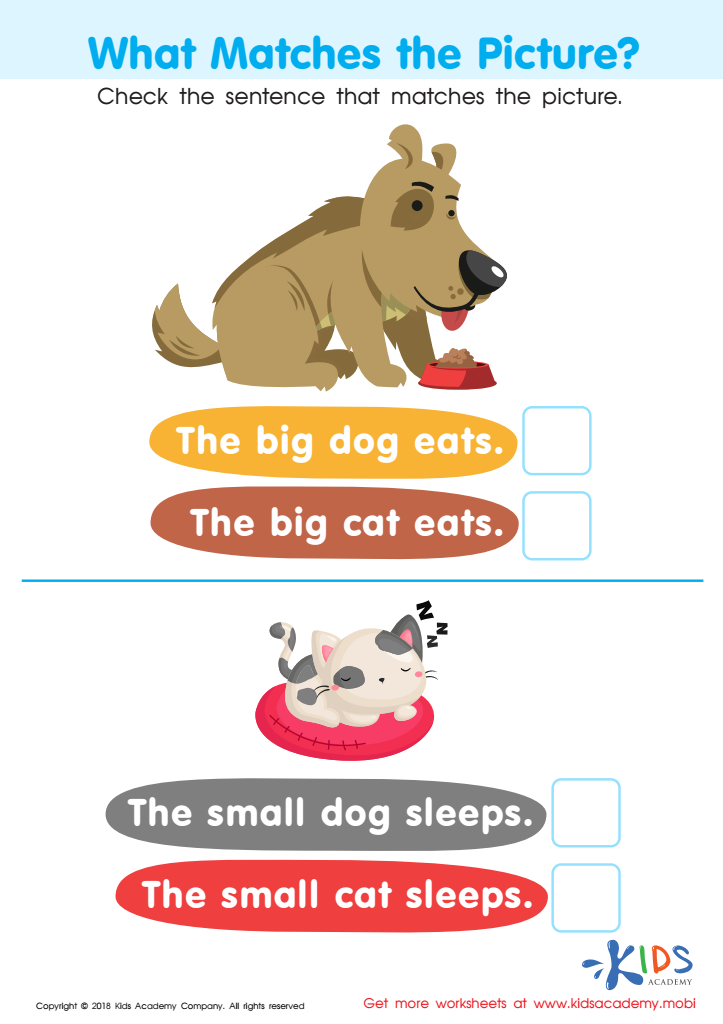
What Matches the Picture? Worksheet
Emerging readers can use pictures of cute pets and phrase repetition to match sentences to pics, building skills while having fun! It's a great way to bolster vocab and confidence, motivating them to keep reading.
 Assign to My Students
What Matches the Picture? Worksheet
Worksheet
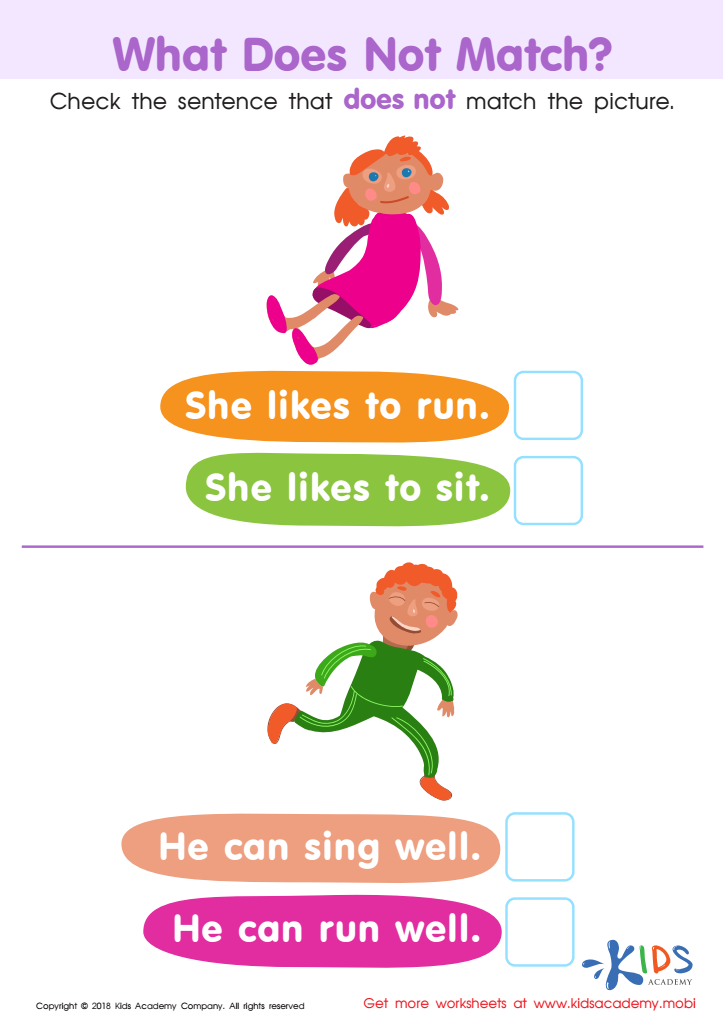
What Does Not Match? Worksheet
Emerging readers need to practice using visual cues and repetitive text. This colorful PDF provides them with an opportunity to look at pictures, use discrimination and discern which phrase does not match. It also enables them to gain familiarity with high-frequency words to aid decoding longer sentences.
What Does Not Match? Worksheet
Worksheet
Join Kids Academy for Free
Who is primarily going to use this learning content?







Shape recognition is a fundamental aspect of early childhood development that serves as a building block for more advanced learning. For both parents and teachers, understanding and fostering this skill in kindergarten-age children is crucial.
First and foremost, shape recognition helps with early literacy and numeracy. Recognizing different shapes helps children identify letters and numbers, as these characters are essentially combinations of various shapes. For example, knowing the difference between a circle and an oval can aid in distinguishing between the letters 'O' and 'Q'.
Beyond reading and math, shape recognition also enhances cognitive skills such as categorization, comparison, and spatial awareness. When children learn to identify shapes, they also learn how to sort objects based on specific attributes, which is a critical thinking skill. This cognitive framework sets the stage for problem-solving and analytical thinking in later academic pursuits.
Shape recognition acts as an early introduction to geometry. Understanding the properties of shapes – like sides and angles – is foundational knowledge for more complex mathematical concepts they will encounter in later years.
Finally, mastering shape recognition builds confidence and sets a positive tone for a child's educational journey. When children can swiftly identify shapes, they experience a sense of achievement, motivating them to tackle increasingly challenging tasks.
In short, caring about shape recognition in kindergarten reading forms a holistic developmental benefit that supports a child's educational growth on multiple levels.