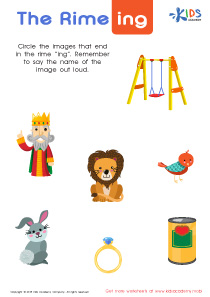
Spatial awareness Kindergarten Reading Worksheets
4 filtered results
-
From - To
Discover our engaging "Spatial Awareness Kindergarten Reading Worksheets" designed to enhance your child's understanding of spatial relationships and positions. Our expertly crafted printable worksheets utilize fun activities to help young learners grasp concepts such as in/out, over/under, and left/right, crucial for boosting their reading comprehension skills. By practicing these worksheets, children develop the foundational skills needed for reading success while also building critical thinking abilities. Perfect for classroom or at-home use, our resources ensure learning is an enjoyable and effective experience for kindergarteners. Visit us to explore our extensive collection and support your child's educational journey!
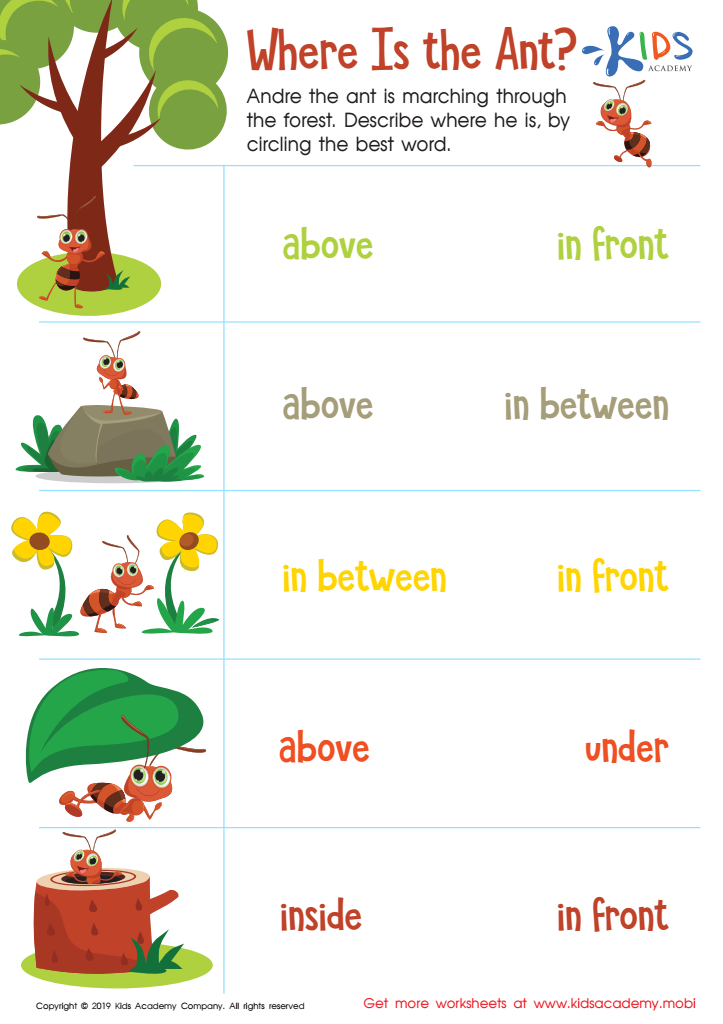
Where Is the Ant? Worksheet
 Assign to My Students
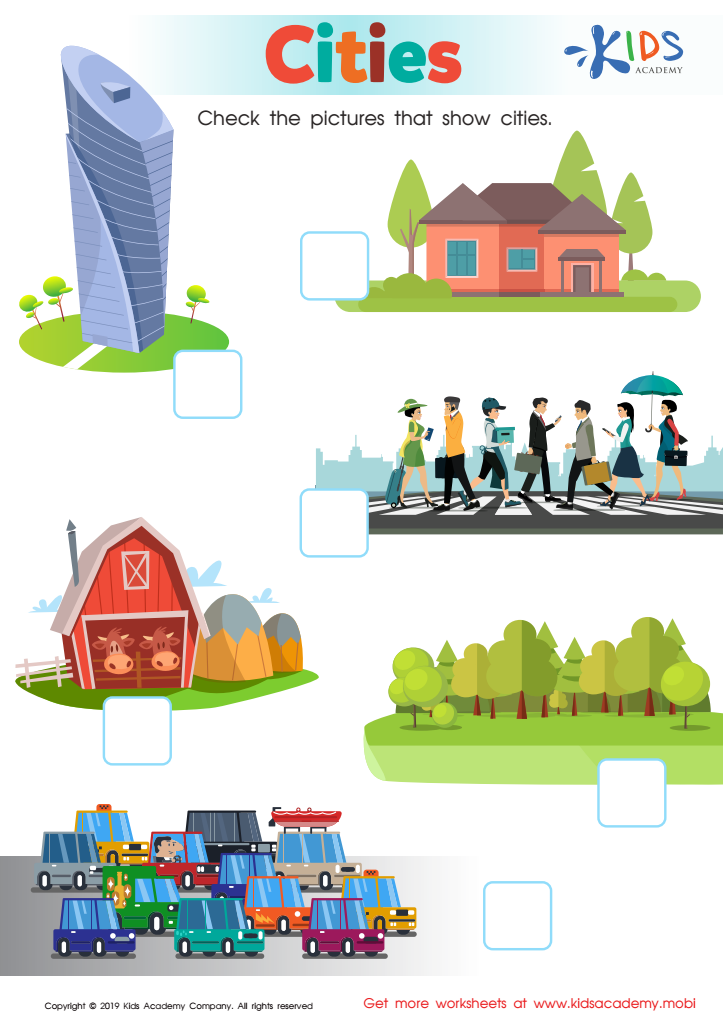
Cities Worksheet
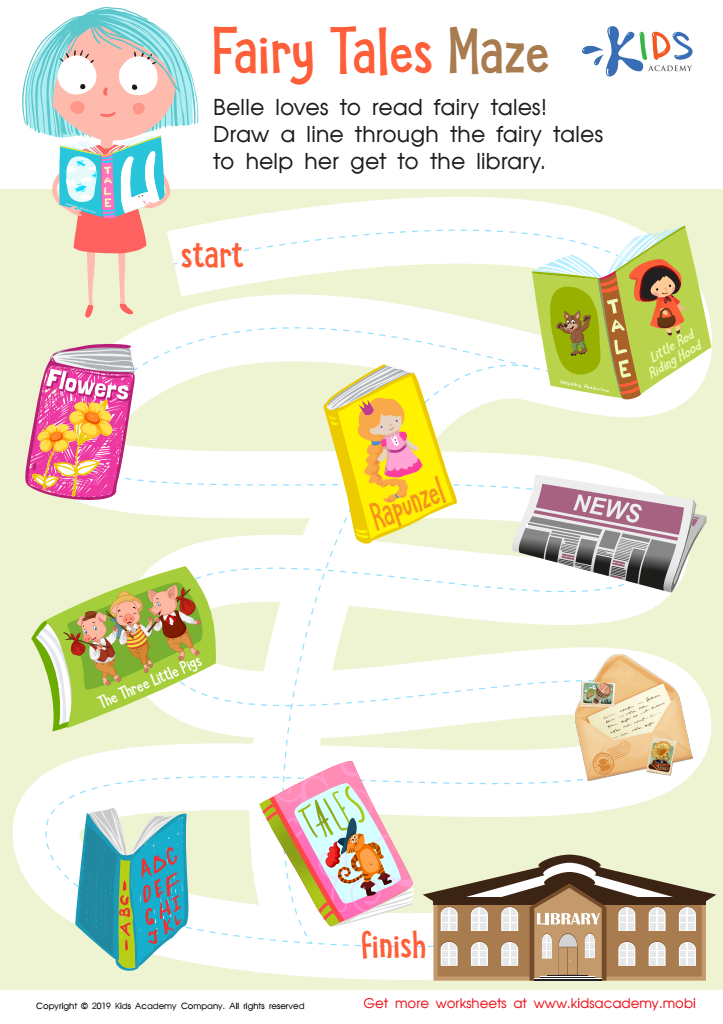
Fairy Tales Maze Worksheet
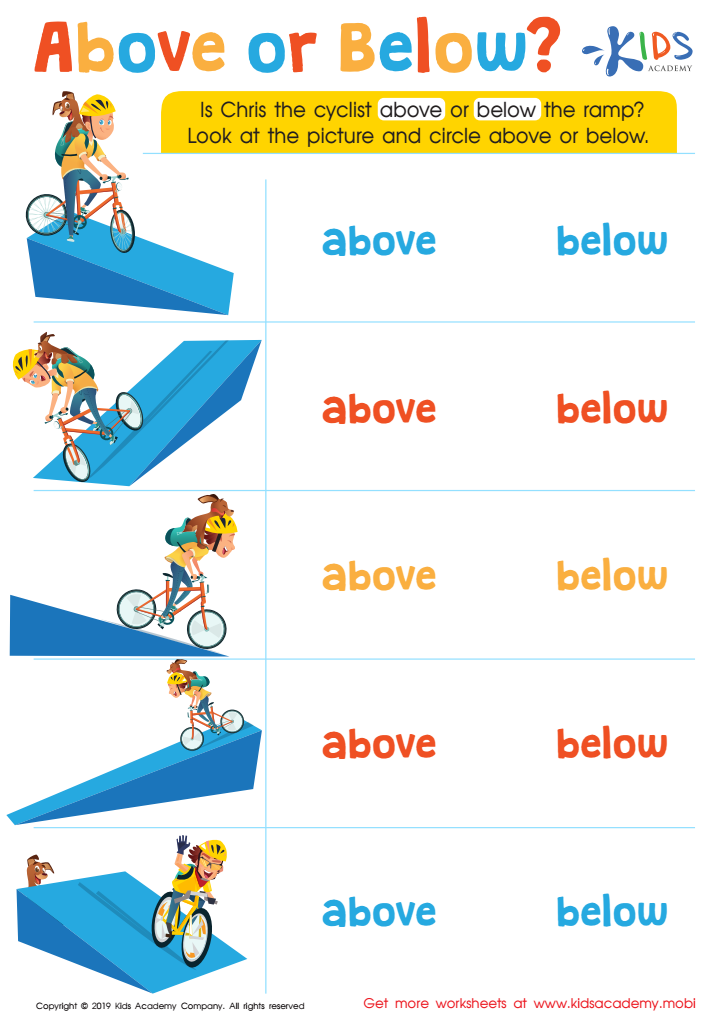
Above or Below? Worksheet


.jpg)




Spatial awareness is a crucial skill for young learners as it lays the foundation for more advanced cognitive abilities, including reading and math. Parents and teachers should care about fostering spatial awareness in kindergarten because it directly influences a child's success in these fundamental areas.
Spatial awareness involves understanding the relationships between objects, oneself, and the environment, which plays a pivotal role in learning to read. Recognizing letter formations, understanding how they combine into words, and aligning text on a page requires a basic grasp of spatial concepts. For instance, distinguishing between 'b' and 'd' or understanding the difference between 'on' and 'under' are tasks that depend on spatial skills.
Moreover, spatial awareness is intertwined with math skills as it helps children grasp geometry, patterns, and measurements. These early math skills are essential building blocks for more complex problem-solving tasks later in their education.
Investing time in developing spatial awareness can foster critical thinking, improve coordination, and increase confidence in young learners. Parents and teachers who emphasize spatial activities—such as puzzles, building blocks, and spatial vocabulary games—provide children with the tools they need for academic success and everyday life.
Focusing on spatial awareness not only enriches a child's current learning experiences but also builds a robust framework for future educational achievements.