Shape Recognition Kindergarten Science Worksheets
3 filtered results
Difficulty Level
Grade
Age
-
From - To
Subject
Activity
Standards
Boost your child's early education with our "Shape Recognition Kindergarten Science Worksheets"! Designed for young learners, these engaging and colorful worksheets help kids identify and categorize basic shapes. Through fun activities like tracing, drawing, and matching, children develop fine motor skills and spatial awareness. Ideal for both classroom and at-home learning, our worksheets provide an enjoyable way to master key concepts in early math and science. Encourage your little one's curiosity and foundational skills with these interactive and educational resources! Explore more today at Kids Academy and set your child on a path to academic success.
Favorites
With answer key
Interactive
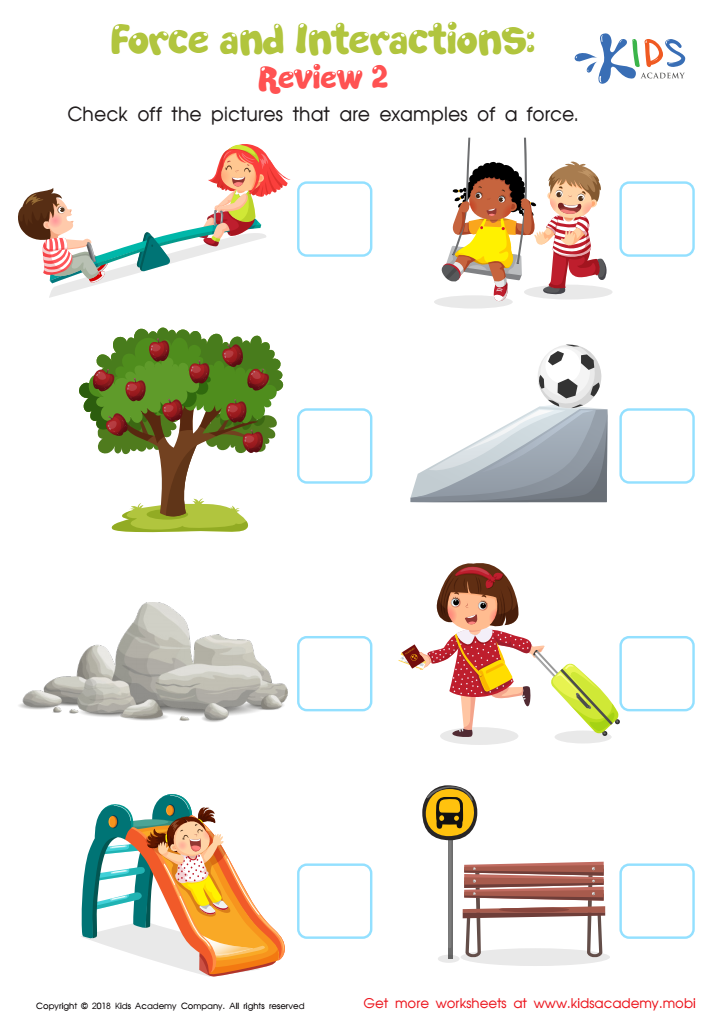
Force and Interactions: Review 2 Worksheet
Your child can identify force examples by checking the pictures. There are 8 images of kids engaging in activities and objects in motion. Get them to name the activities and objects, or if they know, explain force and interaction.
 Assign to My Students
Force and Interactions: Review 2 Worksheet
Worksheet
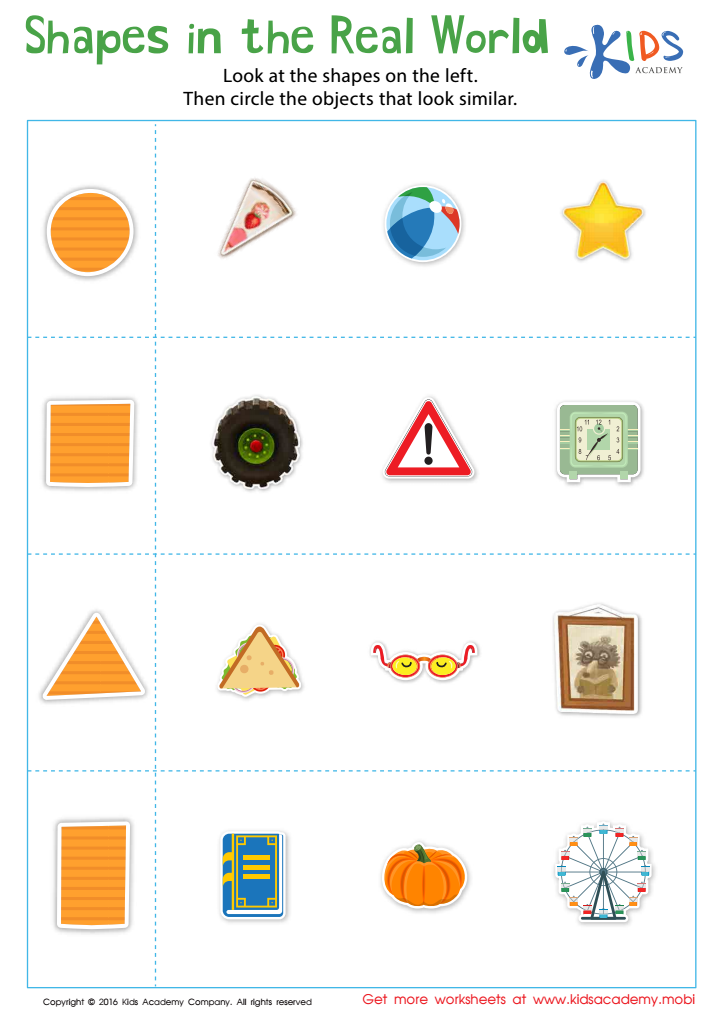
Shapes in the Real World Worksheet
Teach kids math in real-world context with this fun and inviting PDF. Let them explore geometric shapes and match them with everyday objects, giving them practice with fine motor skills and reinforcing basic shapes. Help them understand that math is everywhere in their lives!
Shapes in the Real World Worksheet
Worksheet
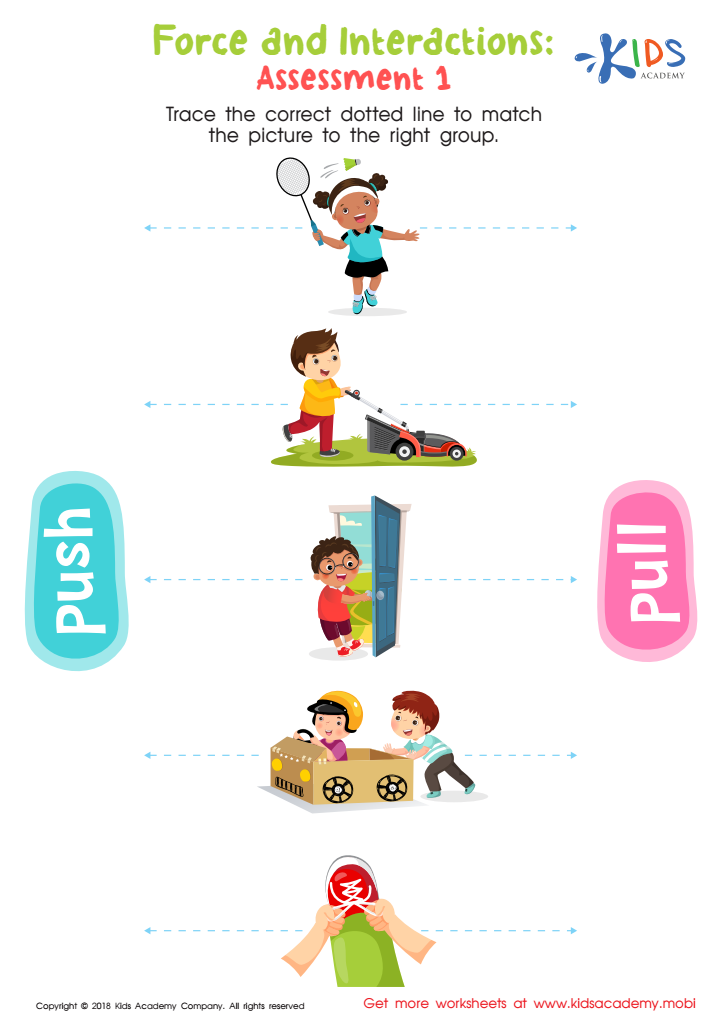
Force and Interactions: Assessment 2 Worksheet
Help your child see the difference between push and pull with this fun worksheet. Ask them to match each picture to the right group. The "push" is on the left and the "pull" is on the right. Assist them in tracing the activities and explain what it is the people are doing.
Force and Interactions: Assessment 2 Worksheet
Worksheet
Join Kids Academy for Free
Who is primarily going to use this learning content?






%20(1).jpg)
Shape recognition in kindergarten is foundational for young learners, as it plays a critical role in various aspects of cognitive and personal development. Parents and teachers should value this aspect of education because it acts as a building block for more complex mathematical concepts. Recognizing and understanding shapes aid children in grasping spatial awareness, which is crucial for geometry skills they'll encounter in later grades.
Beyond mathematics, shape recognition facilitates the development of visual discrimination skills, where children learn to notice differences and similarities, which are vital in reading and writing. Through recognition and differentiation between shapes, kids also improve their problem-solving and reasoning abilities. This skill translates into better capacity for pattern recognition, crucial in subjects like science, technology, engineering, and mathematics.
In a broader scope, discussing and exploring shapes enhances language development as children describe properties and articulate their observations, building their vocabulary and verbal skills. Socially, engaging in shape-related activities foster collaboration and communication when working with peers, promoting teamwork and positive interaction.
Overall, early engagement with shape recognition equips children with essential analytical skills, setting a solid foundation for academic success and everyday life skills. By focusing on this during kindergarten, we ensure that children are not only ready for future educational challenges but also gain confidence in their growing abilities.