Verb identification Kindergarten Writing Worksheets
3 filtered results
-
From - To
Unlock your child's potential with our Kindergarten Verb Identification Writing Worksheets! Designed to make learning fun and engaging, these worksheets help young learners recognize and use verbs in sentences. By matching illustrations with action words, kids develop critical language skills while enjoying playful, hands-on practice. Perfect for home or classroom use, our worksheets ensure your kid enjoys every step of their educational journey. They'll strengthen their vocabulary, enhance reading comprehension, and build a strong foundation for future writing success. Give your kindergartner the tools they need to master verbs with our expertly crafted, visually appealing worksheets.
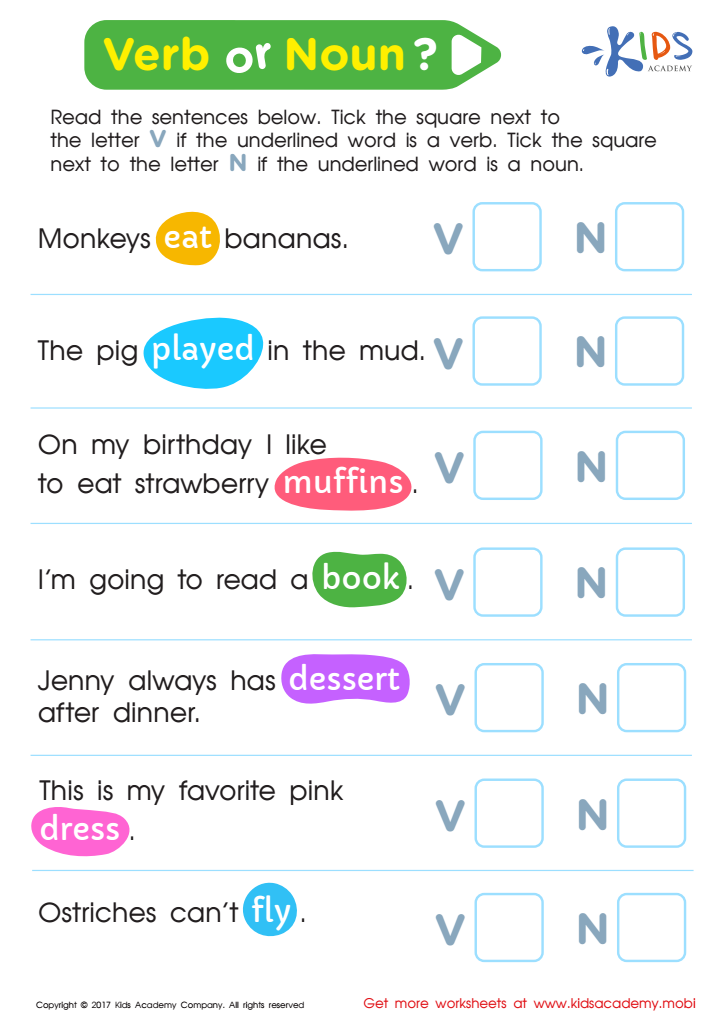
Verb or Noun Worksheet
 Assign to My Students
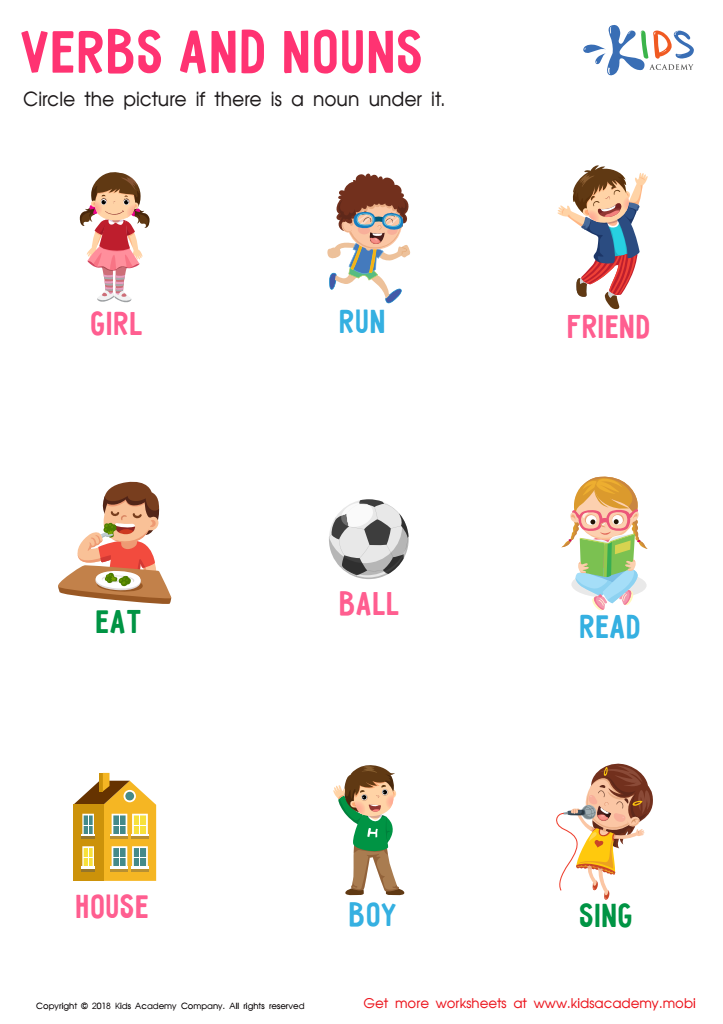
Verbs and Nouns Worksheet
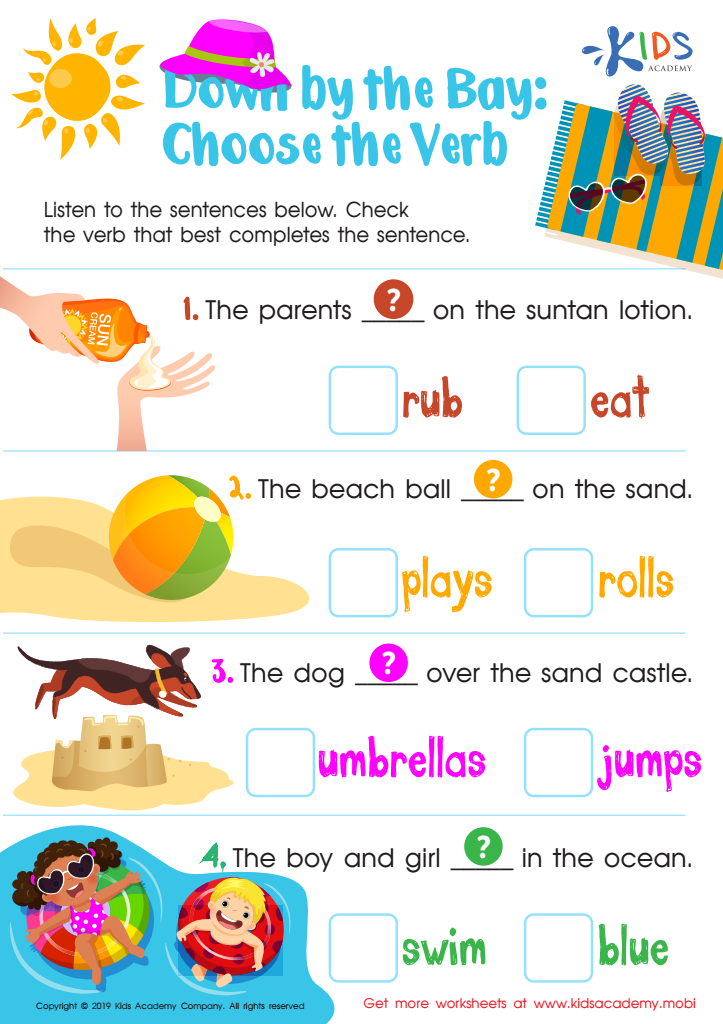
Down by the Bay: Choose the Verb Worksheet








Verb identification in kindergarten writing is crucial for a child's language development and serves as the foundation for effective communication. Verbs are action words, and understanding them helps children describe activities and events more vividly, enhancing their ability to tell stories, share experiences, and articulate thoughts. Early identification of verbs instills basic grammar skills, enabling students to construct sentences that make sense and are grammatically correct.
For parents, helping their child recognize verbs can lead to enriched vocabulary and improved cognitive skills. Reading books together and pointing out action words can be a delightful activity that strengthens parent-child bonds while simultaneously promoting learning. This interaction boosts children's confidence and encourages a love for reading and writing.
For teachers, incorporating verb identification into kindergarten writing instruction supports language proficiency. When children actively engage in identifying and using verbs, they develop critical thinking and analytical skills that are transferable to other academic areas. Teachers can use engaging activities like action songs, storytelling, and interactive writing exercises to make learning about verbs enjoyable.
In essence, focusing on verb identification at an early age lays a solid linguistic foundation, enabling children to grow into competent communicators. It supports their overall academic journey, making them better readers and writers while fostering a lifelong love for learning.