Letter-sound association Normal Alphabet Worksheets for Ages 3-4
6 filtered results
-
From - To
Discover our engaging Letter-Sound Association Normal Alphabet Worksheets designed specifically for ages 3-4. These printable activities help young learners connect letters with their corresponding sounds, laying a strong foundation for early literacy. Each worksheet is vibrant, interactive, and tailored to keep children entertained while they learn. With fun exercises that involve tracing, matching, and identifying letters, kids will enhance their phonemic awareness and boost their confidence in language skills. Perfect for both classroom and home use, these worksheets provide a valuable resource for parents and educators looking to support early childhood development in a playful and effective way.
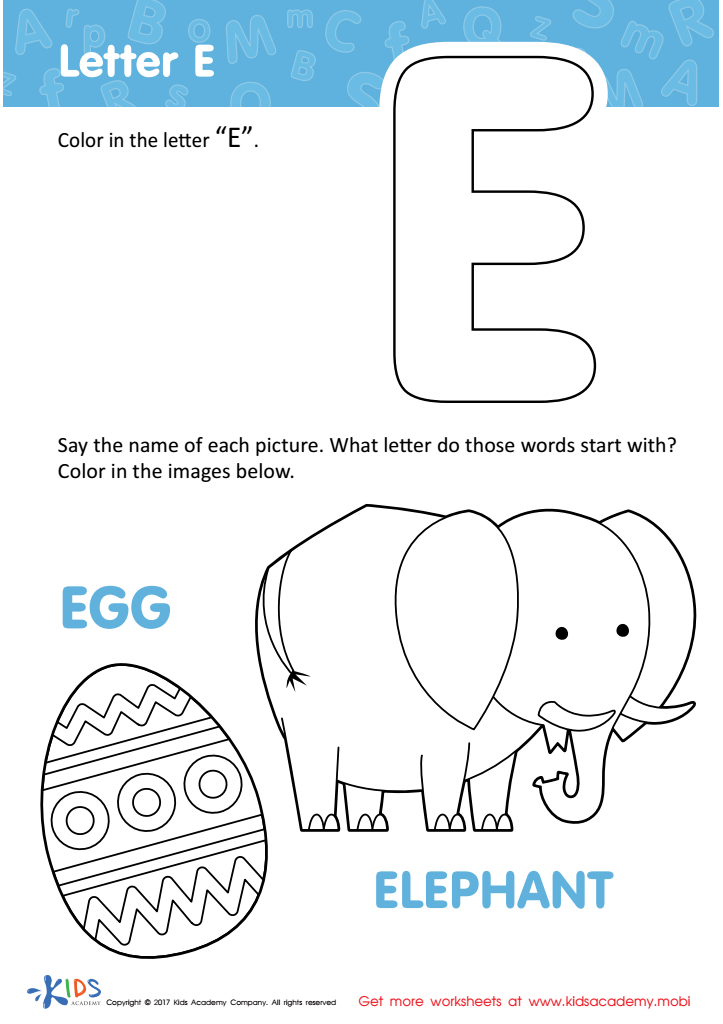
Letter E Coloring Sheet
 Assign to My Students
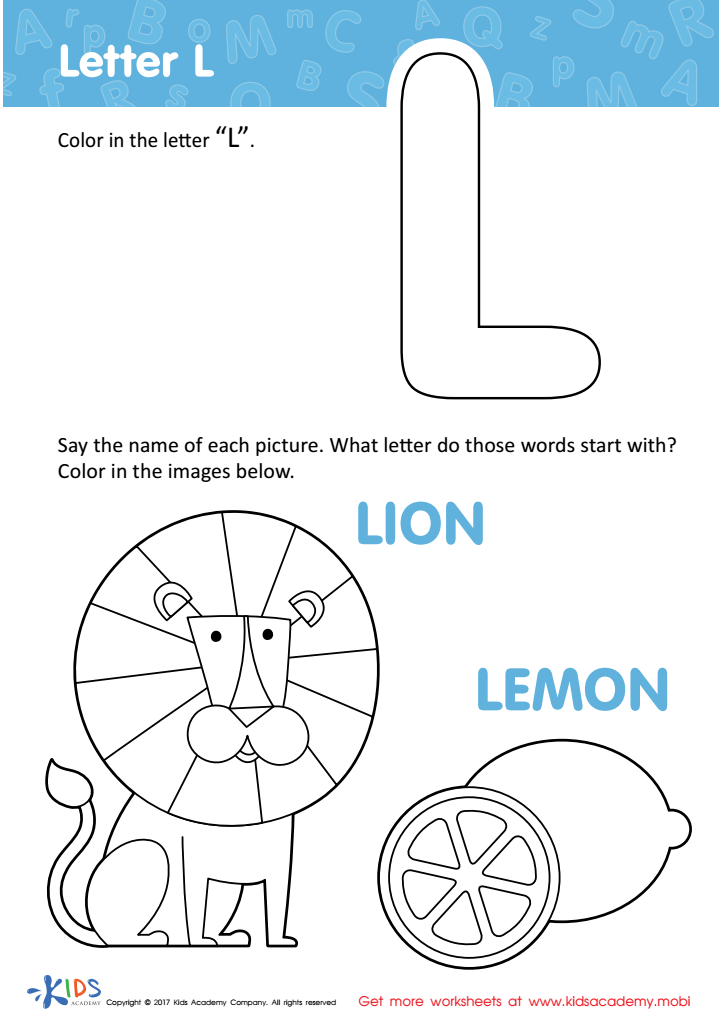
Letter L Coloring Sheet
Assign to My Students
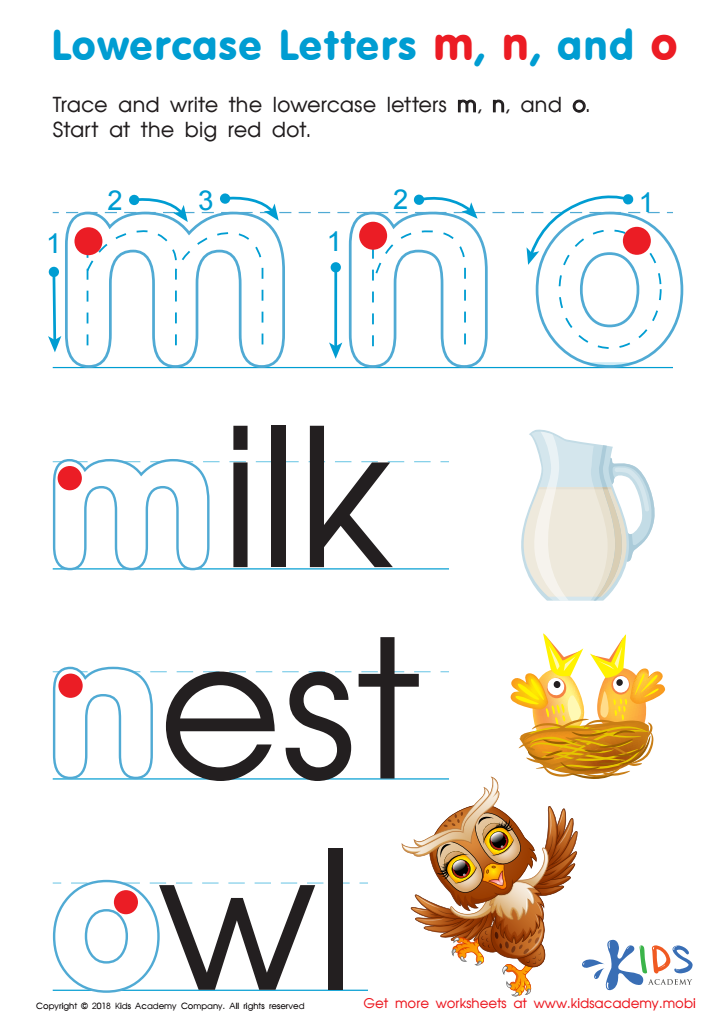
Lowercase Letters m n o Worksheet
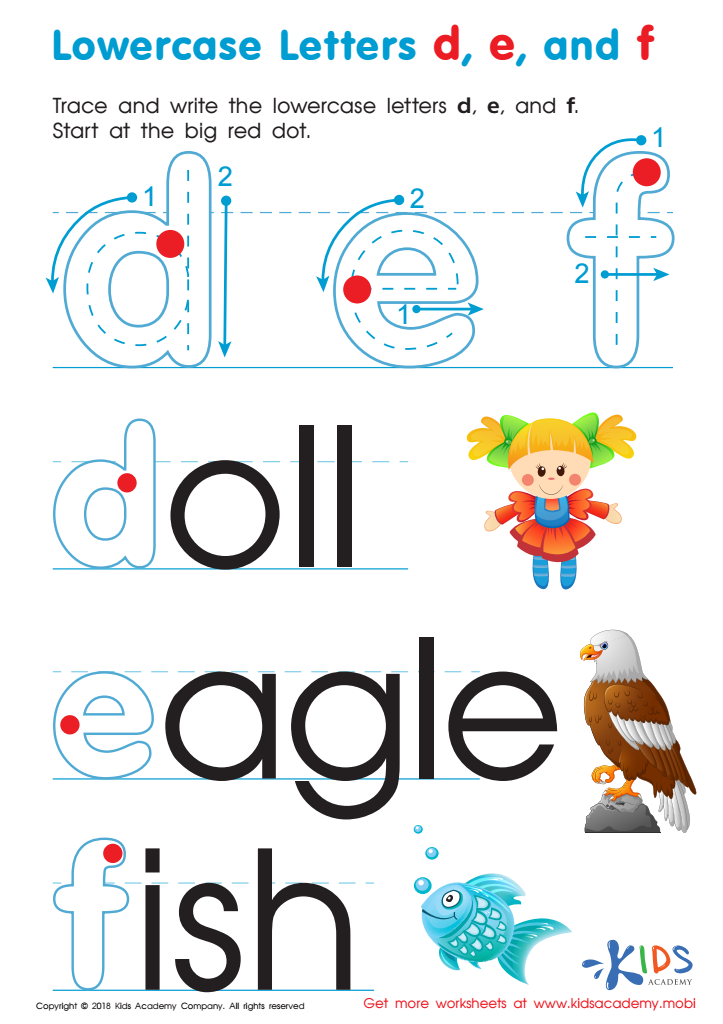
Lowercase Letters d e f Worksheet
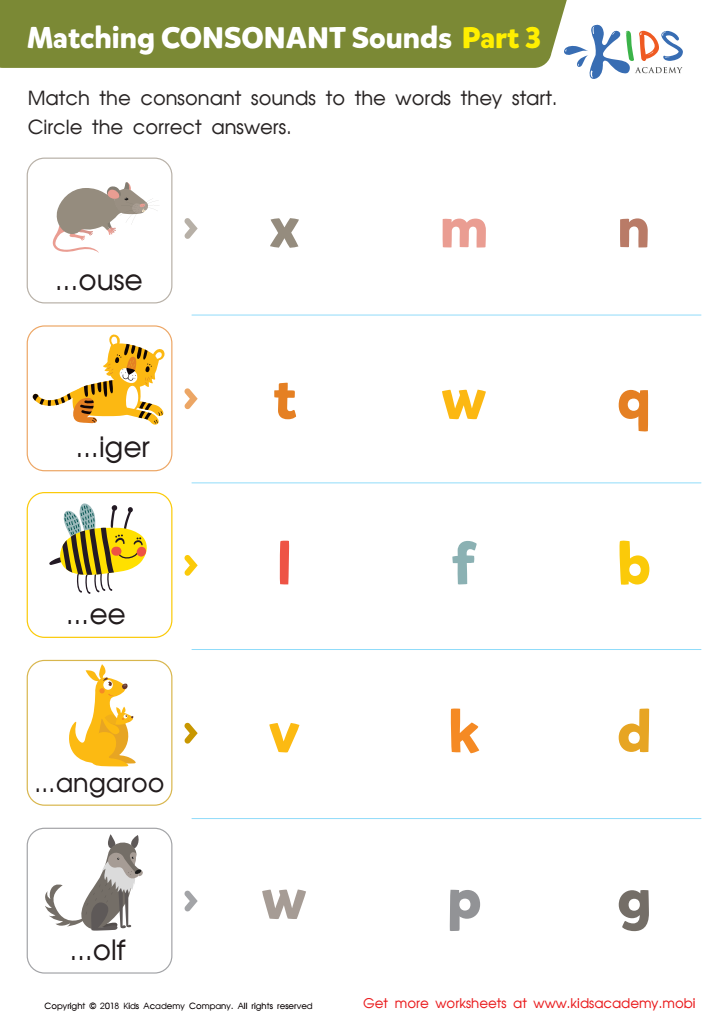
Matching Consonant Sounds: Part 3 Worksheet
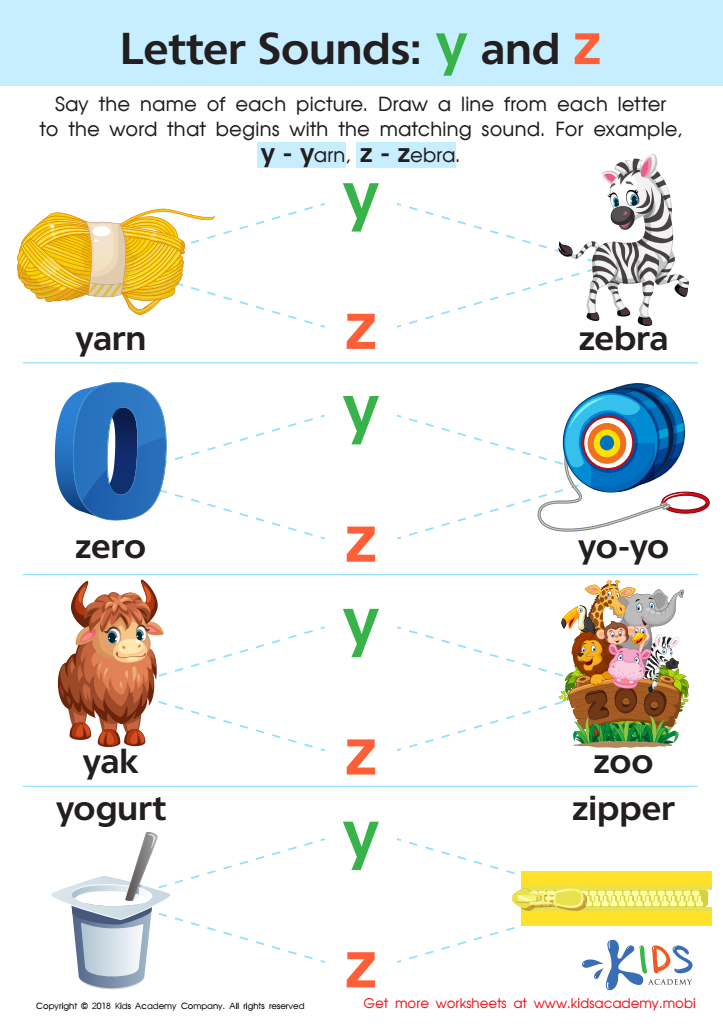
Letter Y and Z Sounds Worksheet








Letter-sound association, the ability to link letters with their corresponding sounds, is fundamental for early literacy development in children ages 3-4. Understanding this relationship lays the groundwork for reading and writing, fostering essential cognitive, linguistic, and social skills.
Parents and teachers should care about this concept because it significantly influences how children approach reading later in life. When children recognize that letters represent sounds, they become more confident in decoding words, which allows them to develop stronger reading fluency and comprehension skills. This foundation not only aids in academic achievement but also instills a love for reading, which can have lasting effects on a child’s learning journey.
Moreover, teaching letter-sound association can be an interactive and engaging process. Utilizing songs, rhymes, and playful activities makes learning enjoyable and boosts children’s motivation to learn. These experiences also promote social skills as children collaborate and share their newfound knowledge with peers.
Supporting early literacy through letter-sound awareness helps create a positive literacy environment, encouraging children to explore language and express themselves. By prioritizing this critical skill, parents and teachers invest in their child's educational success and foster a lifelong passion for learning.







