
Handwriting improvement Normal Letter Recognition Worksheets for Ages 3-4
3 filtered results
Difficulty Level
Grade
Age
-
From - To
Subject
Activity
Standards
Enhance your child's learning journey with our Handwriting Improvement Normal Letter Recognition Worksheets designed specifically for ages 3-4. These engaging and interactive worksheets cater to early learners, promoting both fine motor skills and letter recognition. Each activity combines playful illustrations with structured handwriting practice, helping your little ones master the alphabet in a fun way. Our worksheets are perfect for parents and educators aiming to boost writing confidence while reinforcing crucial cognitive skills. Download and print these easy-to-use resources today to set the foundation for your child's successful literacy journey! Visit our site for quality educational materials tailored to young learners.
Favorites
With answer key
Interactive
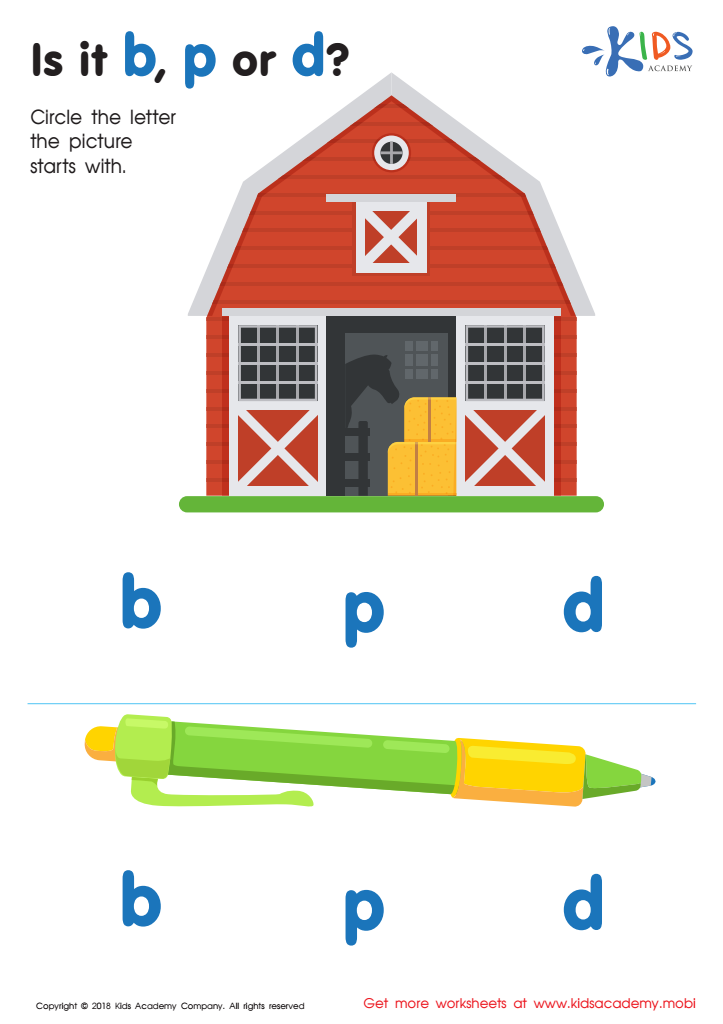
Is it b, p or d? Worksheet
Test your child's identification skills with this worksheet. They must identify the image and then circle the letter it begins with: 'b', 'p', or 'd' (e.g. an image of the sun would mean they circle 's').
 Assign to My Students
Is it b, p or d? Worksheet
Worksheet
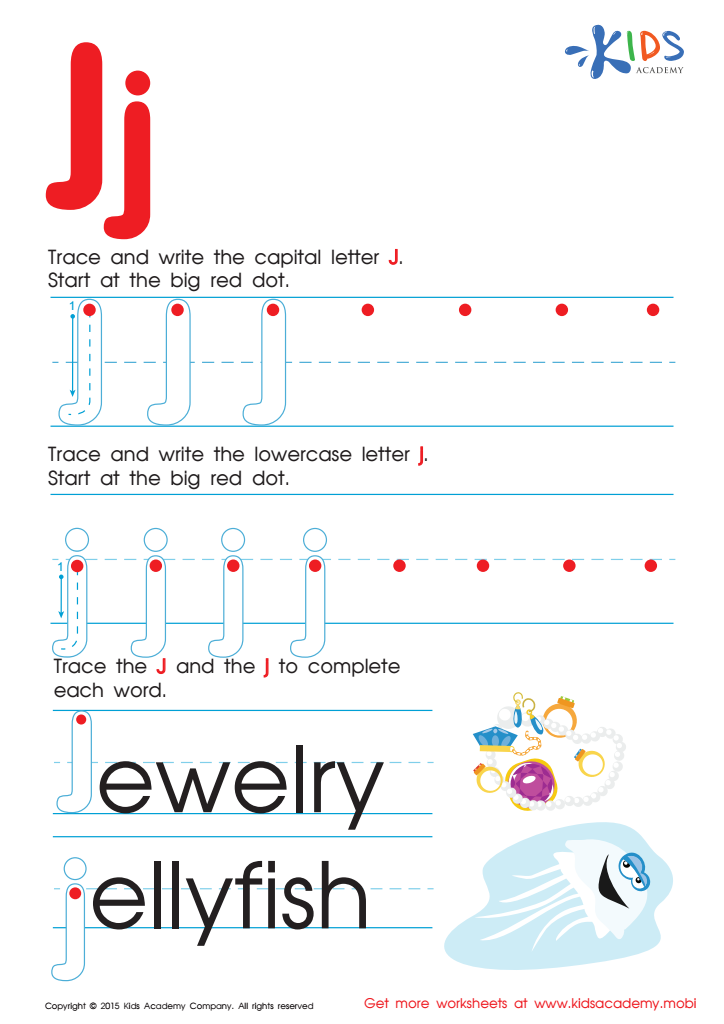
Letter J Tracing Page
Trace and write the letter "J" with our ABC worksheet - start at the big red dot! Have fun completing words like jewelry, jellyfish and more. Check out our kindergarten activities for more alphabet practice.
Letter J Tracing Page
Worksheet
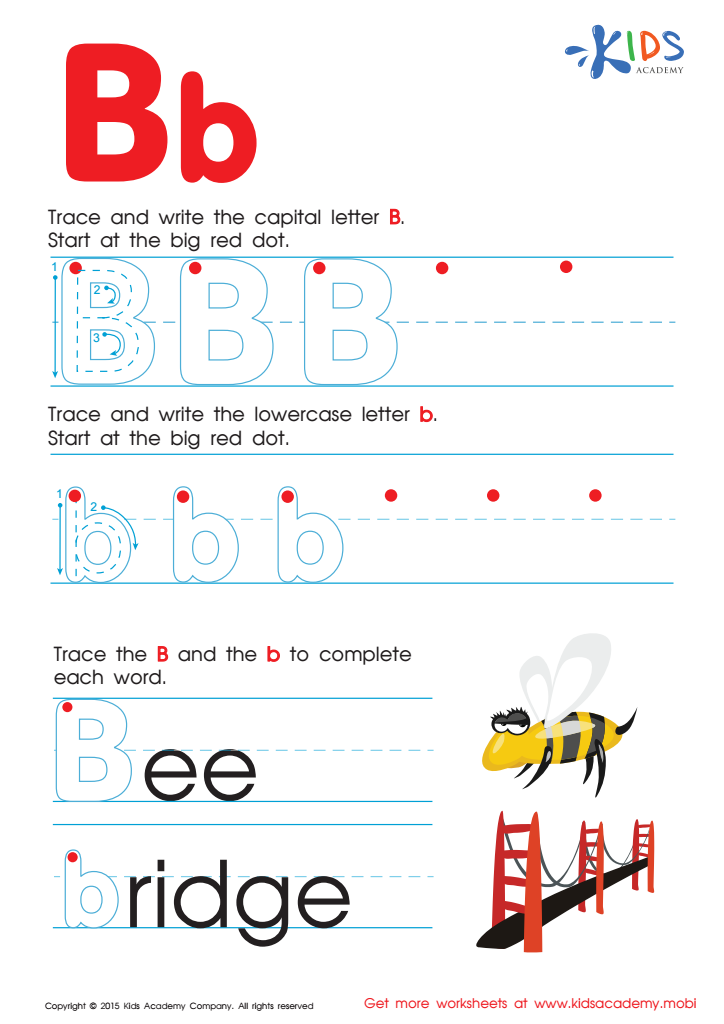
Letter B Tracing Page
Ready to learn the Alphabet? Put your pencil on the red dot and trace & write both capital & lowercase "B". Then have a look at the pictures. Catch the bee, cross the bridge & write the letters to complete the words. More ABC worksheets for kindergarten available!
Letter B Tracing Page
Worksheet
Join Kids Academy for Free
Who is primarily going to use this learning content?








Handwriting improvement and normal letter recognition are crucial for children aged 3-4 as they lay the foundation for academic success and cognitive development. During these formative years, children are naturally curious and eager to learn. Encouraging them to improve their handwriting and recognize letters fosters fine motor skills and hand-eye coordination, which are essential for various daily tasks and future writing activities.
Moreover, letter recognition is key in developing literacy skills. By learning the shapes and sounds of letters, children build a critical understanding of language that is vital for reading and writing proficiency. With a strong foundation in handwriting and letter recognition, children are more likely to engage confidently with their schoolwork as they progress into more challenging concepts.
Parents and teachers play an instrumental role in this process. By implementing engaging activities, such as letter tracing, crafts, and fun games, they can ignite a child's passion for learning. Positive reinforcement and consistent practice encourage children to take pride in their skills, fostering a growth mindset. Ultimately, nurturing handwriting improvement and letter recognition equips young learners with the tools they need for lifelong success in reading and writing, enhancing both their academic journey and self-esteem.








