Lowercase letter writing Normal Letter Recognition Worksheets for Ages 3-4
3 filtered results
-
From - To
Enhance your child’s early writing skills with our Lowercase Letter Writing Normal Letter Recognition Worksheets, designed specifically for ages 3-4. These engaging printable activities help young learners familiarize themselves with lowercase letters, improving their handwriting and letter recognition—a fundamental step in their literacy journey. Through fun tracing and writing exercises, children will gain confidence in their writing abilities while building fine motor skills, preparing them for future academic success. Perfect for both classroom and at-home practice, our worksheets provide a solid foundation for early reading and writing development. Start your child on the path to literacy success today!
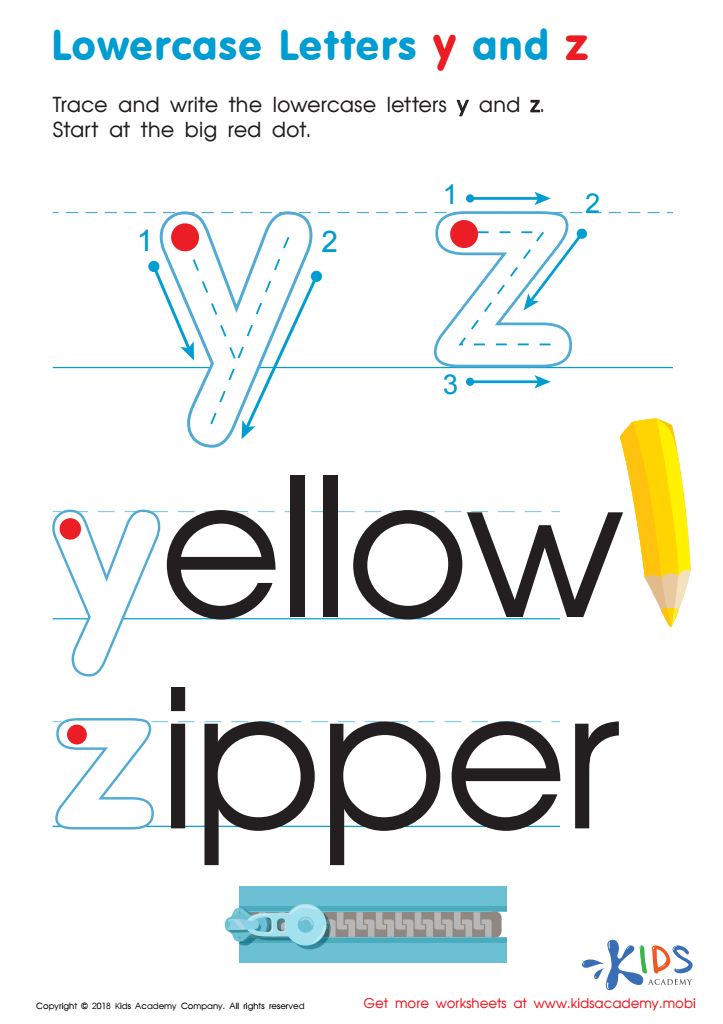
Lowercase Letters y z Worksheet
 Assign to My Students
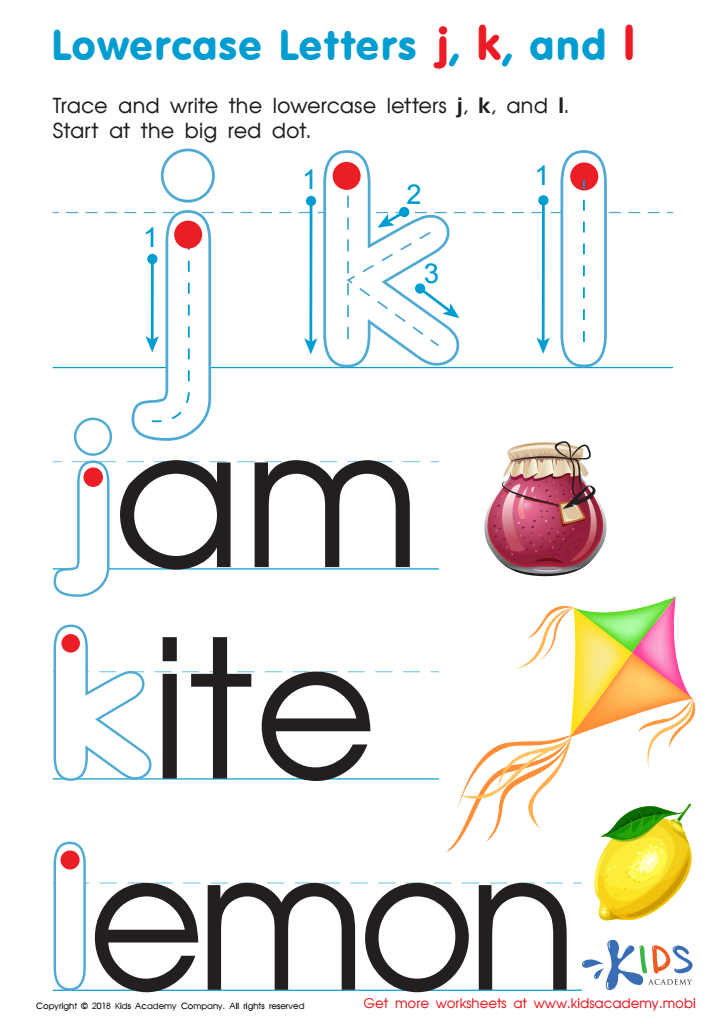
Lowercase Letters j k l Worksheet
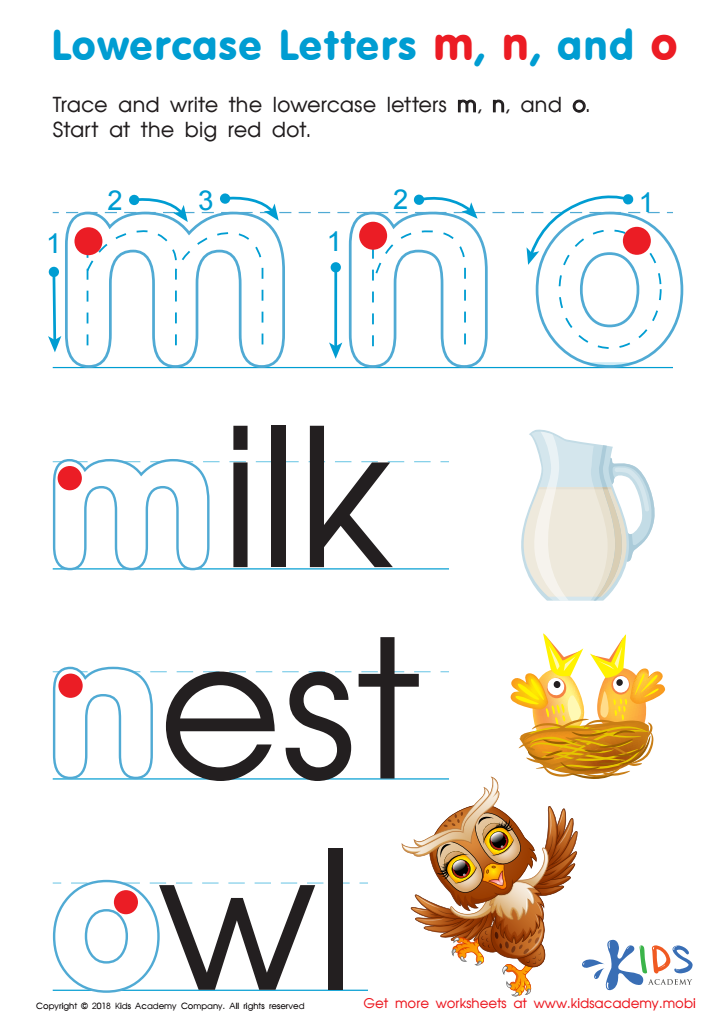
Lowercase Letters m n o Worksheet








Parents and teachers should care about lowercase letter writing and normal letter recognition for children ages 3-4 because these skills form foundational building blocks for literacy development. At this early age, children are in a critical period for language acquisition, and the ability to recognize and write letters is crucial for reading and writing proficiency later on. Engaging young learners in activities that develop these abilities not only promotes fine motor skills and hand-eye coordination but also enhances their cognitive development.
Writing and recognizing lowercase letters help children become familiar with the alphabet's nuances, which is essential because much of written language consists of lowercase letters. Early exposure to both uppercase and lowercase letters ensures that children won't face confusion when they start decoding text in storybooks and classroom materials. Furthermore, mastering these skills at a young age fosters confidence and independence, giving children a head start that can benefit their academic journey.
Parental and teacher involvement is crucial at this stage because it offers the guidance and encouragement children need. Interactive and playful learning experiences can make this practice enjoyable, keeping young learners engaged and enthusiastic about their progress. Therefore, focusing on these literacy skills is an investment in a child's future reading and writing success.








