Motor skills development Normal Letter Recognition Worksheets for Ages 3-4
3 filtered results
-
From - To
Enhance your child's motor skills and letter recognition with our engaging Normal Letter Recognition Worksheets, specifically designed for ages 3-4. These worksheets provide a fun and interactive way for young learners to identify and practice letters, while simultaneously developing crucial fine motor skills. Through tracing, coloring, and various hands-on activities, kids will build confidence in their ability to recognize letters and communicate effectively. Our carefully crafted materials cater to early learners, ensuring a solid foundation in literacy skills. Explore our diverse selection of worksheets and watch your child's cognitive and motor development flourish as they embark on this exciting educational journey!

Letter H Tracing Page
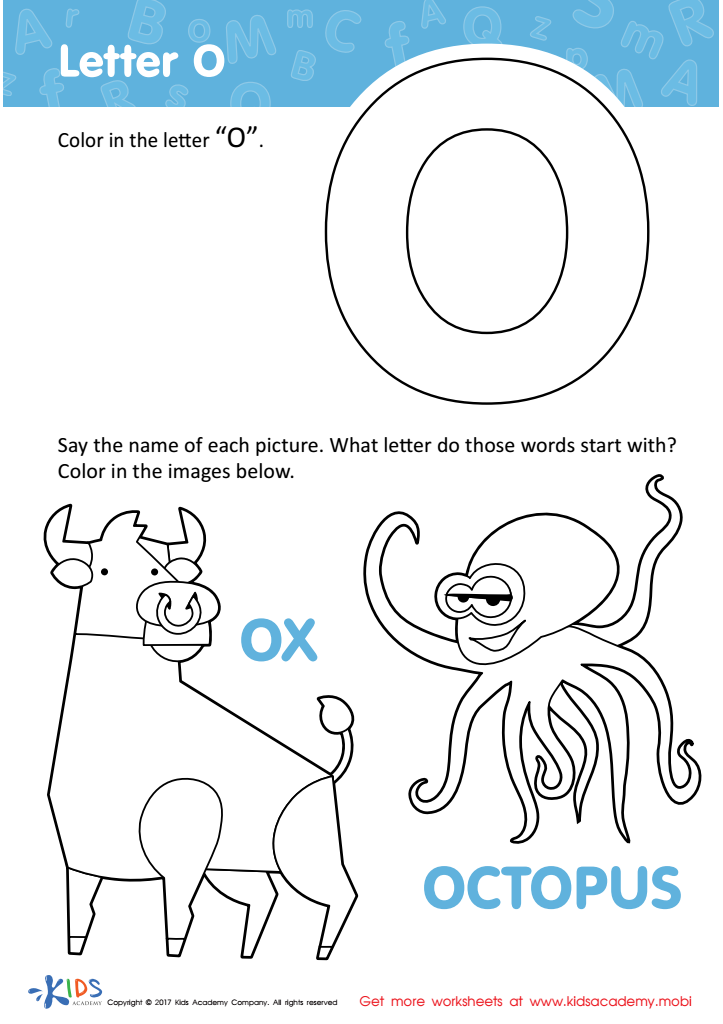
Letter O Coloring Sheet
 Assign to My Students
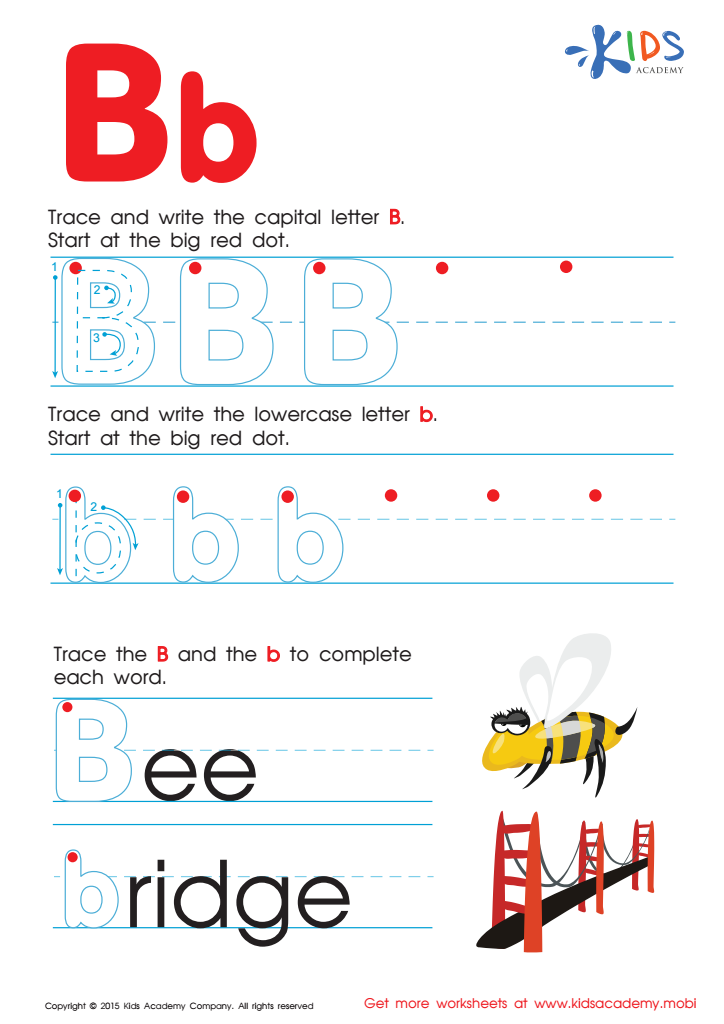
Letter B Tracing Page








Parents and teachers should prioritize the development of motor skills and letter recognition in children ages 3-4 because these foundational skills play a crucial role in a child’s overall learning and cognitive development. At this age, children are honing their fine motor skills, which are essential for tasks like writing, drawing, and self-help activities. Engaging in activities that enhance motor skills helps build the hand-eye coordination necessary for future academic success.
Furthermore, normal letter recognition is vital as it sets the stage for early literacy. Recognizing letters lays the groundwork for reading and writing, which are essential skills in the school environment and beyond. When children can identify letters, they are better equipped to understand phonics, develop vocabulary, and express themselves in written form.
Fostering these skills encourages confidence and independence, helping children to participate actively in learning activities. Additionally, early recognition of any delays in these areas allows for timely intervention, ensuring that children receive the support they need to reach their full potential. Thus, motor skills development and letter recognition are not just educational benchmarks; they are integral to nurturing well-rounded, confident learners.








